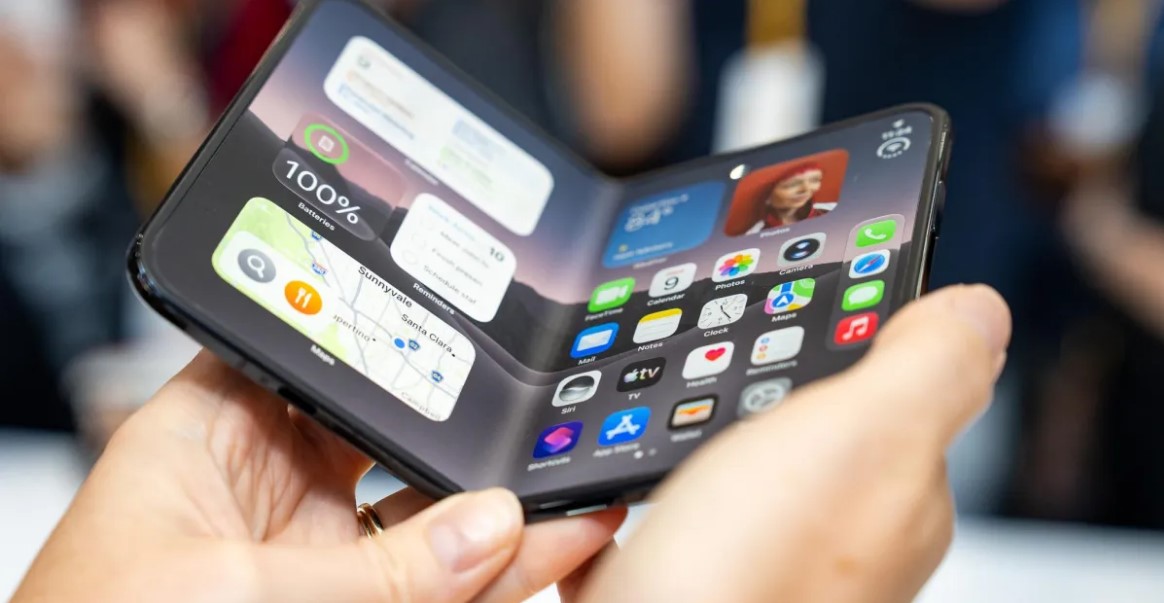
Apple has confirmed it will release a foldable iPhone in September 2026, priced at $1,999, featuring a crease-free display and the largest battery ever in an iPhone. The device will open like a book, with a 5.49-inch outer screen and a 7.76-inch inner display when unfolded.
The design priority is eliminating the crease that mars most current foldables. Apple developed a new hinge material specifically to remove the visible line where the screen folds. Engineering the crease away required overcoming significant technical challenges, but Apple pursued the solution “regardless of cost.”
The foldable iPhone will feature dual 48-megapixel cameras and the largest battery capacity ever installed in any iPhone. The device will use a Touch ID power button similar to iPad models, with no Face ID system for facial recognition unlock. This diverges from Apple’s recent iPhone design philosophy but reflects the practical constraints of building a foldable form factor.

Mass production was originally scheduled to begin in June 2026 but was pushed back to August due to manufacturing complexity. Analysts expect limited supply at launch given the technical difficulty of producing foldable displays at scale. Broader availability is projected for early 2027.
The official name hasn’t been confirmed. Rumors refer to it as either the “iPhone Fold” or the “iPhone Ultra,” but Apple hasn’t announced which will be the final designation.
The $1,999 price positions the foldable as a premium device significantly more expensive than standard iPhone 18 models. The price reflects not just the foldable technology but also Apple’s strategy of creating a distinct product tier for early adopters and professionals willing to pay for cutting-edge form factors.
The foldable iPhone represents Apple’s response to Samsung’s Galaxy Fold success. Samsung has sold millions of foldable phones over several generations. Apple’s late entry into the market comes with the advantage of learning from Samsung’s iterations and the disadvantage of entering a market where competitors have already established consumer familiarity.