

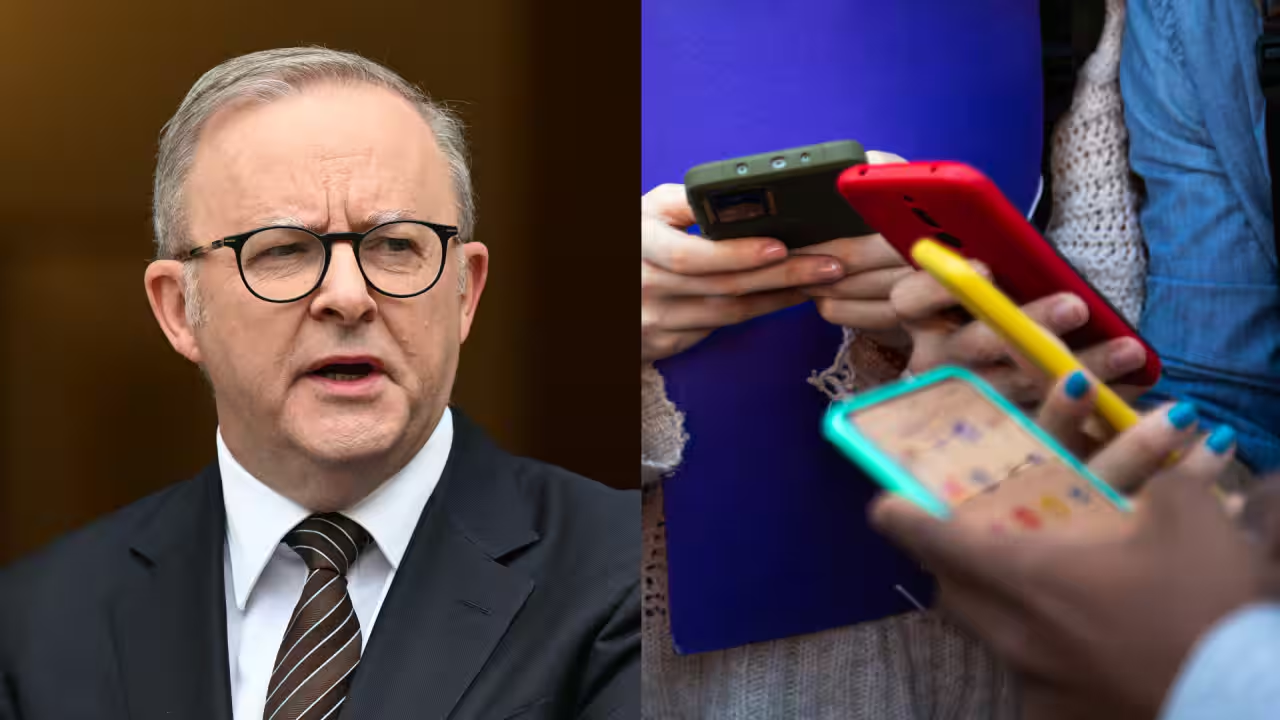
Australia enforced a major social media ban for users under 16 this month. The move affects access to platforms such as Facebook, Instagram, YouTube, and Reddit. It has become one of the most discussed digital policy shifts of 2025. The social media ban also changed how millions view online safety and tech rules worldwide.Many older users believed the change did not impact them. But 2025 brought a wide set of global shifts across tech platforms. These shifts affected user experiences everywhere, according to Reuters and other major outlets.
Social Media Ban in Australia and the Global Ripple Effect
The Australian government pushed the ban to protect children from harm and online abuse. The rule took effect nationwide this month. Some minors still have access, but most lost entry to major platforms. Officials said the goal was to reduce grooming, bullying, and exposure to adult content.The ban arrived during a year of major tech industry disruption. Meta dropped its fact-checking teams and shifted to crowd-based notes. According to Reuters, Meta also removed limits on content about immigration and gender topics. Digital rights groups said this raised the risk of hate speech and targeted attacks.OpenAI also drew attention. Its updated GPT-4o model produced images that looked like Studio Ghibli art. These AI images spread fast across digital spaces. Artists and rights groups raised concerns about copyright and misuse.Tensions rose in India and Pakistan after the Pahalgam attack in April. Social media became a battleground for harassment. Public figures calling for peace were targeted on the platform X. These actions showed how online spaces can fuel fear and conflict.
How the Ban Fits Into Wider Tech Controls and New Risks
The United States also tightened online checks. The return of Donald Trump brought stricter visa rules. The DS-160 form asked for social media accounts. Officials pushed for deeper screening of travelers from multiple countries. According to AP News, the new proposals would require five years of social media history.Big outages also shook the web. AWS went down on October 20 because of a DNS error. Services such as Canva, Amazon, and ChatGPT stopped working. A month later, Cloudflare saw a failure in its bot management system. This outage hit X, OpenAI, LinkedIn, and other major platforms.The outages showed how much of the internet depends on a few companies. When one fails, large parts of the web go dark. Experts say this raises questions about resilience and digital safety.
What These Shifts Mean for the Future of Digital Platforms
The social media ban in Australia is now a test case. Governments worldwide are watching the results. Some may copy the rule if it reduces harm. Others may resist it on free speech grounds.Users also face new uncertainty. Platforms are changing rules fast. AI tools are growing stronger. And outages remind people how fragile the web can be.
Iran Protests Surge as Economy Falls and Public Anger Spreads Nationwide
The social media ban in Australia may shape the next stage of online safety debates. It puts pressure on tech firms and governments to rethink digital risks. More changes seem likely as the world adapts to a tense and shifting online landscape.
FYI (keeping you in the loop)-
Q1: Why did Australia pass a social media ban for under-16s?
The ban aims to protect children from online harm. It blocks minors from using major platforms. Officials say safety is the top priority.
Q2: Which platforms are affected?
The rule applies to sites like Facebook, Instagram, YouTube, Reddit, and others. Any service with open social features is included.
Q3: Did global users feel the impact too?
Yes. Major tech changes in 2025 affected users worldwide. Meta’s new rules, AI image trends, and network outages shaped daily online use.
Q4: How did the AWS and Cloudflare outages affect people?
The outages shut down key apps and sites for hours. They showed how dependent the web is on a small number of infrastructure providers.
Q5: Why did social media screening increase in U.S. visa applications?
The U.S. government expanded security checks. Travelers must now share more online history. Officials say it helps assess risk.
Trusted Sources: Reuters, AP News, BBC News
iNews covers the latest and most impactful stories across
entertainment,
business,
sports,
politics, and
technology,
from AI breakthroughs to major global developments. Stay updated with the trends shaping our world. For news tips, editorial feedback, or professional inquiries, please email us at
[email protected].
Get the latest news and Breaking News first by following us on
Google News,
Twitter,
Facebook,
Telegram
, and subscribe to our
YouTube channel.


