A colony of black fungi is thriving inside the Chernobyl nuclear reactor. Scientists discovered these resilient organisms years after the 1986 disaster. They grow on the walls of the most radioactive areas.
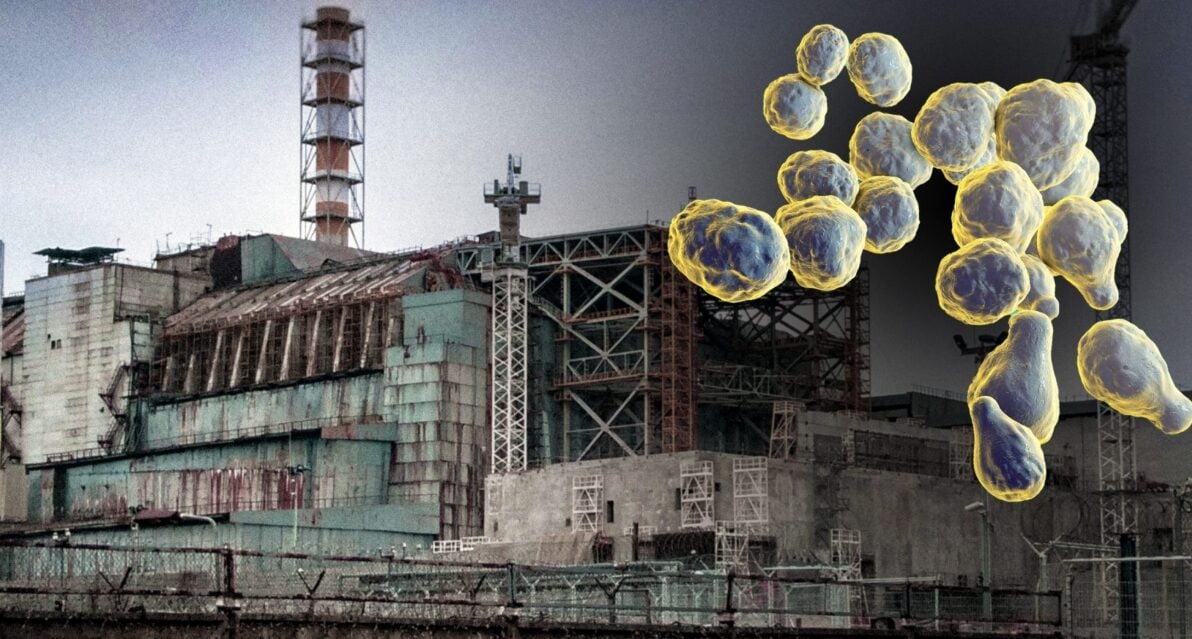
This finding challenges our understanding of life. The fungi do not just survive there. They appear to grow better because of the radiation.
Melanin’s Protective Power in Extreme Radiation
The dominant species is called Cladosporium sphaerospermum. It forms dark, mold-like patches. Its black color comes from a high concentration of melanin.
Melanin is the same pigment that protects human skin from sunlight. In this fungus, it seems to shield against intense ionizing radiation. According to Reuters, researchers found over three dozen fungal species in the zone.
Many of them were melanin-rich. The fungi were collected from inside the ruined reactor building. Their ability to prosper there is extraordinary.
The Radiosynthesis Hypothesis: Feeding on Gamma Rays?
Scientists have proposed a groundbreaking theory. They call it “radiosynthesis.” It suggests the fungi use melanin to convert gamma radiation into chemical energy. This process would be similar to plants using sunlight.
Laboratory experiments support the idea. Research led by Ekaterina Dadachova exposed the fungi to radiation. The organisms grew significantly faster compared to control samples.
Some evidence even suggests “radiotropism.” This means the fungi may grow toward radiation sources. However, the full metabolic process is not yet proven. The exact mechanism remains a topic of intense study.
From Nuclear Ruins to Space Exploration
The unique properties of Chernobyl fungi have captured NASA’s attention. The space agency sent samples to the International Space Station. An experiment in 2022 tested the fungus as a radiation shield.
Early results were promising. A thin layer of the fungus reduced incoming cosmic radiation on the ISS. This opens a path for biological shielding on long space missions.
Back on Earth, the applications focus on bioremediation. The fungi could help clean up contaminated sites like Fukushima. Their natural resilience offers a blueprint for new technologies.
The black fungi of Chernobyl demonstrate life’s incredible adaptability. Their potential for radiation shielding and cleanup is now being seriously explored. The story of these organisms continues to unfold, blending disaster with discovery.
Info at your fingertips
What is special about the Chernobyl fungus?
It thrives in extremely high radiation inside the ruined reactor. Scientists believe its melanin may help it harness energy from radiation, a potential process called radiosynthesis.
Has radiosynthesis been proven?
No, it remains a compelling hypothesis. Experiments show the fungi grow better with radiation, but the complete biochemical pathway for converting radiation to energy is not yet confirmed.
How is NASA using this fungus?
NASA tested it on the International Space Station as a potential biological radiation shield. Early data indicated it could block a portion of harmful cosmic radiation.
Can it help clean up nuclear sites?
It could inspire bioremediation techniques. The fungus’s ability to withstand and potentially process radioactive elements might inform new methods for environmental cleanup.
Where exactly was the fungus found?
It was discovered growing on the interior walls of the Chernobyl Nuclear Power Plant’s damaged Reactor Four, one of the most radioactive environments on Earth.
iNews covers the latest and most impactful stories across
entertainment,
business,
sports,
politics, and
technology,
from AI breakthroughs to major global developments. Stay updated with the trends shaping our world. For news tips, editorial feedback, or professional inquiries, please email us at
[email protected].
Get the latest news and Breaking News first by following us on
Google News,
Twitter,
Facebook,
Telegram
, and subscribe to our
YouTube channel.