A thick blanket of toxic smog engulfed Delhi-NCR early on December 20. The city’s Air Quality Index soared into the ‘severe’ category, hitting a high of 429. This dangerous pollution severely reduced visibility and disrupted air travel.
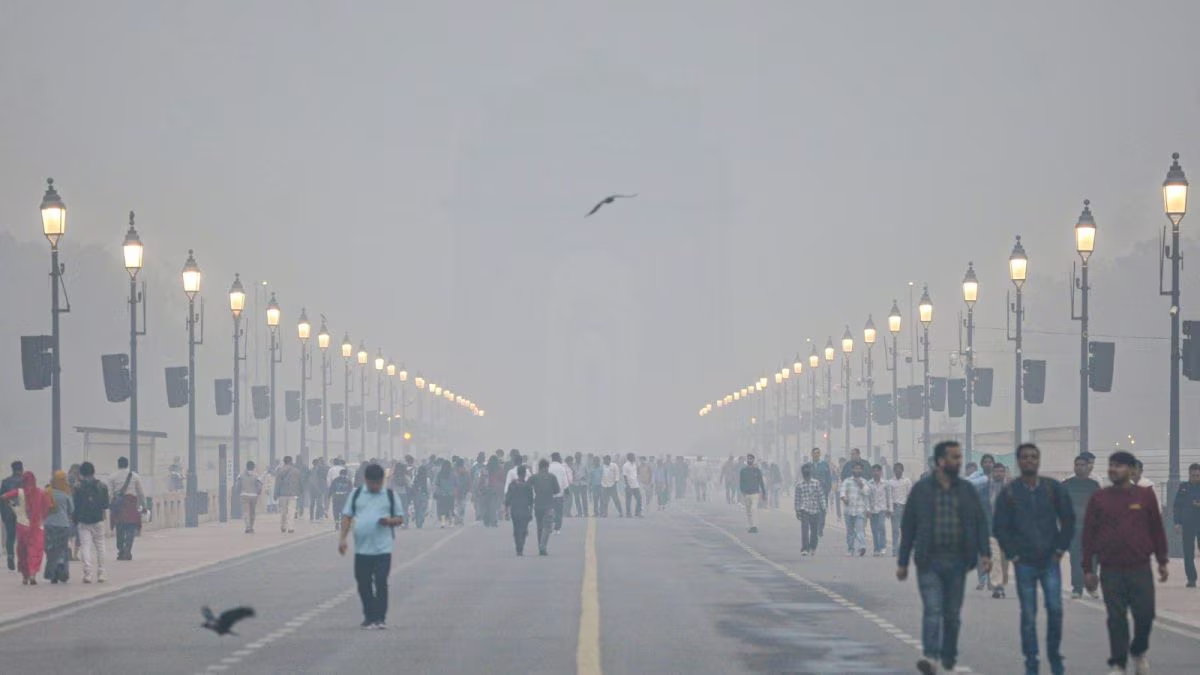
Officials immediately enforced the strictest anti-pollution measures. The Commission for Air Quality Management invoked GRAP Stage-IV across the entire region. This action aims to curb emissions from major sources as a public health emergency unfolds.
Detailed AQI Readings and Immediate Health Hazard
Data from the Central Pollution Control Board painted a grim picture. While Delhi’s overall AQI was 380, categorized as ‘very poor’, several locations recorded far worse numbers. Key monitoring stations reported severe pollution levels.
According to CPCB readings, ITO recorded an AQI of 429. Anand Vihar and Sarai Kale Khan both registered 428. Akshardham and Ashok Vihar also showed severe readings above 400. This consistent data confirms a widespread and hazardous pollution event.
Stringent GRAP Measures and Flight Disruptions
The invoked GRAP Stage-IV plan imposes immediate bans. Non-essential construction work is now prohibited across Delhi-NCR. The entry of certain diesel vehicles into the capital has also been stopped.
The dense smog had a direct impact on travel. The Airports Authority of India issued a weather alert for Northern India. They warned passengers of significant flight delays and disruptions due to very low visibility.
On the previous day, dense fog caused massive airport chaos. Over 500 flights were delayed at Delhi’s Indira Gandhi International Airport. At least 177 flights were cancelled outright, stranding thousands of travelers.
The return of severe toxic smog has triggered a full pollution control response in Delhi-NCR. With the AQI hitting severe levels, authorities are scrambling to protect public health and restore normalcy.
Thought you’d like to know
What health risks does a ‘severe’ AQI pose?
A ‘severe’ AQI level poses serious health risks to everyone, not just vulnerable groups. It can trigger respiratory illnesses, aggravate asthma, and cause eye and throat irritation. Authorities advise minimizing outdoor exposure.
What does GRAP Stage-IV mean for daily life?
GRAP Stage-IV includes a ban on most construction activities and certain diesel vehicles. It may also lead to additional measures like odd-even road rationing if the situation persists, significantly affecting daily commutes and business.
How should air passengers prepare for delays?
Passengers should contact their airline directly for real-time updates. They are also advised to allow considerable extra time for travel to the airport. Relying on official airport channels is crucial for accurate information.
What are the main causes of this toxic smog?
The smog is typically a combination of vehicle emissions, industrial pollution, and dust. Weather conditions like low wind speed and high humidity trap these pollutants close to the ground, creating the dense, toxic layer.
How long is this severe pollution episode expected to last?
The duration depends heavily on changes in weather patterns, particularly wind speed. Forecasts from meteorological departments are key, as stronger winds are needed to disperse the accumulated pollutants.
জুমবাংলা নিউজ সবার আগে পেতে Follow করুন জুমবাংলা গুগল নিউজ, জুমবাংলা টুইটার , জুমবাংলা ফেসবুক, জুমবাংলা টেলিগ্রাম এবং সাবস্ক্রাইব করুন জুমবাংলা ইউটিউব চ্যানেলে।