

Delhi’s air quality remained dangerously poor on Monday, December 15th. The city recorded an Air Quality Index (AQI) of 457, firmly in the ‘severe’ category. This follows Sunday’s reading of 461, which was the season’s worst and the second-most polluted December day ever recorded for the capital.
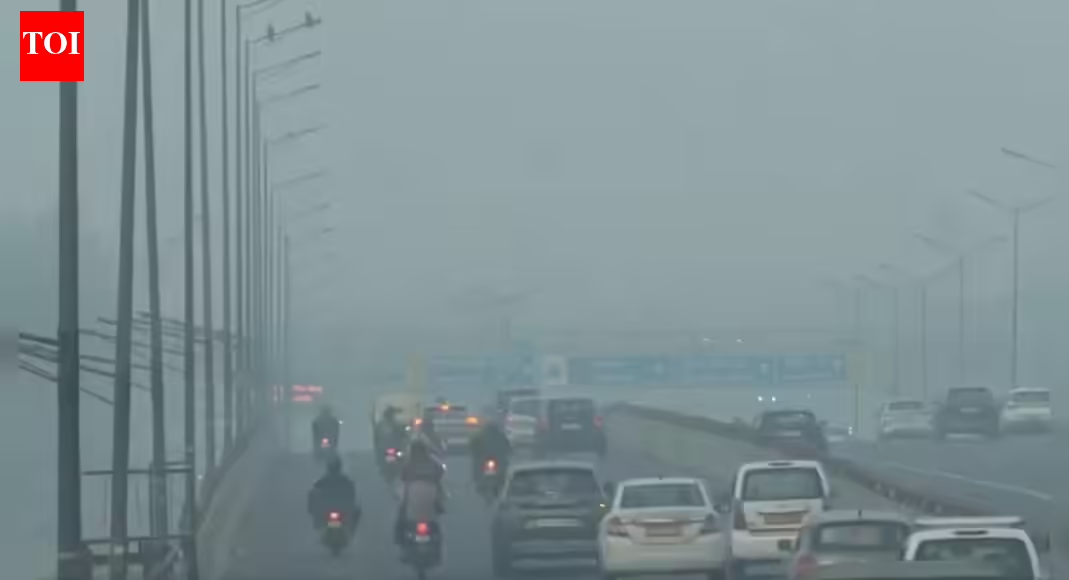 Despite the activation of the strictest anti-pollution measures, a thick haze blanketed the city. Officials confirmed the persistent pollution levels, with some areas like Wazirpur hitting the maximum AQI of 500.
Widespread Hazardous Conditions Grip the Region
The pollution was not confined to Delhi alone. According to CPCB data released Sunday, several neighboring cities also suffered. Noida registered an AQI of 466. Ghaziabad recorded 459. Bahadurgarh reached 464.
Locally, Bawana recorded a staggering AQI of 497 early Sunday. Narela and Okhla Phase 2 followed closely with readings of 492 and 474 respectively. Visibility dropped sharply in key areas like ITO and Anand Vihar, disrupting daily life.
Stringent Measures Enforced Under GRAP Stage IV
In response to the crisis, authorities invoked Stage IV of the Graded Response Action Plan. This represents the highest level of emergency curbs. The Commission for Air Quality Management mandated an immediate ban on all construction and demolition work across Delhi-NCR.
Entry of most trucks into Delhi is now prohibited. Only vehicles carrying essential goods or using cleaner fuels are exempt. Additionally, a ban is in place on Delhi-registered diesel trucks that do not meet the latest BS-VI emission standards.
Schools have shifted to hybrid learning models for numerous grades. State governments have also been advised to consider more drastic steps. These potential measures include closing colleges and implementing an odd-even vehicle rationing scheme.
Info at your fingertips
What is the current AQI category for Delhi?
As of early Monday, Delhi’s AQI was 457. This places it in the ‘Severe’ category, which is the most hazardous level on the scale. The category signifies a health emergency for the entire population.
What does GRAP Stage IV mean for daily life?
Stage IV imposes the strictest pollution curbs. It halts all construction, severely restricts truck traffic, and mandates hybrid schooling for many classes. Authorities may consider even tighter restrictions like odd-even rules for cars.
Which areas were most affected?
On Sunday, Bawana recorded the highest AQI at 497. Wazirpur reached the scale’s maximum of 500 early Monday. The entire Delhi-NCR region, including Noida, Ghaziabad, and Bahadurgarh, reported ‘Severe’ air quality levels.
How does ‘Severe’ air affect health?
Air in the ‘Severe’ category poses serious health risks to everyone, not just vulnerable groups. Prolonged exposure can trigger respiratory illness and cardiovascular problems in otherwise healthy individuals.
Why is pollution so bad in winter?
Colder temperatures trap pollutants closer to the ground in a phenomenon called temperature inversion. This, combined with emissions from vehicles, industry, and seasonal agricultural burning, creates the toxic smog.
What was Sunday’s significance?
Sunday’s AQI of 461 marked the most polluted day of this winter season in Delhi. It also ranked as the second-worst December day for air quality in the city’s recorded history.
iNews covers the latest and most impactful stories across
entertainment,
business,
sports,
politics, and
technology,
from AI breakthroughs to major global developments. Stay updated with the trends shaping our world. For news tips, editorial feedback, or professional inquiries, please email us at
[email protected].
Get the latest news and Breaking News first by following us on
Google News,
Twitter,
Facebook,
Telegram
, and subscribe to our
YouTube channel.


