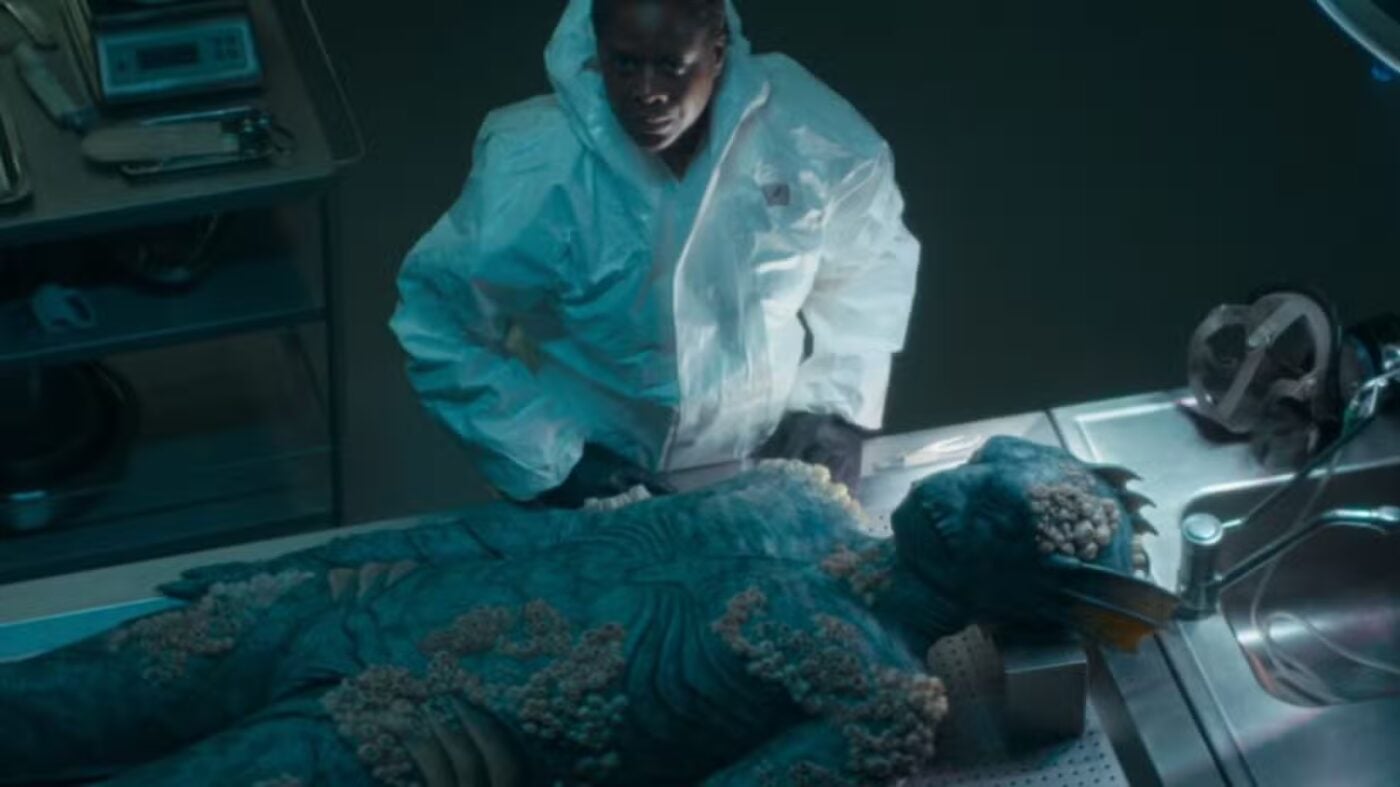
The finale of the Doctor Who spinoff, “The War Between the Land and the Sea,” has dramatically reshaped the show’s universe. The series concluded its run on BBC One on December 7, 2025. It presented a grim resolution to the hidden war between humanity and the aquatic Aquakind.
This miniseries is a canonical part of the Doctor Who lore established during the BBC’s partnership with Disney. Its shocking events now create new narrative obligations for showrunner Russell T Davies. The fallout must be addressed when the main series returns.
Aquakind Devastated by Secret Human Bioweapon
The finale revealed a clandestine operation codenamed “Severance.” According to the narrative, human forces developed a lethal virus designed to target Aquakind. This bioweapon spread rapidly through the world’s oceans.
The result was catastrophic for the sea-dwelling species. The virus successfully eradicated approximately 90% of the entire Aquakind population. This group was formerly known as the classic Doctor Who monsters, the Sea Devils.
This act effectively ends their potential as a large-scale threat. With only a tenth of their species remaining, their capacity for war is gone. Their future appearances would require a completely different narrative context.
UNIT Leader’s Fate Sets Up Troubling Future Stories
The spinoff also delivered a pivotal character arc for UNIT commander Kate Lethbridge-Stewart. Played by Jemma Redgrave, Kate is deeply traumatized by the loss of her colleague, Colonel Christofer Ibrahim. Her mental state deteriorates significantly by the story’s end.
In a final disturbing scene, Kate threatens a civilian at gunpoint over a minor littering incident. This overreaction suggests unchecked PTSD and a dangerous shift in her character. It presents a major problem for the unified command of UNIT.
Her instability creates a compelling new challenge for the Doctor. The Time Lord’s trusted ally on Earth may now be compromised. This sets a tense stage for their inevitable next meeting in the main series.
The Doctor Who spinoff finale has permanently altered the franchise’s landscape with its dark conclusion. The genocide of Aquakind and the fracture of a key hero redefine the narrative boundaries. These events ensure the main show’s return must grapple with a profoundly changed world.
Info at your fingertips
What is “The War Between the Land and the Sea”?
It is a gritty Doctor Who spinoff miniseries that aired on BBC One. The story focused on a secret war between humanity and the aquatic Aquakind, formerly known as the Sea Devils. It concluded the BBC’s production deal with Disney.
How did the spinoff affect the Sea Devils?
The finale revealed a human bioweapon killed 90% of their population. This devastating genocide, called Operation Severance, leaves the species nearly extinct. Their role as a major villainous force is effectively over.
Why wasn’t the Doctor in the spinoff?
Character Kate Lethbridge-Stewart explained the Doctor’s stance. He reportedly said he saves the human race but does not shape it. Since the conflict was between two Earth species, he chose not to intervene directly.
What happened to Kate Lethbridge-Stewart?
The UNIT leader suffered severe PTSD after her colleague’s death. The finale showed her emotionally unstable, even threatening a civilian. This breakdown poses a serious problem for Earth’s primary defense organization.
Is this spinoff considered official Doctor Who canon?
Yes, all live-action content produced under the BBC-Disney partnership is canonical. This includes “The War Between the Land and the Sea.” Its events are now part of the official Doctor Who timeline and continuity.
Who created the spinoff series?
While specific writer credits for the finale are not detailed here, the overall Doctor Who franchise is led by showrunner Russell T Davies. The spinoff falls under the broader creative direction of the BBC’s Doctor Who production team.
জুমবাংলা নিউজ সবার আগে পেতে Follow করুন জুমবাংলা গুগল নিউজ, জুমবাংলা টুইটার , জুমবাংলা ফেসবুক, জুমবাংলা টেলিগ্রাম এবং সাবস্ক্রাইব করুন জুমবাংলা ইউটিউব চ্যানেলে।