A powerful new documentary from Gaza arrives in U.S. theaters this week. The film, Put Your Soul on Your Hand and Walk, offers an intimate look at civilian life under bombardment. It premieres amid ongoing conflict and deep personal loss for its director.
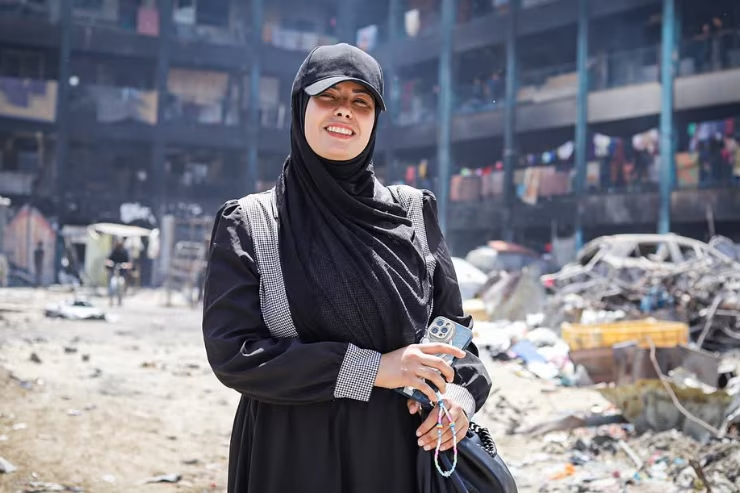
The film is built around video calls with Palestinian photojournalist Fatma Hassona. She was killed in an Israeli airstrike in April 2025. Her death occurred just after the film was selected for the Cannes Film Festival.
Creating Intimacy Amidst Impossibility
Director Sepideh Farsi started the project in early 2024. She felt Palestinian civilian voices were absent from mainstream media coverage. According to The Hollywood Reporter, Farsi, an Iranian filmmaker, wanted to understand daily life during the war.
Travel to Gaza was impossible due to closed borders. Farsi instead forged a digital connection with Hassona. The film is composed of their shaky video calls and Hassona’s own stark photographs. This method creates a raw, immediate portrait unlike traditional war documentaries.
A Film’s Journey and a Widening Conversation
The documentary’s release comes during a shifting media landscape. Farsi notes that criticism of the war is now more visible, though she calls it timid. The film has sparked strong emotional responses at European screenings, with audiences expressing grief and anger.
Kino Lorber began the U.S. rollout with a New York premiere on November 5. The release coincides with renewed debate over Gaza coverage. It also follows the election of New York City’s first Muslim mayor, Zohran Mamdani, who is publicly pro-Palestinian.
The film stands as a testament to Fatma Hassona’s resilience and joy. Its North American release aims to amplify Palestinian voices. It transforms a personal collaboration into a lasting cinematic memorial.
A quick knowledge drop for you
What is the documentary ‘Put Your Soul on Your Hand and Walk’ about?
It is a film built around video calls with Palestinian photojournalist Fatma Hassona. It documents daily civilian life in Gaza during the war. The project aimed to capture a perspective missing from mainstream news.
Who was Fatma Hassona?
Fatma Hassona was a Palestinian photojournalist living in Gaza. She became the director’s collaborator and the central voice of the film. She was killed in an Israeli airstrike in April 2025.
Where can I watch the documentary?
Kino Lorber is handling its North American distribution. The rollout began with a premiere at New York’s IFC Center. It will expand to other theaters and likely streaming platforms.
How has the industry received the film?
It has sold to distributors across Europe, Australia, Japan, and Canada. Notably, it has found no distribution interest in Germany so far. Its Cannes selection provided significant early prestige.
What has the audience reaction been?
Screenings have provoked intense emotional responses. Viewers report feelings of sorrow, rage, and gratitude. The film has opened spaces for public discussion that many felt were previously silenced.
What does the director hope the film achieves?
Sepideh Farsi hopes it fosters human connection and empathy. She is ambivalent about its power to change political decisions. However, she believes it creates vital space for conversation and mourning.
iNews covers the latest and most impactful stories across
entertainment,
business,
sports,
politics, and
technology,
from AI breakthroughs to major global developments. Stay updated with the trends shaping our world. For news tips, editorial feedback, or professional inquiries, please email us at
[email protected].
Get the latest news and Breaking News first by following us on
Google News,
Twitter,
Facebook,
Telegram
, and subscribe to our
YouTube channel.