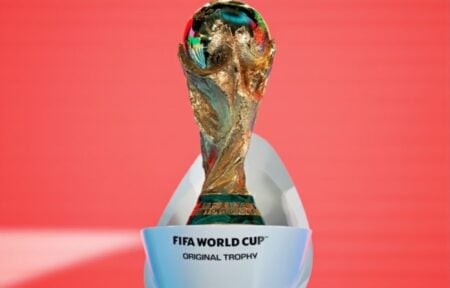
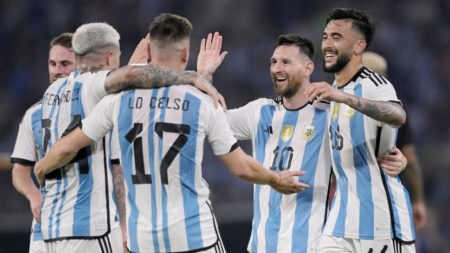
The ‘group of death’ FIFA World Cup 2026 debate is heating up after the official draw on December 5 in Washington, D.C. Fans and analysts immediately identified Group I and Group L as the tournament’s toughest groups. Both feature multiple heavyweight nations and high-upside challengers capable of eliminating top teams early.
The expanded 48-team format and 12-group structure create more parity, but these two groups stand out for their balance, star power, and upset potential. Early reactions from global media, including major outlets such as Reuters and BBC News, also highlight these groups as the most competitive in the field.
How the ‘group of death’ FIFA World Cup 2026 conversation formed
The conversation centers largely on Group I and Group L, each featuring a dangerous mix of elite programs and rising contenders. Group I contains France, Senegal, Norway, and the FIFA Playoff 2 winner. France remains one of the world’s deepest squads with recent finals appearances. Senegal enters as Africa’s most stable football power with high-level talent. Norway features Erling Haaland and Martin Ødegaard, both capable of changing a match instantly.
The final spot in the group goes to the FIFA Playoff 2 winner. That team is expected to bring physical play and disciplined structure, creating an unpredictable environment where every match matters. Analysts note that even France faces real risk in a group where all three opponents can take points.
Group L presents a different but equally dangerous dynamic. England and Croatia bring knockout-stage pedigree and global expectations. Ghana regularly challenges top European sides and is known for its speed and physicality. Panama enters as the underdog but has a reputation for defensive organization and low-margin matches. All four nations can influence the standings, making it a rare group where three teams could realistically win it while the fourth can derail ambitions.
Trusted coverage from international sports desks underscores the depth across both groups, noting that they align with the traditional definition of a “group of death”: no weak links, multiple elite programs, and real elimination threats for global powerhouses.

What makes these groups uniquely difficult in 2026
The 2026 World Cup format reshapes group-stage dynamics. With more teams and narrower margins for advancement, balanced groups present higher risk. Group I offers extreme star power, tactical variability, and physical matchups. France is a title contender, but Senegal’s cohesion and Norway’s attacking strength reduce any safe assumptions.
Group L mirrors this challenge from top to bottom. England enters with one of its deepest squads in history. Croatia continues to excel in high-pressure settings and remains a tactical problem for any opponent. Ghana brings unpredictability and athletic advantage, while Panama’s disciplined approach means no team is guaranteed an easy result.
Major outlets such as Associated Press note that tournament parity has increased significantly since 2018 and 2022. That trend amplifies risk for favorites in tightly packed groups. A single draw or late goal could shift qualification.
What this means for the tournament ahead
These designations rarely remain symbolic. A difficult group often reshapes knockout-stage paths and determines early tournament drama. Group I and Group L will likely deliver high-stakes matches from the opening whistle. Early missteps could cost even the strongest nations.
Fans are already circling these groups as focal points for the opening rounds. Tournament organizers expect strong global viewership for these matchups, especially with star-driven storylines and unpredictable outcomes.
As the ‘group of death’ FIFA World Cup 2026 debate continues, Group I and Group L stand as the clearest candidates. Both offer a demanding mix of elite pedigree and upset potential, promising some of the most dramatic moments of the early tournament.
FYI (keeping you in the loop)-
Q1: What defines the ‘group of death’ at the FIFA World Cup 2026?
It is a group with no weak team, multiple top contenders, and real elimination risk for a powerhouse. Group I and Group L fit that definition closely.
Q2: Why is Group I considered one of the toughest?
France, Senegal, and Norway offer elite talent and strong recent form. The playoff winner adds more unpredictability.
Q3: What makes Group L equally dangerous?
England and Croatia bring proven tournament strength. Ghana and Panama can disrupt the standings with their physical play and discipline.
Q4: Could another group emerge as the ‘group of death’ later?
Yes. Tournament form and injuries can shift perceptions. Early upsets may reshape which group looks most dangerous.
Q5: How does the 48-team format impact group difficulty?
The wider field increases competitive balance. More teams means more unpredictable matchups and higher stakes in every game.
iNews covers the latest and most impactful stories across
entertainment,
business,
sports,
politics, and
technology,
from AI breakthroughs to major global developments. Stay updated with the trends shaping our world. For news tips, editorial feedback, or professional inquiries, please email us at
[email protected].
Get the latest news and Breaking News first by following us on
Google News,
Twitter,
Facebook,
Telegram
, and subscribe to our
YouTube channel.