

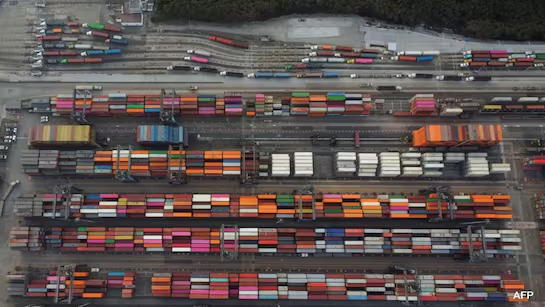
Mexico will impose heavy new tariffs on imports from India starting in 2026. The move threatens three-quarters of India’s current exports to its key Latin American market. According to a report from the Global Trade Research Initiative, this fundamental shift will severely impact Indian competitiveness.The Mexican Senate approved the sweeping tariff overhaul in December. The changes raise duties on goods from countries without a free-trade agreement to as high as 50%. This action aligns Mexico with a more protectionist US trade policy ahead of a major regional pact review.
Sectors Brace for Uneven Impact as Duties Skyrocket
The new structure will impose duties of 5% to 50% on imports from India and other non-FTA partners. For most products, tariffs will jump from 0-15% to around 35%. A few strategic items, primarily steel, will face a punitive 50% rate.The impact on Indian exporters will be severe but uneven. Pharmaceutical exports will remain relatively insulated. Duties there will increase only marginally, allowing generic drugs to stay competitive. This sector exported $197 million to Mexico last fiscal year.Metal exports face the steepest barriers. Aluminium exports will see duties rise from 5-10% to 25-35%. Iron and steel exports face the harshest climb, from 10-15% to 35-50%. This makes Indian steel commercially unviable in Mexico overnight.
Auto, Electronics, and Textile Industries Hit Hard
Passenger vehicles, India’s single-largest export to Mexico, will see tariffs rise from 20% to 35%. This weakens India’s position in a market heavily influenced by North American trade rules. Auto component exports will be hiked from 10-15% to 35%, disrupting supply chains.Electronics and machinery will be hit hard. Smartphones, which currently enter duty-free, will attract a 35% tariff. This effectively shuts down India’s handset exports. Industrial machinery will see duties rise from 5-10% to 25-35%.Labour-intensive sectors like garments and ceramics also face pressure. Tariffs will climb from 20-25% to 25-35%. This threatens exports largely driven by small and medium businesses. India exported nearly $5.75 billion worth of goods to Mexico last year.
Warner Bros. Acquisition Bidding War Puts Movie Theater Industry on Edge
The Mexico tariff hike represents a critical juncture for Indian exporters. This move forces a urgent rethink of market diversification strategies. The weakening global trade system demands new resilience from key industries.
Info at your fingertips
What is the main reason for Mexico’s tariff hike?
Analysts see the move as Mexico aligning with U.S. protectionist trade policy. It signals support for tightening North American supply chains ahead of the 2026 USMCA agreement review.
Which Indian exports are most affected?
Metals, automobiles, auto parts, and electronics face the steepest duty increases. Steel tariffs could reach 50%, while smartphones will jump from 0% to 35%.
Are any Indian exports exempt from the hikes?
Pharmaceuticals are less affected. Duties will increase only slightly, from 0-5% to 0-10%, allowing generic drugs to remain competitive in the Mexican market.
Will India retaliate with its own tariffs?
India is unlikely to retaliate directly. Its imports from Mexico are only about half the value of its exports, providing little economic leverage for a tit-for-tat response.
What are Indian exporters doing now?
Industry bodies are urging the government to pursue a free-trade agreement with Mexico. Meanwhile, companies are being advised to diversify their export markets rapidly to build resilience.
How significant is Mexico as a trade partner for India?
Mexico is India’s second-largest export destination in Latin America after Brazil. The $5.75 billion trade relationship is now fundamentally at risk due to the new policy.
iNews covers the latest and most impactful stories across
entertainment,
business,
sports,
politics, and
technology,
from AI breakthroughs to major global developments. Stay updated with the trends shaping our world. For news tips, editorial feedback, or professional inquiries, please email us at
[email protected].
Get the latest news and Breaking News first by following us on
Google News,
Twitter,
Facebook,
Telegram
, and subscribe to our
YouTube channel.

