A major government study has exposed critical flaws in how India stores its pulses. The research found inconsistent and unscientific practices in warehouses across the country. This is leading to significant waste of a vital protein source.The findings raise serious concerns for national food security. They come as India struggles with domestic shortages and heavy import dependence. Better storage is seen as key to reducing losses and stabilizing supply.
Widespread Warehouse Problems Lead to Avoidable Losses
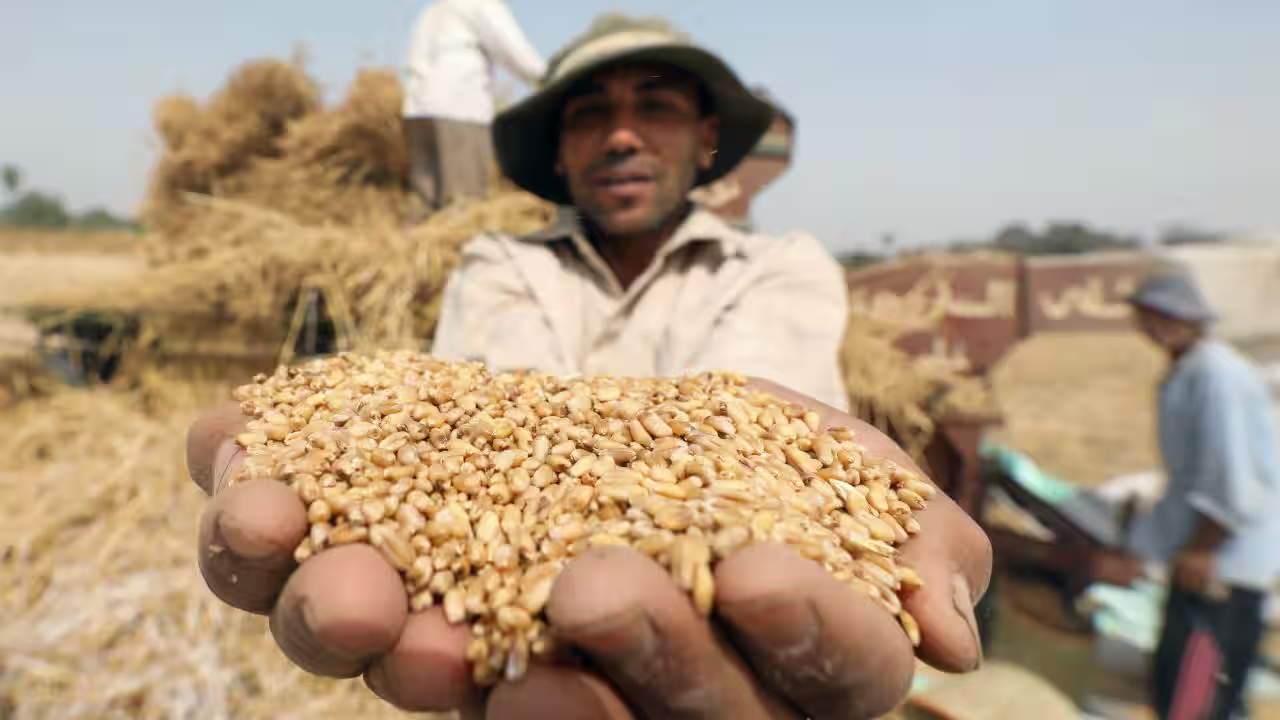
The study examined over 500 stacks of pulses in 101 warehouses. It tracked chickpea, pigeon pea, lentil, and other staples for a full year. Investigators found wide variations in temperature, humidity, and pest control.These poor conditions make pulses far more vulnerable than grains during storage. According to the report, high moisture and poor aeration damage cooking quality and color. They also increase the risk of severe insect infestation.The impact is a direct hit on availability and farmer income. About 9% of pulses are lost nationally due to post-harvest issues. Uniform scientific standards could drastically cut this waste. This would support the government’s mission for self-reliance.
Outdated Practices and the Push for Modern Standards
The report highlights the use of unsuitable thin plastic bags in many warehouses. It recommends thicker, airtight polypropylene bags instead. It also warns against outdated fumigation methods.Experts say current stacking standards are decades old. They fail to account for different pulse varieties. Each type reacts differently to storage conditions, requiring specific handling.The government has taken note of the findings. Officials are exploring the development of unified national storage norms. Modern, commodity-specific guidelines are seen as essential. They would preserve quality, improve food safety, and boost market confidence.
Indiana Pacers Stunned by Lowly Wizards in Disappointing Home Loss
The newly released study underscores a hidden vulnerability in India’s food chain. Solving the pulse storage crisis is now a critical step. It is vital for achieving nutritional security and reducing costly imports.
Thought you’d like to know
Why is pulse storage so important for India?
Pulses are a primary protein source for millions of Indians. Poor storage leads to massive annual waste, worsening domestic shortages and forcing the country to rely more on expensive imports to feed its population.
What percentage of pulses is lost after harvest?
Nationally, around 9% of pulses are lost due to post-harvest problems. A significant portion of this loss occurs because of unscientific storage conditions in warehouses across major producing states.
What did the government study find?
The study found wide variations in moisture, temperature, and pest control in pulse warehouses. It noted that fungal growth and insect damage appear quickly under poor conditions, rendering stocks unusable.
How does this affect the common consumer?
Storage losses contribute to lower domestic availability and higher market prices. They undermine government efforts to keep pulses affordable and accessible for everyday households.
What is the government doing about this issue?
Authorities are reviewing the study to develop unified national standards for pulse storage. This is part of a broader mission to increase domestic production and achieve self-reliance in pulses by 2030.
What are the recommended solutions?
The report recommends using specific thicker packaging, modern fumigation, and digital stock monitoring. It calls for commodity-specific guidelines instead of a one-size-fits-all approach to warehouse management.
iNews covers the latest and most impactful stories across
entertainment,
business,
sports,
politics, and
technology,
from AI breakthroughs to major global developments. Stay updated with the trends shaping our world. For news tips, editorial feedback, or professional inquiries, please email us at
[email protected].
Get the latest news and Breaking News first by following us on
Google News,
Twitter,
Facebook,
Telegram
, and subscribe to our
YouTube channel.