

A federal antitrust trial against NASCAR began in Charlotte, North Carolina on December 1, 2025. The lawsuit was filed by Cup Series teams 23XI Racing and Front Row Motorsports. The case centers on allegations that NASCAR illegally used monopoly power during charter agreement negotiations. A jury will decide the outcome over ten scheduled court days.The trial is the climax of over a year of legal battles. It questions the fundamental business relationship between the sanctioning body and its teams. According to reports from Racing America, the courtroom has been packed with media witnessing what could be a transformative case for the sport.
Emotional Testimonies and Internal Secrets Revealed
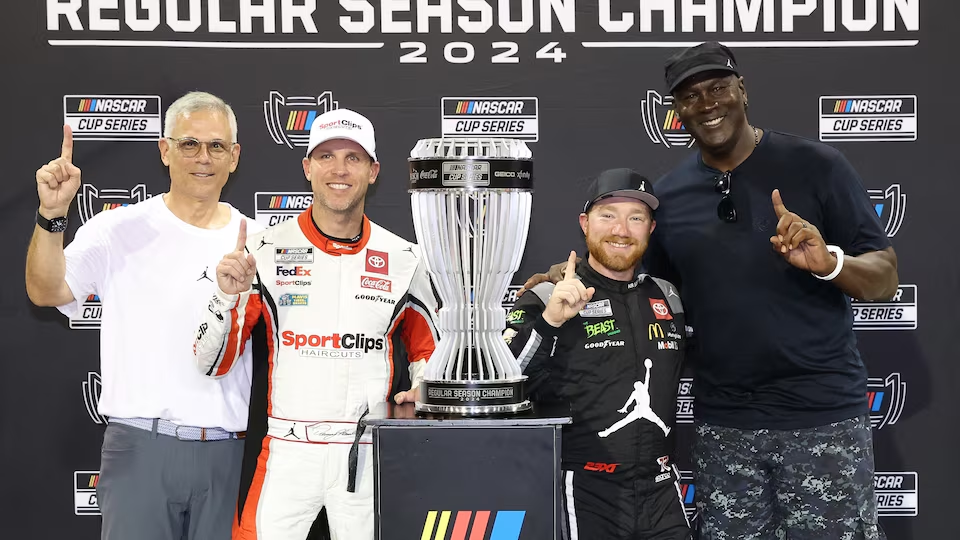
The trial’s first week featured dramatic witness testimony. Denny Hamlin, co-owner of 23XI Racing, became emotional while discussing his racing origins. He later testified about feeling muzzled by NASCAR. Hamlin claimed public praise for the sport was often just repeating “talking points” to avoid backlash.Internal NASCAR documents were presented as evidence. They revealed executives’ fears of a breakaway racing series, similar to the LIV Golf and PGA Tour conflict. Strategies to lock down racetracks with exclusive long-term agreements were outlined. An email thread showed executives frustrated with NASCAR leadership’s hardline stance in negotiations.Financial struggles were a key focus. Front Row Motorsports owner Bob Jenkins testified his team never turned a profit in two decades. He stated the charter system, meant to provide stability, failed to make his team financially healthy. Jenkins said he felt “insulted” by NASCAR’s suggestion that overspending was the core problem.
Broader Impact on the Future of Stock Car Racing
The trial’s outcome could reshape NASCAR’s economic model. The plaintiffs argue the 2025 charter agreement was signed under coercive conditions. They claim NASCAR set an artificial deadline and refused the teams’ top request: permanent charters. Several other team owners, including Richard Childress, testified they also felt forced to sign.NASCAR’s defense maintains it negotiated in good faith. The sanctioning body points to 13 teams signing the deal as proof it was fair. They argue the lawsuit was a predetermined plan by 23XI Racing’s investors. The jury must now weigh these competing narratives.The verdict will have immediate consequences for team valuations and investment. A win for the teams could force a complete overhaul of revenue sharing and charter terms. A win for NASCAR would solidify its current control over the sport’s commercial structure. The financial future of every team hangs in the balance.
Trump Faces Growing Pressure Over AI Regulation as Silicon Valley Pushes for Unified Rules
The jury’s decision in this NASCAR monopoly power trial will determine who controls the economic engine of America’s premier stock car racing series. The sport’s ownership model is officially on trial.
A quick knowledge drop for you:
What is a NASCAR charter?
A charter is a guaranteed entry into every Cup Series race. It provides teams with a share of certain race revenues. Introduced in 2016, it functions similarly to a franchise in other sports leagues.
Why are 23XI and Front Row Motorsports suing NASCAR?
The teams allege NASCAR abused its monopoly power during contract talks. They claim they were forced to sign an unfavorable charter agreement. The suit argues this violates federal antitrust laws designed to protect fair competition.
What is the main issue with the charter agreement?
The teams wanted charters to be permanent assets to build equity. NASCAR insisted on a seven-year term with renewal at its discretion. This lack of permanence, teams argue, stifles investment and limits their value.
How could this trial affect NASCAR fans?
The financial health of teams directly impacts competition. A stable, profitable model could attract more owners and sponsors. The outcome could influence team spending on drivers, technology, and overall race quality.
Who are the key witnesses in the trial?
Key witnesses include Denny Hamlin, Bob Jenkins, and NASCAR executives like Jim France and Steve Phelps. Legends like Richard Childress and Roger Penske are also on the potential witness list to discuss negotiation dynamics.
When is a verdict expected?
The trial is scheduled for ten court days through mid-December. A verdict from the six-person jury could come shortly after closing arguments. The timeline depends on the pace of testimony and cross-examination.
iNews covers the latest and most impactful stories across
entertainment,
business,
sports,
politics, and
technology,
from AI breakthroughs to major global developments. Stay updated with the trends shaping our world. For news tips, editorial feedback, or professional inquiries, please email us at
[email protected].
Get the latest news and Breaking News first by following us on
Google News,
Twitter,
Facebook,
Telegram
, and subscribe to our
YouTube channel.


