

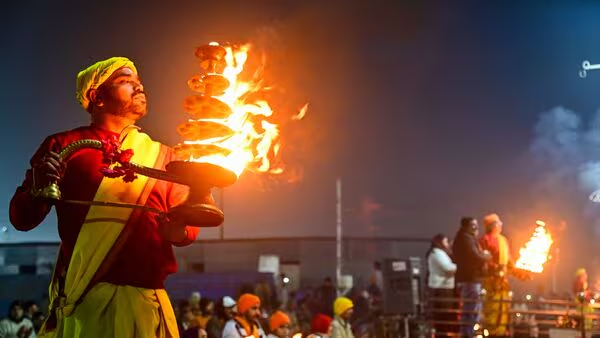
India welcomed 2026 with a profound display of faith. Thousands of devotees visited temples, rivers, and shrines on January 1st. Major religious hubs from Jammu to Puri saw massive gatherings.The day highlighted a nationwide preference for spiritual beginnings. According to ANI, pilgrims shared that connecting with their roots was a priority. This tradition marks a significant cultural start to the new calendar year.
Nationwide Temples and Rivers Witness Unprecedented Footfall
In Reasi, Jammu and Kashmir, the Shri Mata Vaishno Devi shrine attracted thousands. Pilgrim Jyoti Singh called her visit a blessing. The pilgrimage set a devotional tone for her year ahead.Uttar Pradesh was a major center of activity. Huge crowds gathered at the Shri Ram Janmabhoomi Temple in Ayodhya and the Kashi Vishwanath Temple in Varanasi. Devotees also took holy dips in the Ganga at Prayagraj and Haridwar.Nandini Joshi, an Ayodhya visitor, praised the peaceful management. She said starting the year with aarti and darshan was unforgettable. Similar scenes played out at the Golden Temple in Amritsar and the Kamakhya Temple in Guwahati.
A Cultural Reflection and Boost for Religious Tourism
This collective turn to devotion reflects a deep-seated cultural practice. For many families, it is about grounding the new year in tradition. It also serves as an important moment for generational connection.Jhoomar, a devotee in Haridwar, emphasized this for her children. She stated the visit was about connecting to roots and creating positive vibes. The day provided a significant boost to local religious tourism economies nationwide.
Why Taiwan President Vowed to Defend Sovereignty After Chinas Military Drills
The spiritual celebrations for New Year 2026 demonstrated India’s enduring cultural fabric. This widespread observance underscores a unifying national tradition of faith and renewal as a cornerstone for the year ahead.
Thought you’d like to know
Which temples saw the largest crowds on New Year 2026?
The Shri Mata Vaishno Devi shrine, Ayodhya’s Ram Janmabhoomi, and Varanasi’s Kashi Vishwanath were among the busiest. Major river ghats in Haridwar and Prayagraj also saw massive gatherings for ritual baths.
Were there any special arrangements for the crowds?
Yes, temple authorities made extensive arrangements. Visitors in Ayodhya specifically commended the peaceful and well-managed crowd control, allowing for smooth darshan and aarti ceremonies.
Did people travel from far away for this?
Absolutely. Reports indicated pilgrims traveled from across India. For instance, a devotee from Dwarka, Gujarat, visited Mathura specifically to start the year with Shri Krishna’s blessings.
What was the main reason people gave for visiting?
Most cited a desire for a spiritual beginning and to connect with cultural roots. Many also expressed wishes for peace, prosperity, and health for their families in the new year.
Were celebrations limited to northern India?
No, the fervor was nationwide. Significant gatherings were also reported at the Jagannath Temple in Puri, Odisha, and the Kamakhya Temple in Guwahati, Assam.
iNews covers the latest and most impactful stories across
entertainment,
business,
sports,
politics, and
technology,
from AI breakthroughs to major global developments. Stay updated with the trends shaping our world. For news tips, editorial feedback, or professional inquiries, please email us at
info@zoombangla.com.
Get the latest news and Breaking News first by following us on
Google News,
Twitter,
Facebook,
Telegram
, and subscribe to our
YouTube channel.


