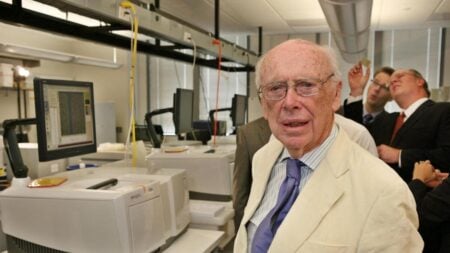
James D. Watson, the pioneering biologist who helped unlock the secret of life, has died. He was 97 years old. His death was confirmed by Cold Spring Harbor Laboratory. Watson passed away this week in a hospice on Long Island.
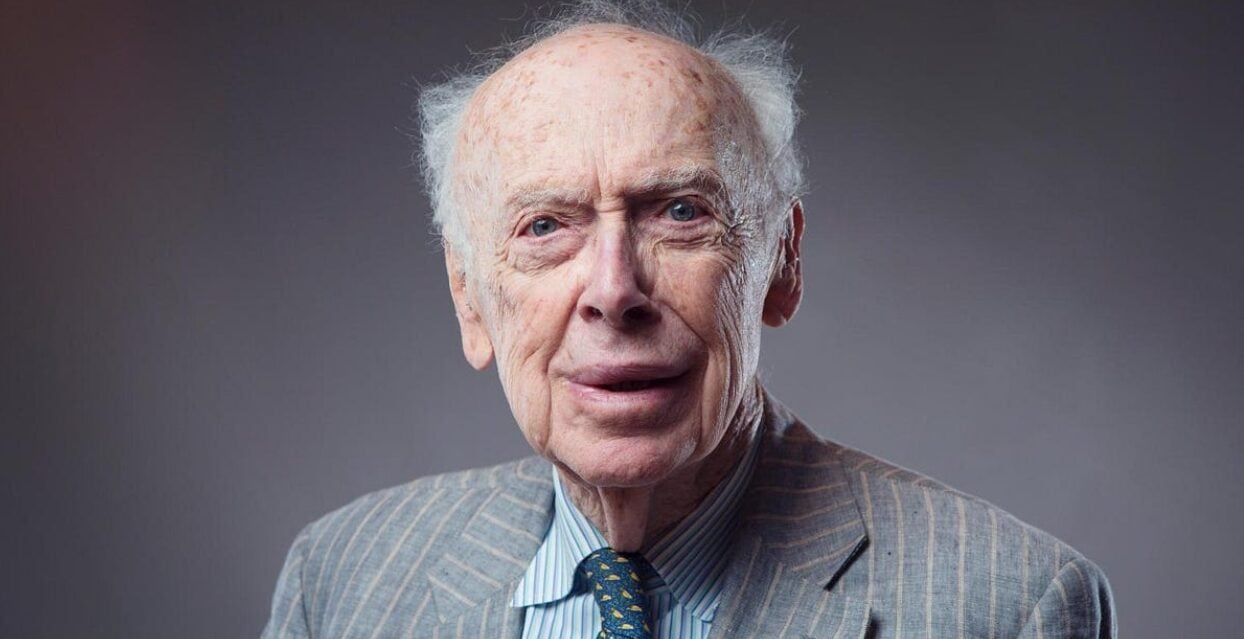
His 1953 discovery of DNA’s structure revolutionized science. It also made him a Nobel laureate. Yet his later years were overshadowed by offensive remarks on race and intelligence.
A Scientific Triumph and Lasting Controversy
Watson and British physicist Francis Crick discovered the double helix. Their work revealed how genetic information is stored and copied. This finding won them the Nobel Prize in Physiology or Medicine in 1962.
The discovery paved the way for modern genetics. It led directly to biotechnology, genetic engineering, and DNA testing. According to Reuters, a colleague called the double helix finding inevitable, but credited Watson for his relentless drive.
Yet Watson’s legacy is deeply complex. His 1968 memoir, “The Double Helix,” was controversial. Colleagues accused him of portraying scientists as scheming and ambitious. He was also criticized for using Rosalind Franklin’s data without full credit.
A Complicated Legacy in Science and Society
In 2007, Watson made deeply troubling comments about race and intelligence. He suggested genetic differences explained IQ test results. The scientific community widely condemned these views as racist and baseless.
He was forced to retire from his leadership role at Cold Spring Harbor Laboratory. The lab itself rejected his statements. Watson later apologized, but repeated similar claims in a 2019 documentary.
Beyond the controversy, he was a formidable institution builder. He helped shape Harvard’s biology department and transformed Cold Spring Harbor Lab into a world-leading research center. He also briefly led the Human Genome Project, resigning on principle over gene patenting.
James Watson dies leaving a monumental yet deeply flawed scientific legacy. His work laid the foundation for the genomic age. His words, however, remind us that genius does not preclude profound error.
Thought you’d like to know
What did James Watson win the Nobel Prize for?
He shared the 1962 Nobel Prize in Physiology or Medicine with Francis Crick and Maurice Wilkins. They won for discovering the molecular structure of DNA, the double helix.
Why was James Watson controversial?
His 2007 statements linking race to intelligence caused widespread outrage. Major scientific institutions rejected his views. This led to his professional ostracism in later years.
Did James Watson acknowledge Rosalind Franklin’s work?
Historians note Watson and Crick used Franklin’s X-ray data without her knowledge initially. Her crucial contribution was not fully acknowledged until after her death. The Nobel is not awarded posthumously.
What was Watson’s role in the Human Genome Project?
He was the first director of the National Institutes of Health’s genome project in 1990. He resigned in 1992 over a policy dispute about patenting human genes.
Where did James Watson work for most of his career?
After Harvard, he led Cold Spring Harbor Laboratory on Long Island for decades. He is credited with transforming it into a premier molecular biology research center.
iNews covers the latest and most impactful stories across
entertainment,
business,
sports,
politics, and
technology,
from AI breakthroughs to major global developments. Stay updated with the trends shaping our world. For news tips, editorial feedback, or professional inquiries, please email us at
[email protected].
Get the latest news and Breaking News first by following us on
Google News,
Twitter,
Facebook,
Telegram
, and subscribe to our
YouTube channel.