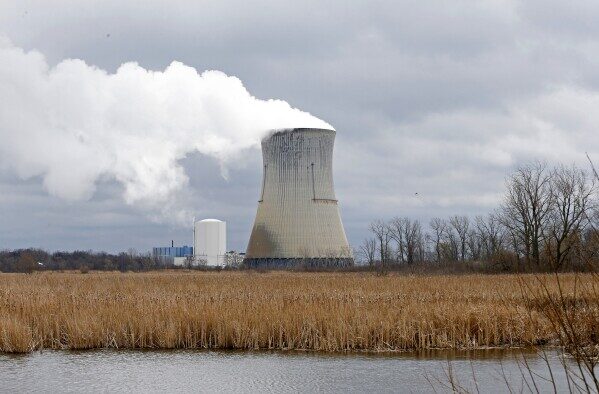
In a move that reverberated across the U.S. utility sector, the Public Utilities Commission of Ohio (PUCO) delivered a landmark decision last month: FirstEnergy’s three regulated utilities must pay a staggering $250 million for violations tied to the infamous HB 6 corruption scandal. Of that sum, over $186 million is earmarked for direct refunds or credits to consumers, offering some relief after years of inflated bills and lost trust.HB 6, the controversial law at the heart of the scandal, was designed to bail out unprofitable nuclear and coal plants. But, as detailed by Canary Media, it came at a steep price: FirstEnergy paid $60 million in bribes to ensure its passage and to block a referendum that could have overturned it. The fallout has been massive, implicating former Ohio House Speaker Larry Householder and ex-Republican Party Chair Matt Borges, both convicted of racketeering in 2023.
Consumers Bear the Costs—and Get Some Relief
The PUCO’s ruling represents one of the largest penalties of its kind in U.S. history, but for many, it’s too little, too late. Consumer advocates like Maureen Willis from the Ohio Consumers’ Counsel have been pushing for accountability since 2020, arguing that FirstEnergy’s mismanagement should not be a burden on ordinary Ohioans. “FirstEnergy’s executive decisions contributed to increased financial risk, and it is unfair for its consumers to bear this burden through higher electric bills,” Willis said, calling for shareholders to shoulder the cost instead.Despite these demands, regulators stopped short of slashing FirstEnergy’s allowed profits. The commission approved a net rate increase of $34 million—far less than the $183 million FirstEnergy sought—but still a blow to many. Some customers, such as those served by Cleveland Electric Illuminating Co., will see rates rise, while others (Toledo Edison and Ohio Edison) will benefit from reductions. But as watchdog groups caution, these lower bills may be temporary. “Customers should be wary of the lower bills,” warned Dave Anderson from the Energy and Policy Institute. “They’re an improvement for now, but may not last.”

Corporate Accountability: A Mixed Bag
FirstEnergy’s journey through the regulatory gauntlet has been expensive. Beyond the PUCO’s penalties, the company previously paid $230 million to the Department of Justice to settle criminal charges, $100 million for federal securities claims, and $20 million to avoid state criminal charges. A class action lawsuit added nearly $50 million more to the tally.Yet, for many in the industry and public interest groups, the outcome is bittersweet. The relief falls short of the half-billion dollars some advocates sought, and deeper reforms—like a full review of FirstEnergy’s management practices—were left unaddressed. The PUCO did, however, order a new corporate-separation audit within three years, a step toward greater oversight.“What the PUCO did do here that was quite strong was find FirstEnergy broke multiple Ohio laws,” Anderson noted. The penalties included daily fines of $10,000, $16,000, and $25,000 for different violations, totaling tens of millions. If such rigorous enforcement became the norm, Anderson argues, utilities might think twice before repeating FirstEnergy’s mistakes.
Financial Markets and Shareholder Sentiment
Meanwhile, FirstEnergy continues to attract investor attention. According to MarketBeat, institutional investors hold nearly 90% of FirstEnergy’s shares, with recent major increases from funds like Edgestream Partners L.P. and DekaBank Deutsche Girozentrale. Despite recent turbulence, FirstEnergy’s market capitalization stands at $26.39 billion, with shares trading at $45.69—down 1.6% amid the regulatory news.Analysts remain cautiously optimistic, with a “Moderate Buy” consensus and price targets hovering around $49.08. The company posted solid quarterly results in October 2025, reporting $0.83 earnings per share (beating estimates) and $4.15 billion in revenue, up 10.8% year-over-year. Its dividend yield sits at 3.9%, signaling continued commitment to shareholder returns even as it navigates legal and regulatory headwinds.
MLS Cup Final Showdown: Messi’s Miami Hosts Müller’s Vancouver in Historic Clash
The Road Ahead: Reform, Rates, and Reputation
FirstEnergy is far from done with regulatory scrutiny. The utility announced plans to file its next rate case in early 2026, meaning new rates could kick in by 2027. Legislative changes have already accelerated the schedule for rate reviews and ended most bill riders, setting the stage for further battles over how much consumers should pay and who should bear the costs of past mismanagement.Criminal charges remain pending against two former FirstEnergy executives, and another PUCO case is scheduled for an evidentiary hearing in February 2026. The commission will again examine whether FirstEnergy used customer money for political purposes—a violation of state law. Given the company’s history of mixing funds, proving compliance may be a tall order.All this unfolds against a backdrop of broader changes in the energy sector. As highlighted by the recent International Symposium on AI and Nuclear Energy hosted by the IAEA, utilities are facing unprecedented demands for clean, reliable power—driven in part by the explosive growth of AI data centers. The energy map is being redrawn, and companies like FirstEnergy must adapt not only to regulatory expectations but also to technological shifts and evolving consumer needs.The PUCO’s November 2025 rulings mark a turning point, but they also underscore the complexities of utility accountability in America. The question remains: Will these financial penalties and regulatory reforms prevent future scandals, or are they just a temporary patch on deeper systemic issues?
iNews covers the latest and most impactful stories across
entertainment,
business,
sports,
politics, and
technology,
from AI breakthroughs to major global developments. Stay updated with the trends shaping our world. For news tips, editorial feedback, or professional inquiries, please email us at
[email protected].
Get the latest news and Breaking News first by following us on
Google News,
Twitter,
Facebook,
Telegram
, and subscribe to our
YouTube channel.