

The Oxford Dictionary has named “rage bait” its 2025 Word of the Year. The announcement was made by Oxford University Press today. The term perfectly captures a dominant and troubling online trend.It describes content deliberately crafted to provoke anger for clicks. This selection reflects a major shift in how the digital world interacts with our emotions. The Guardian and CNN were among the first to report the story.
The Anatomy of Modern Outrage
Use of the term “rage bait” has tripled over the past year. Oxford defines it as online material designed to elicit outrage. It is often frustrating, provocative, or offensive by design.This content thrives on social media platforms. Its sole purpose is to drive traffic and boost engagement metrics. The strategy exploits human psychology and algorithmic promotion.
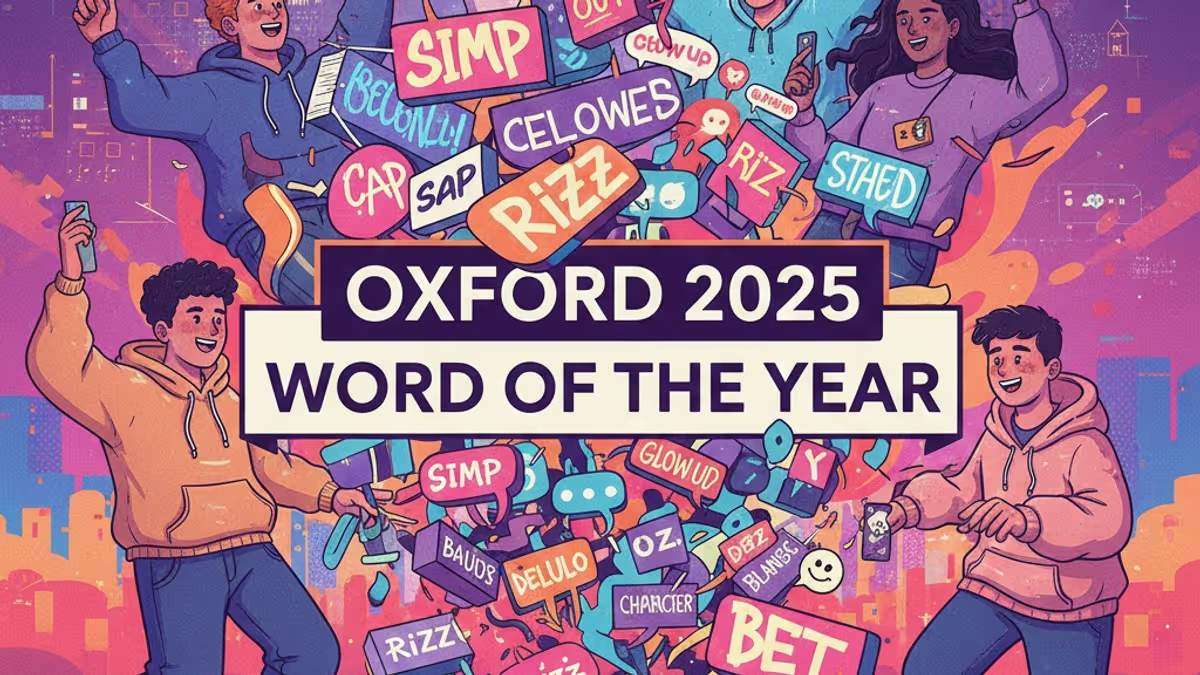
From Attention Economy to Anger Economy
Casper Grathwohl is President of Oxford Languages. He explained the evolution clearly. The internet once traded on curiosity for clicks.Now it hijacks and influences our core emotions. This marks a move from an attention economy to something darker. Outrage has become a potent, manipulatable currency.The choice follows last year’s winner, “brain rot.” That term described the mental drain of endless scrolling. “Rage bait” reveals the engineered content causing that drain.It shows a keen awareness of digital wellness concerns. These two words together map the emotional landscape of modern web use.
A Legacy of Provocation and a Warning
The concept isn’t entirely new. Oxford traced its first recorded use to a 2002 online forum. It described a driver’s deliberately inflammatory response.But its recent surge into mainstream vocabulary is significant. It provides a shared language to critique a pervasive experience. People can now label the manipulation they feel.Other dictionaries also highlighted tech’s linguistic influence. Collins Dictionary chose “vibe coding” for 2025. The Cambridge Dictionary selected “parasocial.”These choices confirm technology’s deep impact on language. They show how digital life creates entirely new ways of communicating.
Zillow Pulls Climate Risk Scores from Listings After Real Estate Agent Backlash
Oxford’s selection of “rage bait” as the 2025 Word of the Year is a cultural alarm bell. It forces a conversation about emotional health in digital spaces. The term “rage bait” now defines the toxic undercurrent of much online interaction.
Thought you’d like to know
What exactly is “rage bait”?
It is online content specifically designed to make people angry. Creators use frustration or offensive takes to spark reactions. The goal is always to generate more clicks and shares.
Why did Oxford choose this word?
Usage of the term increased by 200% in the last year. It reflects a significant and worrying shift in digital culture. The selection acts as a mirror to widespread online experiences.
What was on the shortlist for the word of the year?
Other contenders included “aura farming” and “biohack.” These terms also describe tech-influenced behaviors. The shortlist showed digital culture’s broad impact on language.
How does rage bait affect people?
It can contribute to mental fatigue and online polarization. Constant exposure to engineered outrage is emotionally draining. It can also skew perceptions of public debate and social issues.
What was last year’s Oxford Word of the Year?
The 2024 winner was “brain rot.” It described the mental fog from too much low-value content. This year’s “rage bait” is seen as a related, logical progression.
iNews covers the latest and most impactful stories across
entertainment,
business,
sports,
politics, and
technology,
from AI breakthroughs to major global developments. Stay updated with the trends shaping our world. For news tips, editorial feedback, or professional inquiries, please email us at
[email protected].
Get the latest news and Breaking News first by following us on
Google News,
Twitter,
Facebook,
Telegram
, and subscribe to our
YouTube channel.


