

A strong Taiwan earthquake struck southeast of Taipei on December 27, sending waves of shaking across the capital. The quake reached a magnitude of 6.7, according to Taiwan’s weather agency. It hit offshore at a depth of 73 km. Officials said no major damage was reported in Taipei.
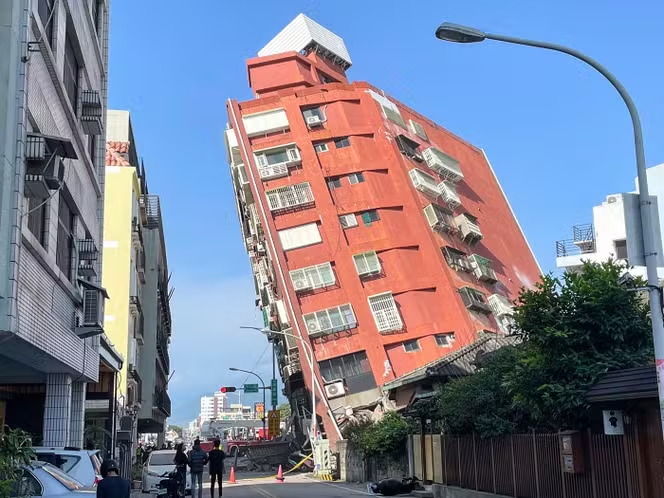 Emergency crews moved fast after the quake. They checked key sites and power lines across Yilan and Taipei. According to Reuters, more than 3,000 homes in Yilan lost power for a short time. Service was restored soon after.
Taiwan Earthquake Prompts Aftershock Warnings and Safety Measures
The quake was felt across northern Taiwan. Many people reported long periods of shaking. Local media said some buildings swayed for close to a minute. The quake struck offshore, which helped limit structural damage. The weather agency warned that aftershocks between 5.5 and 6.0 may occur in the next few days.
Officials urged the public to stay alert. They asked people to check homes for minor damage. President Lai Ching-te said the government had the situation under control. He also asked citizens to follow safety guidelines during possible aftershocks.
Taiwan Power Company confirmed brief outages in Yilan. Crews worked quickly to restore grid stability. No major road damage or transport disruptions were reported. Taipei city officials said all major systems were working normally.
The Indian National Centre for Ocean Information Services said there was no tsunami threat. The agency detected the quake but stated the offshore depth reduced tsunami risk. Other regional monitoring centers agreed with the assessment.
How the Taiwan Earthquake Affects the Region and Ongoing Preparedness
Taiwan sits near the boundary of two major tectonic plates. This makes the island prone to strong earthquakes. Taiwan has invested in strict building codes over the past decades. These rules have helped reduce casualties during large quakes.
Experts said the depth of this quake helped limit destruction. Deep quakes lose more energy before reaching land. Still, residents felt strong shaking across Taipei and nearby counties. Emergency officials will monitor the region closely for aftershocks.
Regional governments across East Asia also reviewed data from the quake. Countries such as Japan and the Philippines track offshore seismic activity near Taiwan. No alerts were issued outside Taiwan. Transport and trade routes continued normal operations.
The quake served as a reminder of the island’s seismic risks. Citizens often take part in yearly earthquake drills. Schools and offices practice evacuation routes and shelter procedures. These routines help people respond faster when real quakes strike.
The Taiwan earthquake showed how prepared the island remains for strong shaking. It also kept the region alert for more activity. Officials will keep monitoring the area until all aftershock risks pass.
Thought you’d like to know-
Q1: What caused the Taiwan earthquake?
The quake was caused by tectonic movement near Taiwan’s plate boundary. The island often experiences strong quakes due to regional seismic activity.
Q2: Was there any major damage in Taipei?
Officials said no major damage was reported. Some buildings swayed, but key infrastructure stayed stable.
Q3: Did the Taiwan earthquake trigger a tsunami?
Authorities said no tsunami threat was detected. The quake’s depth reduced the chance of tsunami formation.
Q4: Will there be aftershocks?
Experts warned that aftershocks between magnitude 5.5 and 6.0 may occur. People were advised to stay alert.
Q5: How many homes lost power?
More than 3,000 homes in Yilan lost power briefly. Crews restored service soon after.
Trusted Sources: Reuters, AP News, BBC News, Taiwan Weather Administration, INCOIS
iNews covers the latest and most impactful stories across
entertainment,
business,
sports,
politics, and
technology,
from AI breakthroughs to major global developments. Stay updated with the trends shaping our world. For news tips, editorial feedback, or professional inquiries, please email us at
[email protected].
Get the latest news and Breaking News first by following us on
Google News,
Twitter,
Facebook,
Telegram
, and subscribe to our
YouTube channel.


