The U.S. Department of Labor has submitted a major new rule for review. It aims to raise wage requirements for H-1B and PERM visa programs. This proposal could force American companies to pay foreign professionals significantly more.
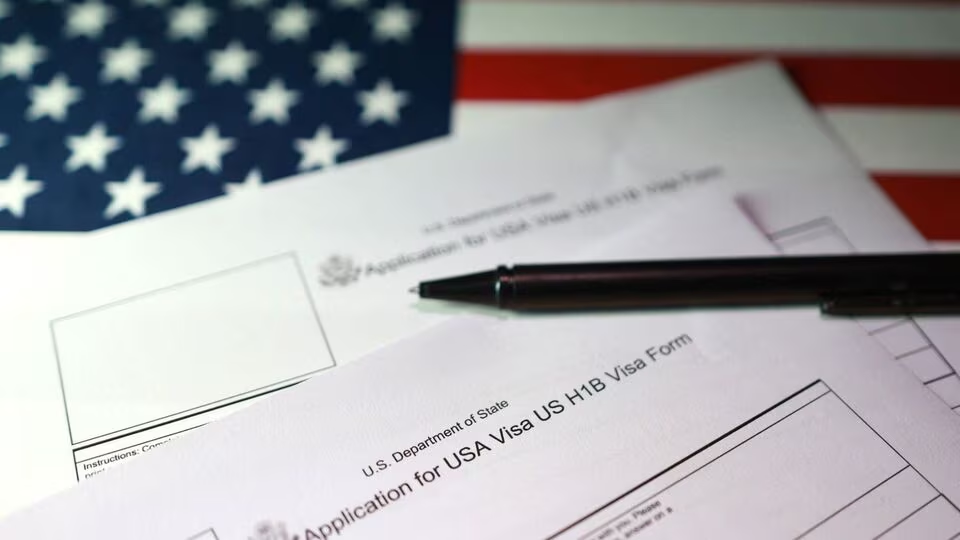 The rule is currently with the Office of Management and Budget. Its full text remains confidential until public release. This move follows a 2025 proclamation to rewrite wage regulations.
Details of the DOL’s Proposal Remain Under Wraps
The proposed rule is titled “Improving Wage Protections for H-1B and PERM Employment in the United States.” According to Reuters, the Department of Labor’s Employment and Training Administration sent it for federal review. This is a standard procedural step.
The OMB must review the rule before publication. Only then will the exact new wage calculations be known. The public will then have a chance to comment on the proposed changes.
Experts warn this could mirror a previous, disruptive effort. The rule is expected to update the methodology for determining “prevailing wages.” This is the minimum salary employers must pay sponsored foreign workers.
Industry Braces for Severe Financial and Operational Impact
Immigration attorneys and analysts are sounding alarms. The change could drastically increase labor costs for companies in tech, healthcare, and consulting. Sponsoring H-1B visa holders or pursuing permanent residency via PERM may become far more expensive.
According to industry commentary, a similar attempt under the previous administration effectively doubled required wages overnight. Positions paying around $120,000 suddenly required over $230,000 to meet compliance. That earlier rule caused widespread chaos before being rescinded.
If this new proposal survives, the disruption could be severe. Employers might be forced to move roles overseas or abandon sponsorship altogether. It would affect new visa filings, extensions, and transfers for current employees.
The proposed H-1B wage hike represents a pivotal shift in U.S. immigration policy, placing a direct financial burden on employers. Its final form will shape the future of American competitiveness for global talent.
A quick knowledge drop for you
Q1: What is the new H-1B wage rule about?
The U.S. Department of Labor has proposed changing how it calculates “prevailing wages.” This could force employers to pay H-1B and PERM workers much higher minimum salaries to comply with visa rules.
Q2: When will the new wage rules take effect?
The rule is still under review. It must be published in the Federal Register and undergo a public comment period first. An official implementation date is likely months away, if the proposal moves forward.
Q3: How much could H-1B salaries increase?
Exact figures are not public. However, a similar previous attempt effectively doubled required wages overnight. Analysts expect a significant, non-modest increase that could price many roles out of the visa program.
Q4: Which industries will be most affected?
Industries reliant on specialized foreign talent will feel the greatest impact. This includes technology, healthcare, engineering, scientific research, and finance. The increased costs could reshape hiring strategies.
Q5: Why is the Department of Labor proposing this change?
The move follows a 2025 directive to rewrite wage regulations. The stated goal is to improve wage protections for foreign and U.S. workers alike, ensuring visa holders are not used to undercut domestic salary standards.
iNews covers the latest and most impactful stories across
entertainment,
business,
sports,
politics, and
technology,
from AI breakthroughs to major global developments. Stay updated with the trends shaping our world. For news tips, editorial feedback, or professional inquiries, please email us at
[email protected].
Get the latest news and Breaking News first by following us on
Google News,
Twitter,
Facebook,
Telegram
, and subscribe to our
YouTube channel.