

Thailand and Cambodia agreed to renew a ceasefire on Friday after days of deadly clashes along their shared border. The deal was confirmed by President Donald Trump following calls with both leaders. The renewed truce takes effect Friday evening. The move comes as tension rose near the Preah Vihear temple area, a long‑contested zone.
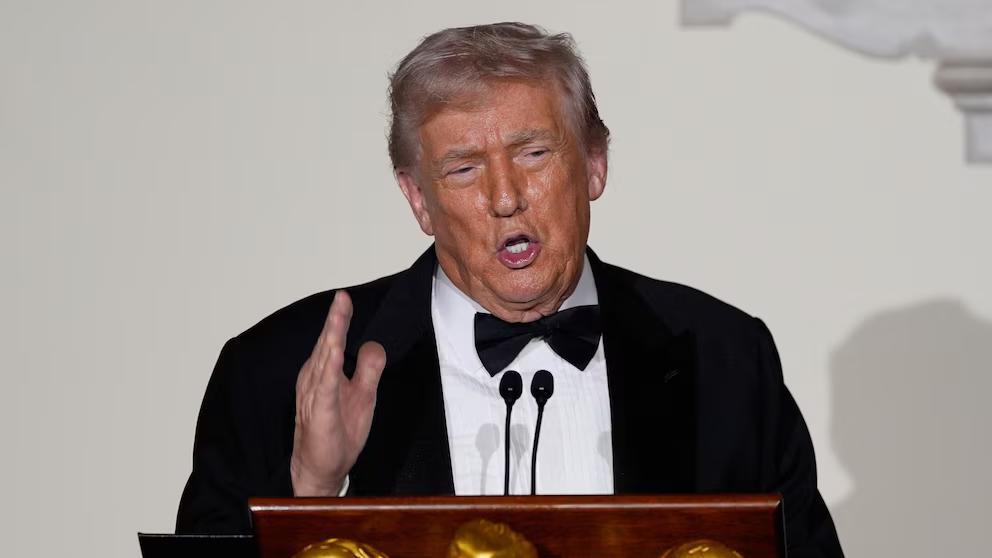 The new agreement aims to restore calm after weeks of rising hostilities. According to AP News, both sides used heavy weapons despite an earlier ceasefire. The White House pushed for a reset after warning that the violence could spread if not contained.
Thai-Cambodian Truce Reset After Border Violence
President Trump said Thai Prime Minister Anutin Charnvirakul and Cambodian Prime Minister Hun Manet agreed to halt all shooting. He said both sides will return to the terms of the first ceasefire arranged in July. That deal was brokered by Malaysia and reinforced at a regional meeting in October.
According to Reuters and AP reporting, cross‑border fire continued even after the original accord. Both nations accused each other of violating the terms. Minor clashes and heated public statements kept tensions high.
ThaiPBS reported that at least six Thai soldiers died after being hit by rocket shrapnel. Thailand said it used jet fighters to strike what it called military targets. Cambodia deployed BM‑21 rocket launchers with a range of up to 40 kilometers.
Thai officials said several homes near the border were damaged by Cambodian rockets. Thailand also said its forces destroyed a crane near the Preah Vihear temple. The army said the crane held devices used for military command and control. Cambodia has not confirmed that claim.
Why the Renewed Truce Matters for Regional Stability
The conflict stems from a long dispute over the border and the Preah Vihear temple region. The issue dates back to a 1907 colonial-era map that Thailand disputes. A 1962 ruling by the International Court of Justice awarded the temple to Cambodia. That decision still angers some Thai groups.
The new truce aims to prevent a wider crisis. The border area is home to villages, farms, and trade routes. A longer conflict could disrupt local economies and trigger larger military action.
Malaysia’s involvement shows the regional concern. Its prime minister, Anwar Ibrahim, helped push both sides toward the earlier deal. The United States has also pushed for calm to protect stability in Southeast Asia.
The renewed Thai-Cambodian truce gives both nations a chance to step back. The main keyword “Thai-Cambodian truce” marks a critical moment in regional diplomacy. The coming days will show if the ceasefire holds.
FYI (keeping you in the loop)-
Q1: What is the Thai-Cambodian truce?
The truce is a ceasefire deal between Thailand and Cambodia. It seeks to stop border clashes near the Preah Vihear temple. Both leaders agreed to restart it on Friday.
Q2: Why did fighting break out again?
Old border disputes and distrust fueled new clashes. Both sides accused each other of violating the earlier deal. Rocket fire and airstrikes raised fears of wider conflict.
Q3: How many soldiers were killed?
ThaiPBS reported at least six Thai soldiers died from rocket shrapnel. Cambodia did not give official numbers. Casualty figures may rise if the truce fails.
Q4: What weapons were used in the clashes?
Thailand used jet fighters for airstrikes. Cambodia used BM‑21 rocket launchers. Both sides reported damage near the border.
Q5: Who helped broker the truce?
Malaysia helped lead the talks. The United States supported the effort. President Trump confirmed the final agreement.
iNews covers the latest and most impactful stories across
entertainment,
business,
sports,
politics, and
technology,
from AI breakthroughs to major global developments. Stay updated with the trends shaping our world. For news tips, editorial feedback, or professional inquiries, please email us at
[email protected].
Get the latest news and Breaking News first by following us on
Google News,
Twitter,
Facebook,
Telegram
, and subscribe to our
YouTube channel.


