European security officials say Russian sabotage is rising fast in 2025. They report new arson attacks, rail disruptions, and cross‑border plots. The incidents have hit Poland, Estonia, the U.K., Germany, and France. Most cases caused limited damage, but officials warn the pace is growing. The main keyword in this headline is Russian sabotage.
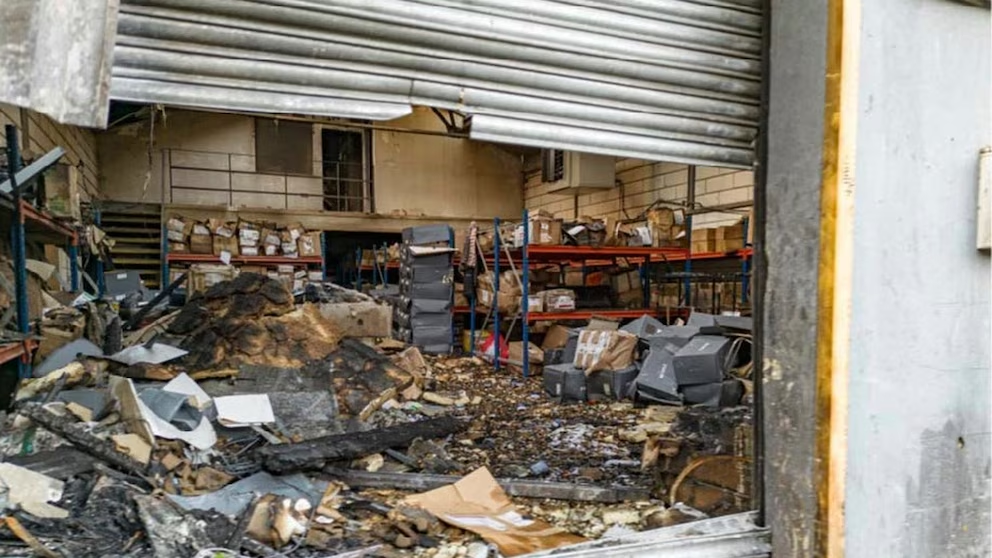 According to the Associated Press, Western agencies link at least 145 incidents to Russia or its proxies. The attacks began after the 2022 invasion of Ukraine and have spread into a wider hybrid campaign. Officials say the goal is simple: drain Europe’s resources and weaken support for Ukraine.
Russian Sabotage Drives Sharp Rise in Hybrid Attacks
Data collected by AP shows a clear spike. Arson and explosives cases jumped from one in 2023 to 26 in 2024. Six more have already been logged this year. Officials told Reuters and AP that Russia uses low‑cost methods and criminal recruits to strike vulnerable sites.
In Poland, a train carrying 500 people stopped suddenly after an overhead line broke and damaged the track. On the same line, explosives blew under a freight train. No one was hurt, but Poland sent 10,000 troops to protect key infrastructure. Officials say these attacks pull security services into long, complex investigations.
Estonia also reports new cases. Fires were set at a supermarket and a Ukrainian restaurant. Prosecutors say the attackers were not locals. They were foreign recruits who crossed several borders before arrest in Italy. This trend forces police to work across countries, which is one of Russia’s main goals.
European Agencies Brace for Long-Term Impact
Officials from the Baltics and Western Europe say many attackers come from criminal networks. Russia avoids using trained intelligence officers, who are in shorter supply after mass expulsions in recent years. Instead, Moscow pays small sums to criminals or ex‑prisoners to carry out risky tasks.
AP reported one case in Lithuania where drone parts and explosives were hidden in a cemetery. A Ukrainian man dug them up on orders from Russian military intelligence. The plot failed, but officers spent months tracking suspects across several countries.
The campaign is pushing Europe to improve cooperation. Prosecutors in Latvia, Lithuania, and Estonia now share teams for sabotage cases. In the U.K., police are being trained to spot possible state‑linked crimes. Officials say Russia is also testing new tools, including weather balloons launched from Belarus that forced airport closures.
European leaders say Russian sabotage is now a steady threat. They expect more plots, more pressure, and more attempts to break European unity.
FYI (keeping you in the loop)-
Q1: What is Russian sabotage in Europe?
Russian sabotage refers to arson, blasts, cyberattacks, and other covert acts linked to Russian intelligence. European officials say these actions aim to weaken support for Ukraine. Many cases involve criminal recruits.
Q2: Which countries are hit most often?
Poland and Estonia report the most cases. Latvia, the U.K., France, and Germany have also seen incidents. These countries are among Ukraine’s strongest supporters.
Q3: How many sabotage cases have been recorded?
The AP database lists 145 cases tied to Russia or its proxies. Arson and explosives incidents jumped sharply in 2024. More cases are already noted in 2025.
Q4: Why does Russia use criminals in these attacks?
Officials say criminals are cheap and easy to recruit. Using them reduces risk to Russian operatives. It also makes investigations longer and harder.
Q5: What is Europe doing to respond?
Police and intelligence agencies are sharing more data. Joint teams are active in the Baltics. Some countries have sent troops to protect key sites.
iNews covers the latest and most impactful stories across
entertainment,
business,
sports,
politics, and
technology,
from AI breakthroughs to major global developments. Stay updated with the trends shaping our world. For news tips, editorial feedback, or professional inquiries, please email us at
[email protected].
Get the latest news and Breaking News first by following us on
Google News,
Twitter,
Facebook,
Telegram
, and subscribe to our
YouTube channel.