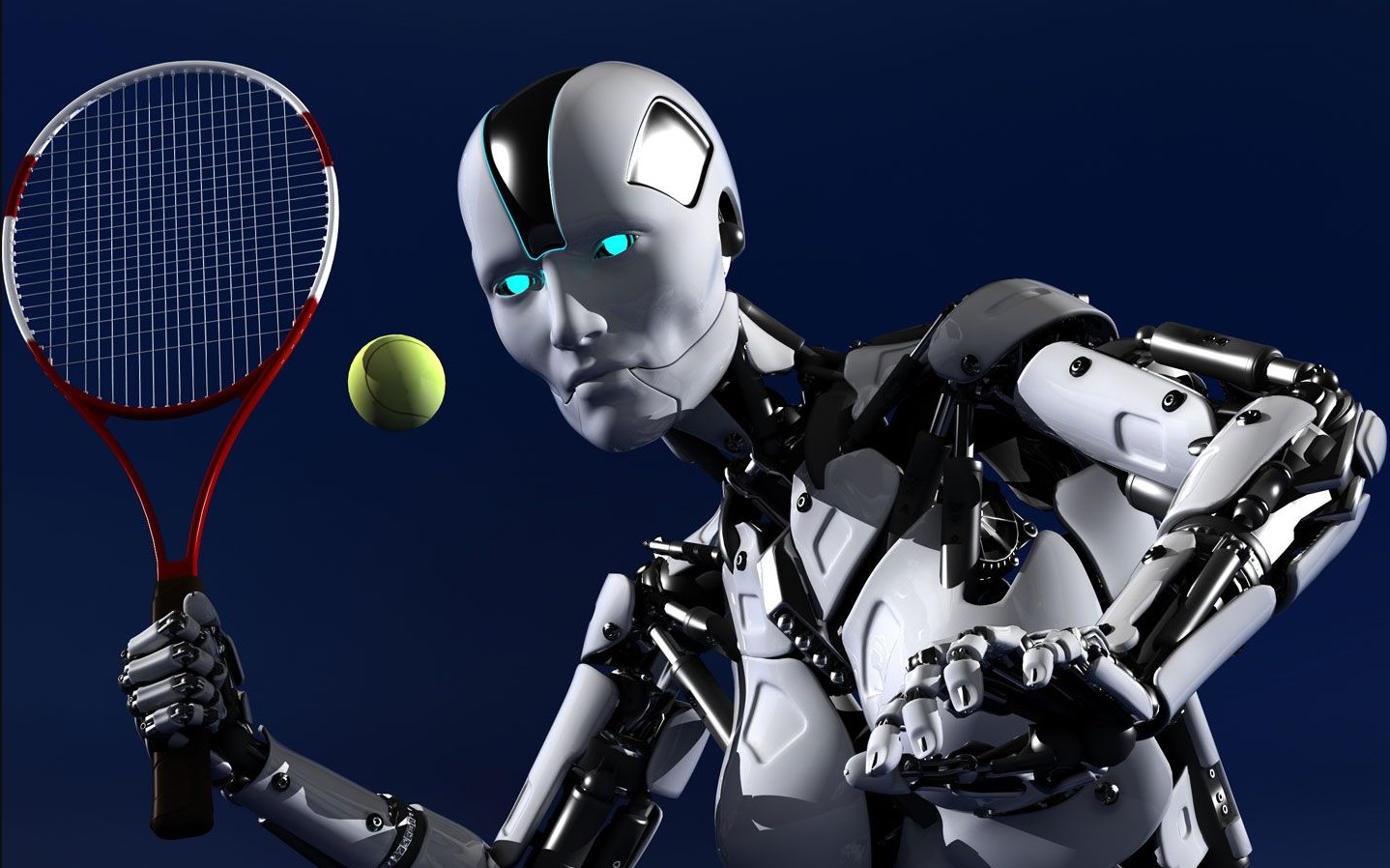
A tennis-playing robot has demonstrated the ability to rally with human players using a new training approach based on limited motion data. The system, developed using a method known as LATENT, enables a humanoid robot to respond to live tennis shots in real time.
The development marks a shift in how robotic movement is learned. Instead of relying on full simulations or pre-programmed sequences, researchers focused on fragments of basic human motion to build functional athletic behavior.
Robot learns tennis from fragmented human movement data
The robot used in the experiment is a humanoid unit designed to move and react dynamically. It was trained using short segments of human tennis actions rather than complete datasets. These fragments represent core movements such as positioning, swinging, and footwork.
During testing, the tennis-playing robot was able to track incoming balls, adjust its stance, and return shots across the net. The rallies were sustained over multiple exchanges, showing that the robot could maintain balance and timing under changing conditions.
In several observed sequences, the robot placed shots away from the human opponent, indicating directional control rather than simple return mechanics. Its movements appeared reactive rather than scripted, suggesting real-time decision-making within its programmed limits.
Early-stage performance hints at broader robotic potential
Public reaction to the tennis-playing robot has focused on its ability to maintain rallies and respond to unpredictable shots. While the motion is not yet fluid, the consistency of returns has drawn attention from both robotics and sports communities.
There is still uncertainty around how the system handles more complex scenarios, such as high lobs or rapid directional changes. The current demonstrations show controlled environments with moderate gameplay intensity.
The use of minimal data for training is seen as a key advancement. It reduces the need for large datasets and may allow robots to learn multiple physical skills more efficiently. Similar approaches could be applied to other sports or physical tasks.
The tennis-playing robot represents a practical step toward adaptive athletic machines. While still limited, its ability to engage in real rallies suggests that future human-robot interaction in sports is moving closer to reality.
FYI (keeping you in the loop)-
How does the tennis-playing robot learn to play?
It uses small fragments of human motion instead of full training datasets. These fragments help the robot understand basic movements needed for tennis.
Can the robot compete with professional tennis players?
Not yet. The current system can sustain rallies but lacks the speed, strategy, and precision of professional athletes.

Follow iNews Zoombangla On Google
Open the Google follow page and tap the checkmark option to receive more updates from iNews Zoombangla in your Google news feed.