Scientists warn that the Thwaites Glacier in Antarctica is breaking apart at a faster pace. The glacier, often called the “Doomsday Glacier,” has shown rapid crack growth in its ice shelf. New data highlights major structural changes recorded between 2002 and 2022. According to Reuters, experts say these shifts could raise global sea levels in the future.
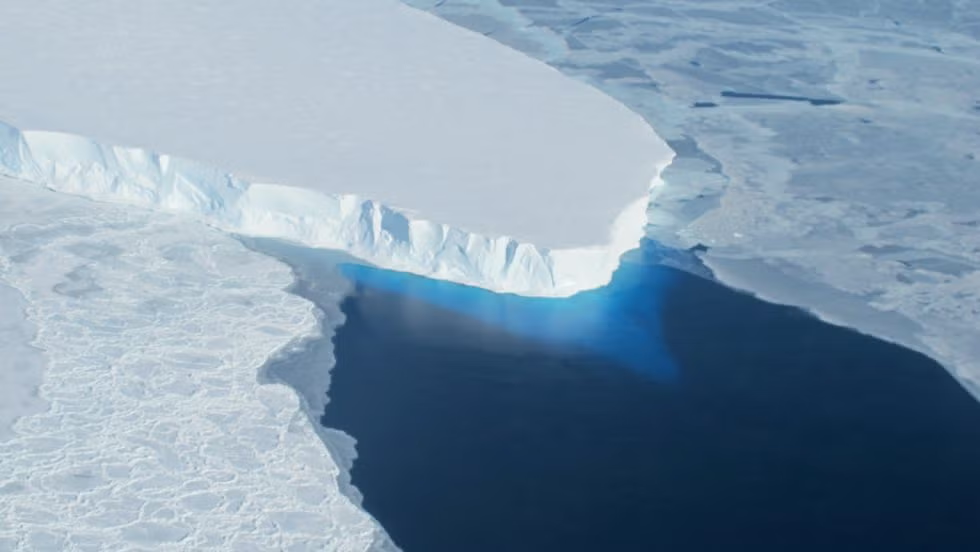 The glacier sits on a critical point in West Antarctica. Its collapse would affect coastlines around the world. Researchers say recent findings show why Thwaites remains one of the most closely watched glaciers on Earth.
Thwaites Glacier Breakdown Shows Sharp Rise in Ice Cracks
New research mapped hundreds of cracks forming across the Thwaites ice shelf. The total length of these cracks has more than doubled since 2002. According to scientists involved in the International Thwaites Glacier Collaboration, these cracks show how the shelf is losing its strength.
The eastern section is the most unstable. This part was once held in place by a ridge on the sea floor. That support has weakened over time. Short cracks and long cracks now cut through the ice in different directions.
This pattern shows a major change in stress within the glacier. Cracks now form faster as the ice moves quicker toward the sea. Experts say this creates a feedback loop. Faster flow creates more cracks. More cracks allow even faster flow.
Reuters reports that GPS readings from 2020 to 2022 show these changes are moving upstream. The shifts appear to advance at roughly 55 kilometers each year. This suggests the glacier may be closer to a rapid break than once believed.
Scientists say the changes also mark a key timeline. From 2002 to 2006, warmer ocean water pushed against the shelf but did not break it fully. By 2007, the glacier lost a major shear zone on its west side. By 2017, cracks had cut clean through the shelf. These events left the glacier far more exposed.
Growing Concerns as Global Sea Levels Face New Pressure
The fate of Thwaites matters because of its massive size. If it collapses fully, sea levels could rise by more than half a meter. Even a partial collapse could destabilize nearby glaciers. This could add another rise in water levels in the decades ahead.
Communities with low coasts would face the greatest impact. These include cities in the United States, Europe, and Asia. According to AP News, climate researchers warn that early signs of collapse should be treated as a global alert.
Scientists are now calling for more study. They say current models may not be strong enough to predict the speed of collapse. The feedback loop of cracking and ice flow is hard to simulate. That makes the future less clear and more urgent.
The future of the Thwaites Glacier is still uncertain, but the message is clear. Experts say its changes demand attention as the main keyword signals rising global concern. The next years will show how fast this critical Antarctic ice can break.
Info at your fingertips-
Q1: What is the Thwaites Glacier?
It is a large glacier in West Antarctica. Scientists call it the “Doomsday Glacier” because its collapse could raise sea levels. It has shown rapid structural changes in recent years.
Q2: Why is the glacier collapsing?
Warm ocean water and shifting stress inside the ice are causing cracks. These cracks weaken the ice shelf. The faster the ice moves, the more cracks form.
Q3: How much could sea levels rise?
A full collapse could raise global sea levels by over half a meter. Even a partial break may trigger more ice loss nearby. This creates long-term coastal risks.
Q4: Who is studying this glacier?
The International Thwaites Glacier Collaboration leads the research. News groups like Reuters and AP News report on new findings. Many universities also send teams to Antarctica.
Q5: When did major cracking begin?
Scientists saw major crack growth starting in 2002. The cracks expanded sharply after 2007. By 2017, the cracks cut across key ice zones.
Trusted Sources: Reuters, AP News, International Thwaites Glacier Collaboration
iNews covers the latest and most impactful stories across
entertainment,
business,
sports,
politics, and
technology,
from AI breakthroughs to major global developments. Stay updated with the trends shaping our world. For news tips, editorial feedback, or professional inquiries, please email us at
[email protected].
Get the latest news and Breaking News first by following us on
Google News,
Twitter,
Facebook,
Telegram
, and subscribe to our
YouTube channel.