Together AI announced a $800 million Series C on July 1 at an $8.3 billion valuation, funding that reflects a hard shift in how enterprises buy AI. The company rents out GPU clusters and lets customers train and run open-source models like DeepSeek, MiniMax, and Kimi for a fraction of what closed systems cost. Customers report savings of 6x to 60x compared to paying for API access to proprietary models like Claude or GPT-4.
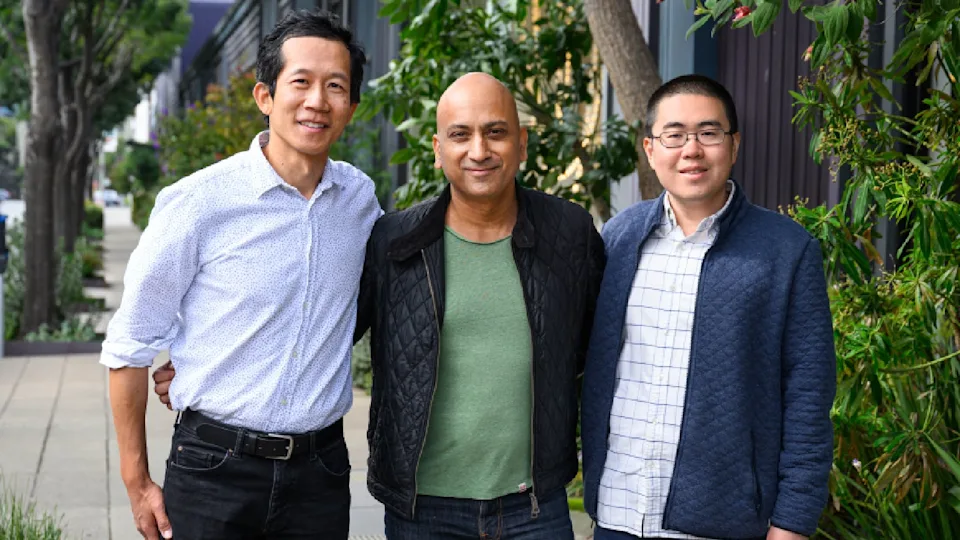
The funding round was led by Aramco Ventures, with participation from Vista Equity Partners, Nvidia, General Catalyst, and others. Together AI reported annual bookings surpassed $1.15 billion in the most recent quarter—a staggering figure for a company that didn’t exist five years ago.
Why the Cost Advantage Matters
Companies using Claude or GPT-4 through APIs pay per token. A million tokens can cost $10 to $30 depending on the model. For a customer running millions of requests a month, that adds up fast. Open-source models like DeepSeek don’t have per-token costs—you pay for compute, and you own the model.
For enterprises with massive workloads, the math is clear. Run DeepSeek on Together AI infrastructure, and you might spend $50,000 a month. Run the same workload on GPT-4, and you might spend $500,000. The performance gap between open-source and closed models has narrowed enough that for many use cases, the cost difference is indefensible.
The Shift in AI Economics
This funding round signals something deeper: the era of treating frontier AI models as scarce resources controlled by a handful of companies is ending. Open-source alternatives are becoming production-grade. Customers aren’t saying closed models are bad—they’re saying they’re expensive relative to open alternatives that solve the same problems.
Together AI plans to scale infrastructure aggressively, expecting its capacity to grow roughly 50-fold over the next five years. That scale will enable even more customers to move away from proprietary APIs.
Anthropic and OpenAI won’t disappear, but they’ll lose the middle market. Startups and smaller enterprises will use open models. Only the largest customers needing absolute performance will pay premium prices for closed systems.
What’s Next
Together AI is expanding its product suite beyond inference. The company is building tools for fine-tuning, training, and model optimization on open-source systems. If they execute well, they could become the default infrastructure for companies that choose open-source AI.
The cost advantage of open-source AI is now so large that enterprises have to actively choose to pay more for closed alternatives. That choice is becoming harder to justify.
References
TechCrunch. (2026). Neocloud Together AI raises $800M, leaps to $8.3B valuation. Published July 1, 2026.
BusinessWire. (2026). Together AI Raises $800 Million at $8.3 Billion Valuation to Make Frontier AI Accessible to All. Published July 1, 2026.

Follow iNews Zoombangla On Google
Open the Google follow page and tap the checkmark option to receive more updates from iNews Zoombangla in your Google news feed.