

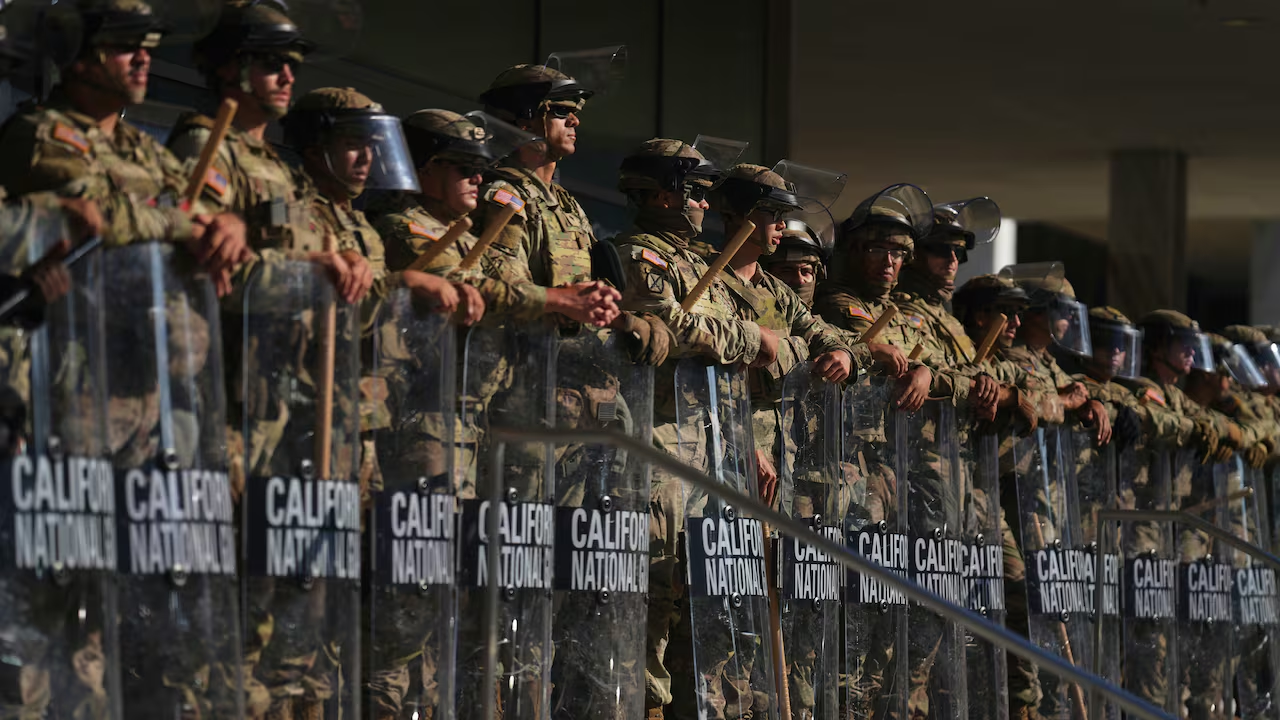
President Donald Trump said his administration has removed the National Guard from Chicago, Los Angeles, and Portland. He made the announcement on Wednesday in a short online post. The move comes after several court rulings blocked his attempts to keep forces in those cities. Judges said the deployments were unlawful and lacked evidence of real threats. The main keyword for this article is Trump National Guard.Local officials said the removal was expected. They argued the deployments were unnecessary and caused tension. They also said the court decisions showed the federal government pushed its authority too far.
Trump National Guard Decision Faces Strong Legal Pushback
According to Reuters, judges ruled again and again that the Trump administration had no legal basis to deploy the National Guard in these cities. Courts said there was no proof that federal sites faced danger from protesters. One ruling from the U.S. Supreme Court blocked Trump’s attempt to deploy troops in Illinois. The court said such power only applies in rare cases.The legal pressure grew in recent weeks. A federal appeals court also ordered the return of hundreds of California National Guard troops to Governor Gavin Newsom. Local officials said these cases forced the administration to step back. They argued the withdrawals were not a choice but a legal requirement.Trump said crime dropped because of the troops. He claimed the Guard reduced violence in all three cities. He warned the forces could return if crime rises again. Chicago officials disputed that claim and said the city’s violent crime in 2025 was the lowest in more than ten years.
Impact of the Court Rulings and What Comes Next
The decision marks a major setback for Trump’s security strategy. His deployments started in June during national protests over immigration enforcement and deportation plans. He also sent troops to Washington and took control of city police. Local data at the time did not support claims of rising crime.Military officials had already begun winding down deployments. Many units were stuck in legal limbo as lawsuits moved forward. The new rulings made further orders unlikely. Cities say the removal may help restore trust between local police and residents.The long-term impact is still unclear. Trump says he will respond if crime rises. State leaders say they will fight any new attempts to take control of their National Guard units.
Mumbai Rings in 2026 with Surprise New Year Morning Rain, IMD Forecasts More Showers
The Trump National Guard withdrawal ends months of legal battles and public debate. The ruling limits federal control and returns authority to the states. The issue may come back if conflict grows over crime and policing.
FYI (keeping you in the loop)-
Q1: Why did Trump remove the National Guard?
Courts ruled the deployments were unlawful. Judges said the federal government did not show proof of danger. These rulings forced the withdrawal.
Q2: Did crime drop because of the deployments?
Trump said crime fell due to the National Guard. Local leaders disagreed. They said data did not support his claim.
Q3: What did the Supreme Court say?
The court blocked Trump’s attempt to deploy troops in Illinois. It said he could only use that authority in rare cases. The ruling weakened his legal argument.
Q4: What happens to the Guard units now?
Units return to state control. Governors will manage future security needs. Federal action is limited by the rulings.
Q5: Can Trump send troops again?
He said forces may return if crime rises. Courts would likely review any new order. Future deployments may face more legal challenges.
Trusted Sources: Reuters, Associated Press, BBC News
iNews covers the latest and most impactful stories across
entertainment,
business,
sports,
politics, and
technology,
from AI breakthroughs to major global developments. Stay updated with the trends shaping our world. For news tips, editorial feedback, or professional inquiries, please email us at
info@zoombangla.com.
Get the latest news and Breaking News first by following us on
Google News,
Twitter,
Facebook,
Telegram
, and subscribe to our
YouTube channel.


