

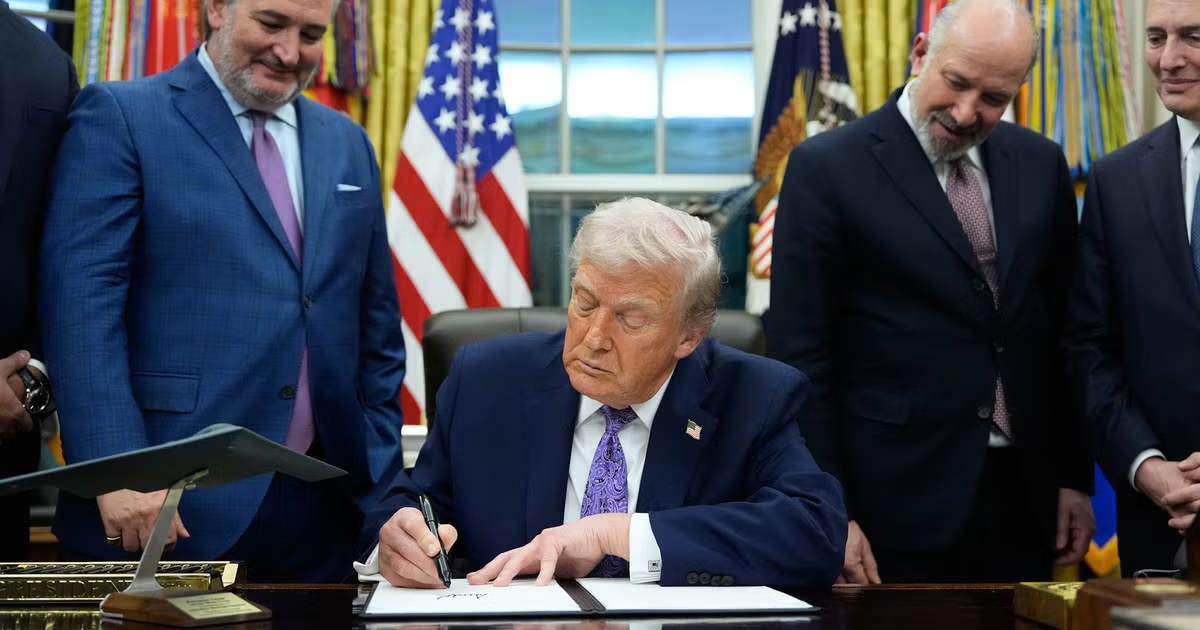
President Donald Trump signed a new executive order on Thursday. It aims to challenge state-level artificial intelligence laws across the U.S. The order argues that AI startups need relief from a confusing patchwork of different state rules. Legal experts warn this move could create prolonged uncertainty and court battles.The order directs federal agencies to push back against certain state AI regulations. According to TechCrunch, it gives the Department of Justice 30 days to form a task force for this legal challenge. The administration’s goal is to establish federal preeminence in AI governance, claiming the technology represents interstate commerce.
Federal Push Creates Immediate Headwinds for Innovation
The directive also tasks the Commerce Department with listing “onerous” state laws within 90 days. This assessment could impact states’ access to federal funding. Meanwhile, agencies like the FTC are asked to explore federal standards that could override state rules.This federal action comes as congressional efforts to create a national AI framework have stalled. Without a clear federal standard, critics argue blocking states leaves consumers exposed. Supporters, however, believe a single national policy is crucial for innovation.Startups are caught in the middle. They now face conflicting guidance from state and federal authorities. Legal challenges are expected to escalate, potentially reaching the Supreme Court. This period of uncertainty could hinder growth and investment in the sector.
Industry Reactions Highlight Deep Divides on AI Governance
Reactions to the Trump AI executive order are sharply divided. Some see it as necessary to prevent a regulatory maze. Others view it as a gift to large tech firms that can weather legal storms.Sean Fitzpatrick of LexisNexis told TechCrunch that states will vigorously defend their consumer protection laws in court. This suggests a long legal fight is ahead. For small startups, this means navigating shifting requirements with limited resources.Andrew Gamino-Cheong of Trustible stated the order could backfire on innovation. He noted big companies can hire lawyers to navigate the chaos. Startups cannot, which puts them at a significant disadvantage in the market.
The new Trump AI executive order sets the stage for a major federalism clash over technology policy. Its ultimate impact on American AI leadership remains uncertain, hinging on court decisions and congressional action.
Thought you’d like to know
What does the Trump AI executive order actually do?
It directs federal agencies to challenge state AI laws. The goal is to stop what the administration calls a “patchwork” of rules. It uses the argument that AI is interstate commerce and should be regulated federally.
How will this affect AI startups?
Startups face immediate uncertainty. They must comply with existing state laws while awaiting court challenges. Legal experts say this period could strain limited resources and slow innovation for smaller companies.
Which states have AI laws this could target?
Several states have enacted AI-related laws. These include consumer protection and bias audit rules. The order specifically tasks the Commerce Department with compiling a list of laws deemed burdensome.
What happens next legally?
The Department of Justice will form a task force to initiate challenges. States are expected to defend their laws vigorously. Many observers believe these cases will ultimately be decided by the Supreme Court.
Could Congress still pass a federal AI law?
Yes. The order explicitly asks the administration to work with Congress on a uniform law. However, previous legislative efforts have stalled, making the timeline for a national framework unclear.
iNews covers the latest and most impactful stories across
entertainment,
business,
sports,
politics, and
technology,
from AI breakthroughs to major global developments. Stay updated with the trends shaping our world. For news tips, editorial feedback, or professional inquiries, please email us at
[email protected].
Get the latest news and Breaking News first by following us on
Google News,
Twitter,
Facebook,
Telegram
, and subscribe to our
YouTube channel.


