President Donald Trump has revealed he has chosen a new Federal Reserve chair. The announcement will be made public soon. This news came from the President during a flight on Air Force One this Sunday.
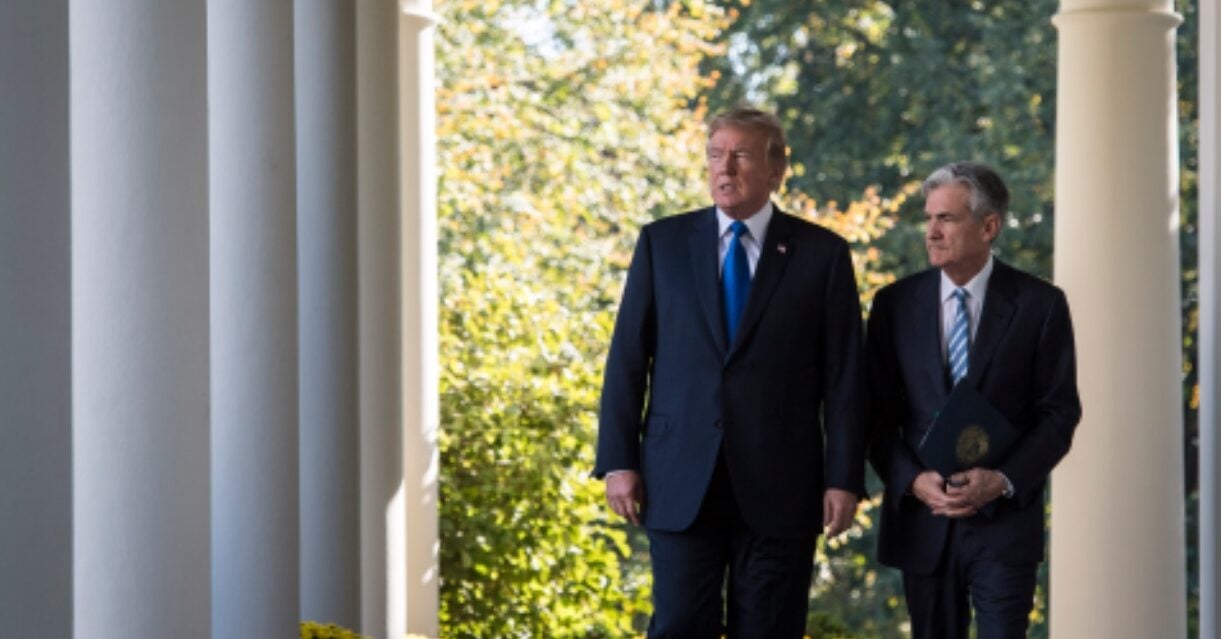
The leadership shift signals a push for monetary policy aligned with potential interest rate cuts. It arrives as the U.S. economy shows a stark split between wealthy and lower-income Americans.
Imminent Announcement Sets Stage for Policy Shift
According to Bloomberg, Trump confirmed his selection to reporters. He stated, “I know who I am going to pick, yeah.” The identity of the nominee remains undisclosed for now.
The next Fed chair will take the helm at a critical moment. Inflation remains a persistent concern for many households. Wage growth has been uneven across different income levels.
This decision is closely tied to Trump’s long-standing preference for lower borrowing costs. He has frequently criticized the central bank for keeping rates too high. His upcoming pick is widely expected to be more dovish.
Navigating the Deepening K-Shaped Economic Divide
The new Fed chair will confront a “K-shaped” economic recovery. This term, highlighted by the Associated Press, describes a widening gap. High-income households are seeing wealth grow from assets like stocks.
Meanwhile, lower-income families face slower wage growth and higher prices. Federal Reserve data illustrates this starkly. The wealthiest 10% of Americans own nearly 87% of stock market assets.
The bottom 50% of households hold just 1.1%. Real wage growth for lower earners has lagged behind. Their annual growth rate is around 1.5%, compared to 2.4% for top earners.
Peter Atwater, an economics professor at William & Mary, explained the dynamic. He noted those at the bottom feel price inflation daily. Those at the top benefit continuously from asset inflation.
Corporate America Adapts to a Two-Tiered Reality
Business strategies now reflect this economic split. Companies are targeting different consumer groups simultaneously. Coca-Cola sells premium products and budget-friendly mini cans.
Delta Air Lines reports strong revenue from first-class tickets. Economy passengers, however, show more financial strain. Best Buy’s CEO noted the top 40% of consumers drive two-thirds of spending.
The remaining 60% are intensely focused on value and bargains. This consumer divide poses a risk to broader economic stability. A weakening job market could cause a sharp spending pullback.
Economist Dario Perkins of TS Lombard issued a warning. He said the bottom of the K could pull down the top. This would threaten companies currently thriving.
The AI Boom’s Uneven Impact on Wealth
Soaring stock markets, fueled by AI investments, exacerbate the divide. Giants like Nvidia and Microsoft see huge gains. These gains largely benefit existing asset owners.
The AI revolution has created relatively few new jobs for average workers. This limits its direct economic benefits for most Americans. The wealth generated is concentrated at the top.
Atwater describes the high-end economy as somewhat self-contained. It revolves around AI, stocks, and luxury experiences. This prosperity does not flow down to lower-income groups effectively.
Policy Challenges Await the Next Fed Chief
The incoming Federal Reserve chair faces a complex balancing act. Potential interest rate cuts could stimulate growth and wages. They also risk reigniting inflation pressures.
Upcoming tax refund changes may provide some relief next year. Many households will receive larger refunds. This could temporarily boost consumer spending.
The central task will be managing these competing forces. The goal is fostering inclusive growth without destabilizing markets. It is a formidable challenge in a deeply divided economy.
The nation awaits the official nomination. The chosen leader’s approach will impact millions. Their success may hinge on bridging the K-shaped gap.
The appointment of a new Federal Reserve chair comes at a pivotal juncture for the U.S. economy. Navigating the K-shaped divide will be the defining task for monetary policy. The chosen path will shape financial stability and everyday affordability for years to come.
Thought you’d like to know
What is a “K-shaped” economy?
A K-shaped economy describes a recovery where different groups diverge. Wealthier households see incomes and asset values rise sharply. Lower-income households face stagnant wages and higher living costs.
Why does the Federal Reserve chair matter?
The Fed chair leads the central bank in setting U.S. monetary policy. They influence interest rates, which affect everything from mortgages to job growth. Their decisions directly impact economic stability and inflation.
Who benefits from a strong stock market?
Stock market gains are highly concentrated. Federal Reserve data shows the top 10% of households own the vast majority of equities. Therefore, market booms primarily increase wealth for those already well-off.
How are businesses responding to the economic split?
Companies are launching dual strategies. They offer premium products for affluent consumers and value-oriented options for budget-conscious shoppers. This approach targets both ends of the economic spectrum.
Could lower interest rates help the economy?
Rate cuts can stimulate borrowing and spending, potentially boosting wages. However, they also risk pushing inflation higher, which hurts lower-income families the most. The Fed must balance these opposing effects carefully.
Trusted Sources
Bloomberg, The Associated Press, Federal Reserve Economic Data (FRED), Federal Reserve Bank of Boston.
iNews covers the latest and most impactful stories across
entertainment,
business,
sports,
politics, and
technology,
from AI breakthroughs to major global developments. Stay updated with the trends shaping our world. For news tips, editorial feedback, or professional inquiries, please email us at
[email protected].
Get the latest news and Breaking News first by following us on
Google News,
Twitter,
Facebook,
Telegram
, and subscribe to our
YouTube channel.