The United States has ordered a full blockade on sanctioned ships carrying Venezuelan oil. The move came after U.S. teams seized or intercepted several tankers near Venezuela this month. The order took effect in the second week of December in the Caribbean Sea. It targets vessels tied to Venezuela’s oil exports, a sector under heavy U.S. sanctions.
 According to Reuters, the action follows new attempts by Venezuelan-linked ships to move crude despite long-standing restrictions. U.S. officials say the blockade aims to cut illegal oil flows to allies of President Nicolás Maduro.
Venezuela Oil Blockade Sparks Global Attention
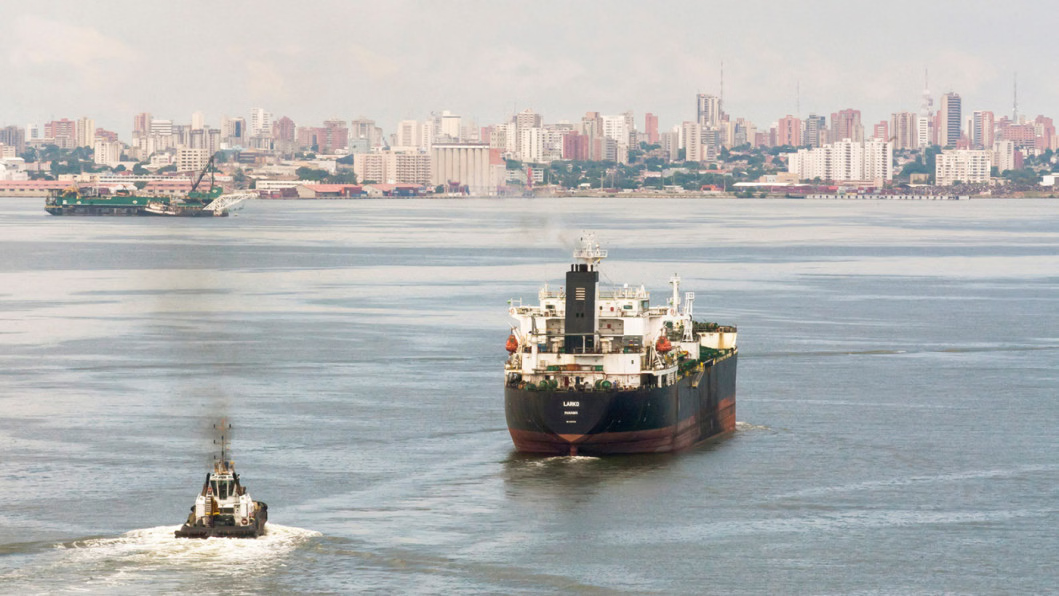
The blockade focuses on three merchant ships that faced direct action. U.S. forces seized the tanker Skipper with almost two million barrels of oil on board. Officials say the ship supplied oil to Cuba at subsidized rates. They claim Cuba has backed the Maduro government for years.
U.S. authorities also stopped the tanker Centuries after it left Venezuelan waters. The Venezuelan Navy escorted it to the edge of the country’s exclusive zone. The U.S. Coast Guard then boarded it for checks under sanctions rules.
The same day, the Coast Guard tried to stop Bella 1. The ship was headed to Venezuela to load crude. The U.S. had already sanctioned Bella 1 for previous Iranian oil trade. It later broadcast distress signals after slipping away from patrol crews.
These actions show how the U.S. uses strict sanctions to pressure states. They also show how ships without proper flags, insurance, or classification face a high risk of seizure. According to AP News, the U.S. Treasury’s Office of Foreign Assets Control plays a key role in tracing sanctioned tankers.
How the Blockade Affects Global Shipping and Oil Trade
The blockade adds stress to oil trade routes in the Caribbean. Ships tied to Venezuela, Iran, and Russia often operate with limited insurance. Major insurers in the U.K. and Europe avoid them due to sanctions. Without insurance, ports refuse entry, and naval forces can board them under maritime law.
Several ships involved had lost their trusted classification from leading societies. Once that happens, ports and insurers stop accepting them. That leaves the tankers vulnerable, and some join what Western officials call a “shadow fleet.” These fleets often hide ownership, switch flags, or use weak registries.
The U.S. says the blockade is needed because sanctions alone have not stopped oil movement. But this step also shows that several countries have found ways to work around financial penalties. They use alternate insurers, small banks, and offshore companies. Reuters reports that Russia and Iran have used similar methods in recent years.
Broader Impact on Energy Markets and Policy
The blockade may slow Venezuelan exports for now. It may also raise regional tension in the Caribbean Sea. Oil markets may see short-term pressure if exports drop. Buyers in Asia and Africa could also face delays.
The long-term picture is less clear. Some analysts say the shadow fleet will keep growing. Others say the blockade may push states to build new ways to trade oil outside the U.S.-led system. What is clear is that global shipping remains tied to U.S. financial power.
The Venezuela oil blockade marks one of the toughest U.S. enforcement steps in recent years. It highlights the reach of sanctions and the risks for ships that try to avoid them. The impact of the blockade will be felt across trade routes in the weeks ahead.
FYI (keeping you in the loop)-
Q1: What is the Venezuela oil blockade?
The blockade is a U.S. order to stop sanctioned tankers moving oil to and from Venezuela. It targets ships linked to illegal or restricted oil trade. It aims to enforce long-standing sanctions.
Q2: Why did the U.S. seize the Skipper?
U.S. officials say it carried nearly two million barrels of crude. They say the ship supplied subsidized oil to Cuba. Cuba is accused of supporting the Maduro government.
Q3: What happened to the tanker Centuries?
The Venezuelan Navy escorted it to the edge of local waters. The U.S. Coast Guard then boarded it under sanctions rules. Its insurance and classification had changed in recent months.
Q4: What is the shadow fleet?
It is a network of ships that work around sanctions. Many have unclear ownership or weak flag registrations. They often lack major insurance coverage.
Q5: How does the blockade affect global trade?
It may delay Venezuelan oil exports. It may also raise risks for shippers in the region. Some buyers could face higher costs or longer shipping times.
Trusted Sources: Reuters, AP News, BBC
iNews covers the latest and most impactful stories across
entertainment,
business,
sports,
politics, and
technology,
from AI breakthroughs to major global developments. Stay updated with the trends shaping our world. For news tips, editorial feedback, or professional inquiries, please email us at
[email protected].
Get the latest news and Breaking News first by following us on
Google News,
Twitter,
Facebook,
Telegram
, and subscribe to our
YouTube channel.