

The geminids meteor showers are considered the most active meteor showers of the year, sometimes producing more than 200 meteors per hour streaking across the night sky. Unlike most meteor showers that originate from icy comets, the Geminids come from a unique rocky source, making them a standout event for skywatchers.
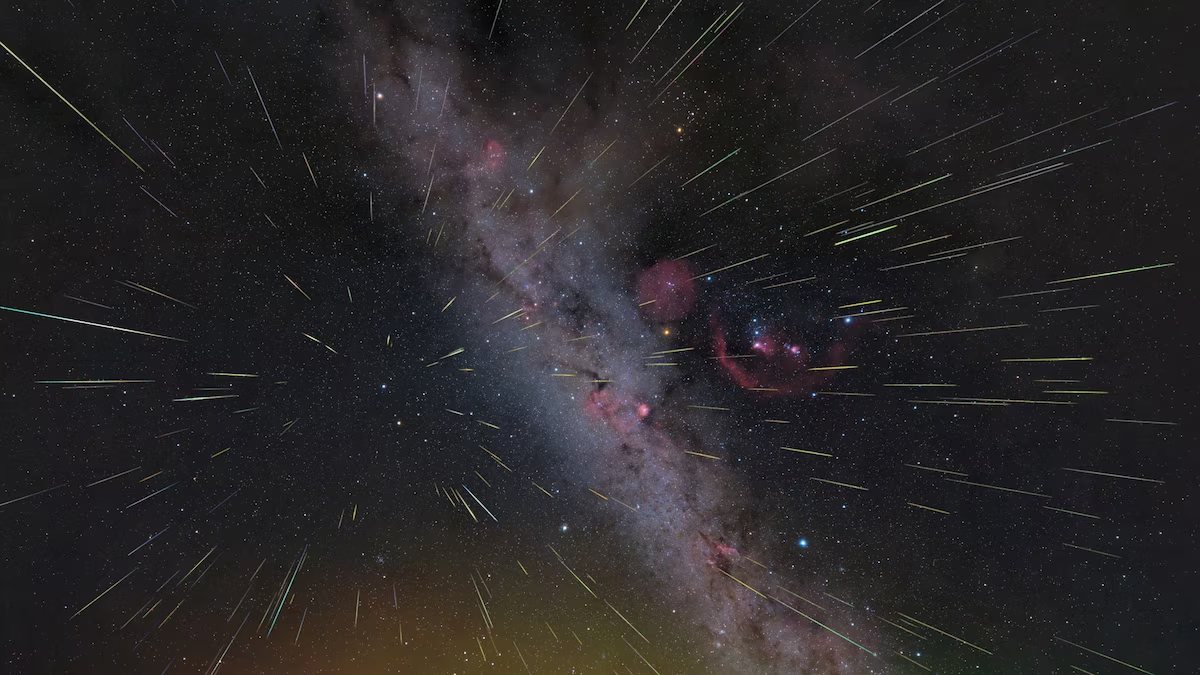
Most meteor showers originate from comets, but the geminids meteor showers are produced by the asteroid 3200 Phaethon. This unusual object orbits the Sun every 1.4 years on a highly elliptical path. Although it behaves somewhat like a comet, Phaethon never develops a visible tail and looks like a typical rocky asteroid, shedding denser debris than comet dust.
Discovery and Origins of the Geminids Meteor Showers
Asteroid 3200 Phaethon was discovered in 1983 and measures just 3.17 miles across. It is named after the mythological son who drove the Sun-god’s chariot. Astronomer Fred Whipple later identified Phaethon as the source of the geminids meteor showers, solving the mystery behind their origin.
Growth and Visibility of the Geminids Meteor Showers
According to NASA, the geminids meteor showers first appeared in the mid-1800s but were initially modest, producing only 10 to 20 meteors per hour. Over time, activity increased, and under ideal conditions, observers can now see up to 120 meteors per hour. The Geminids are also notable because they can be viewed fairly evenly throughout the night.
Moon Phase and Weather Conditions in South Carolina
This year, visibility for the geminids meteor showers is favorable due to a waning crescent moon that continues shrinking toward the New Moon on December 19. In South Carolina, clouds and rain are expected Saturday night into Sunday as a cold front moves through, with clearer skies returning Sunday night through Wednesday. Temperatures will be extremely cold, with Midlands lows possibly dropping to 8 and coastal lows in the low 20s before slowly warming ahead of another cold front.
Tips for Viewing the Geminids Meteor Showers
To get the best view of the geminids meteor showers, observers should find a location far from city and street lights. Lying flat on your back with your feet facing south allows you to take in more of the sky. After about 30 minutes in darkness, your eyes will adapt, and the meteor display can be enjoyed until dawn.
The geminids meteor showers offer one of the most reliable and visually impressive meteor displays of the year. With their unusual asteroid origin, increasing activity over time, and favorable moon conditions, observers have multiple chances to enjoy the show despite cold temperatures. Clear skies and proper preparation can make viewing the geminids meteor showers a memorable experience.
Thought you’d like to know
What are geminids meteor showers?
The geminids meteor showers are an annual meteor event known for high meteor counts and bright streaks across the sky. They originate from asteroid 3200 Phaethon rather than a comet. This makes them unusual compared to other meteor showers. They are visible throughout much of the night.
Why are geminids meteor showers different from other meteor showers?
Geminids meteor showers come from a rocky asteroid instead of icy comet debris. The particles are denser, creating brighter meteors. This difference also explains their consistent and intense activity. Their source makes them scientifically unique.
When can geminids meteor showers be seen best?
The geminids meteor showers can be viewed throughout the night, not just before dawn. Visibility improves as eyes adjust to darkness after about 30 minutes. Clear skies and minimal moonlight enhance viewing conditions. This year’s waning crescent moon supports better visibility.
Where should I look to see geminids meteor showers?
For geminids meteor showers, viewers should find a dark area away from artificial lights. Lying on your back with your feet facing south allows for a wider sky view. This position increases the chances of spotting meteors. Patience is key for the best experience.
How has activity changed for geminids meteor showers over time?
When first observed in the 1800s, geminids meteor showers were relatively weak. Over the years, activity steadily increased. Today, up to 120 meteors per hour can be seen under ideal conditions. This growth makes them one of the most anticipated meteor showers.
iNews covers the latest and most impactful stories across
entertainment,
business,
sports,
politics, and
technology,
from AI breakthroughs to major global developments. Stay updated with the trends shaping our world. For news tips, editorial feedback, or professional inquiries, please email us at
[email protected].
Get the latest news and Breaking News first by following us on
Google News,
Twitter,
Facebook,
Telegram
, and subscribe to our
YouTube channel.


