
Apple-1 computers continue to draw attention at specialist auctions because they connect the company’s modern scale with its earliest workbench beginnings. A recent RR Auction sale and the Apple-1 Registry’s market record show that buyers still value the machines as working technology, company history and physical evidence of the personal-computer era.
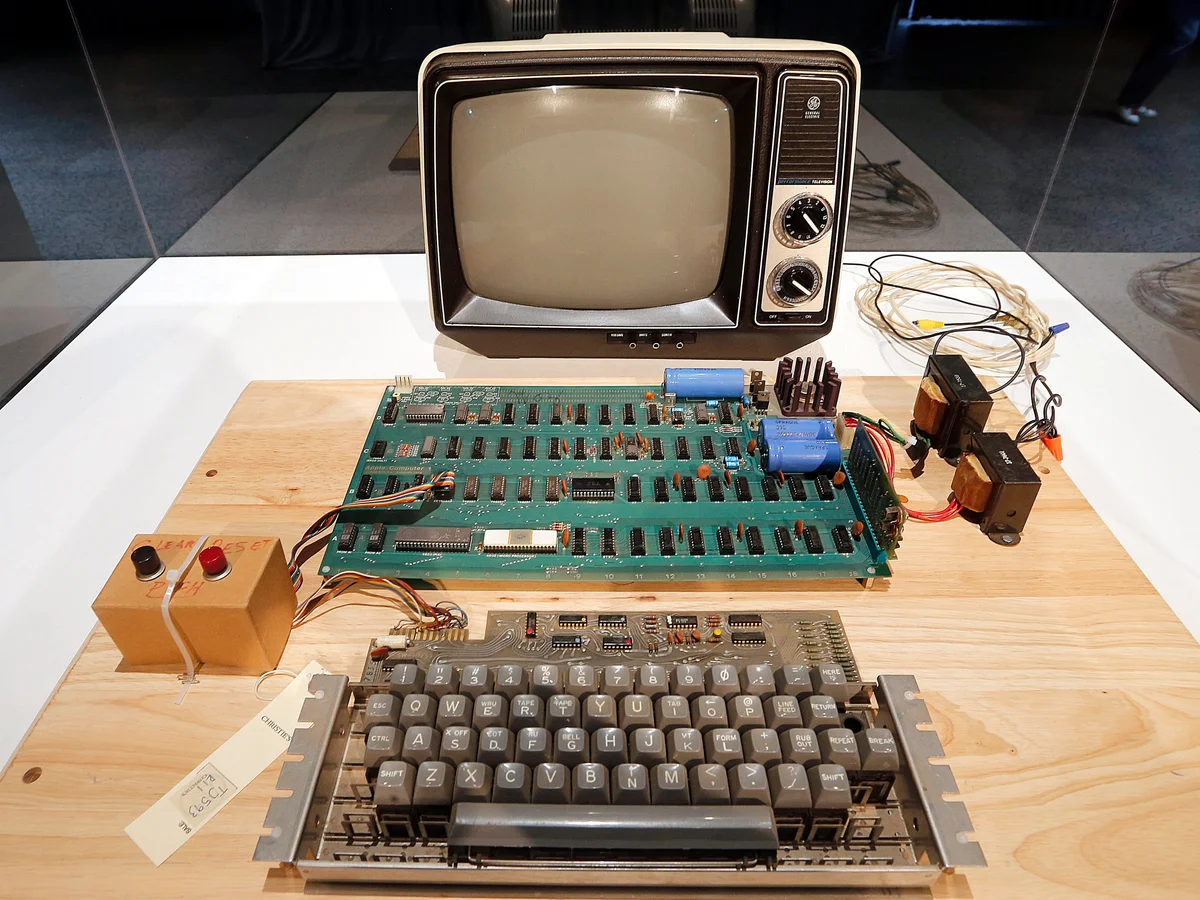
The Apple-1 was designed by Steve Wozniak and associated with the Byte Shop, where early boards were sold in the 1970s. Only a small number were produced compared with later Apple computers. That limited supply is one reason a surviving board can attract collectors when its condition and history are documented.
Price alone does not explain the interest. A working board, an original or period-correct case, a keyboard, a monitor and paperwork can change how an auction lot is judged. Provenance also matters. A board with a credible chain of ownership is easier for collectors to evaluate than an item with an unsupported story.
The Registry’s public market records show that Apple-1 sales can reach very different results. Some depend on the machine’s condition, while others are shaped by a famous owner, a rare serial number or a related group of Steve Jobs material. An auction estimate is not a guarantee of the final price.
Restoration creates another question. A computer from the 1970s may need careful work before it can run, but replacing original parts can reduce historical value. Auction houses and museums often describe what is original, what has been repaired and whether the machine has been tested.
The Apple-1 is also a reminder that early computers were systems, not just circuit boards. Owners needed a display, input method, power and software knowledge to turn the board into a usable machine. That makes a complete example especially interesting to people who collect computing history.
Today’s Apple depends on advanced chips and tightly integrated products, but its public story still includes a small number of hand-built computers. The latest auction activity keeps that beginning visible. For buyers, the lesson is to check documentation, condition and authenticity before treating a rare Apple-1 as an investment.