Apple’s rumored iPhone 20 is back in the spotlight after fresh reporting described the company’s 2027 anniversary model as a major design change. MacRumors, citing Bloomberg’s Mark Gurman, says Apple is planning a special iPhone for the 20th anniversary with a redesign that could be the company’s biggest since the iPhone X. Apple has not announced the product or confirmed its name.
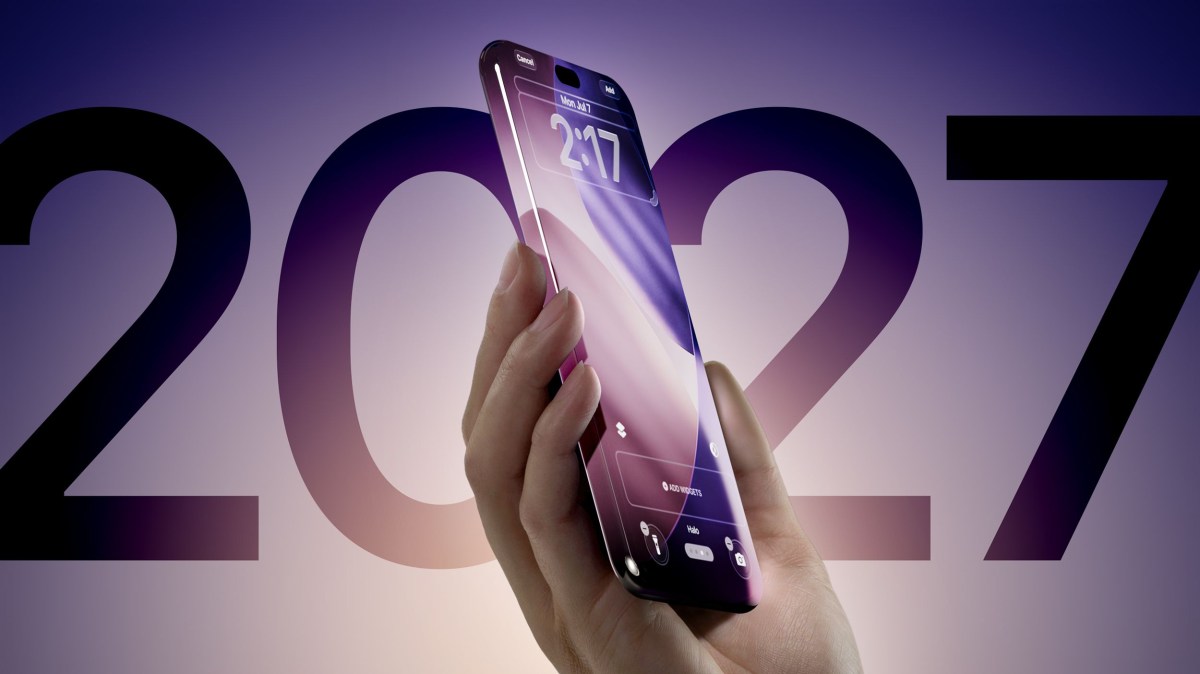
The timing is the clearest part of the story. The original iPhone went on sale in 2007, placing its 20th anniversary in 2027. That gives Apple a reason to mark the year with a new design language, but an anniversary date alone does not prove that every reported feature will reach a shipping phone. The current reports should be read as development information, not a launch announcement.
At the center of the coverage is an all-glass concept. MacRumors says the reported plan involves curved glass that wraps around the edges and a display without the type of cutout used on current iPhones. Tom’s Guide also described the 20th anniversary phone as a possible return to a more continuous glass design. Those reports do not establish the final shape, materials or whether the design would apply to one model or a wider Pro lineup.
The idea recalls the role of the iPhone X. Apple used the 10th anniversary model to move away from the Home button and introduce a new front-facing display layout. A 2027 redesign would therefore be judged against a familiar standard: not only whether the phone looks different, but whether the change becomes a practical platform for later iPhone generations.
Some reports point to two large anniversary models, roughly in the range of today’s Pro and Pro Max sizes. MacRumors has mentioned displays near 6.3 and 6.9 inches, with slimmer bezels potentially making the larger model look closer to 7 inches. These are reported expectations. Apple has not published display measurements, a product name, a price or a retail schedule for the rumored phone.
A wraparound or heavily curved display would bring engineering questions that are easy to overlook in a leak headline. The glass would need to survive drops, repeated handling and pressure at the edges. The software would also have to keep controls readable without making accidental touches more common. None of those challenges proves the project will fail, but they explain why reported prototypes may change before a public release.
The 2027 model is also being discussed alongside a second-generation foldable iPhone. That does not mean the two devices will share the same design or audience. A foldable changes the phone’s usable shape, while the anniversary iPhone reports describe a largely continuous slab. Apple could position them as separate experiments, or adjust the plan as development continues.
Apple’s official event information remains the proper dividing line between confirmed and reported details. The company’s published announcements cover products and dates that it has chosen to reveal. They do not confirm the iPhone 20 name, an all-glass enclosure, the absence of display cutouts or a 2027 price. Readers should not treat a render, analyst note or supply-chain claim as an Apple specification.
For buyers, the iPhone 20 is a long-term watch rather than an immediate purchase decision. The next product cycle will arrive before the anniversary model, and Apple can revise its hardware plans between now and 2027. The useful questions are whether the design survives testing, how Apple handles repair and durability, and whether the result offers a meaningful everyday benefit.
The iPhone 20 story matters because it shows Apple thinking beyond the annual camera and processor update. It may become a genuine anniversary redesign, or the final phone may carry a different name and a more restrained shape. For now, the credible conclusion is narrower: current reporting points to a major 2027 iPhone redesign, while Apple’s official confirmation is still pending.

Follow iNews Zoombangla On Google
Open the Google follow page and tap the checkmark option to receive more updates from iNews Zoombangla in your Google news feed.