

The screen presence of Robert Duvall never relied on showy gestures. His authority came from stillness — the sense that even when silent, a character was thinking faster than everyone else in the room. For more than six decades, that steadiness anchored a run of performances that moved easily between restraint and explosive energy.
Early film appearances signalled the range. In To Kill a Mockingbird he played with minimal dialogue, letting posture and timing carry meaning. The same instinct appeared in MAS*H, The Conversation and Network, where brief moments felt lived-in rather than performed. Even minor roles seemed to arrive with a backstory already formed.
Two performances in films by Francis Ford Coppola ultimately defined the decade that reshaped his reputation.
In The Godfather he was Tom Hagen, the Corleone family’s adopted son and lawyer — calm, polite, and perpetually calculating. Positioned between the aging Don played by Marlon Brando and the colder heir portrayed by Al Pacino, Hagen rarely raised his voice. Yet he often steered the conversation, absorbing tension so others could act. The character’s quiet loyalty carried a note of distance, as if he understood the family better than he could ever belong to it.
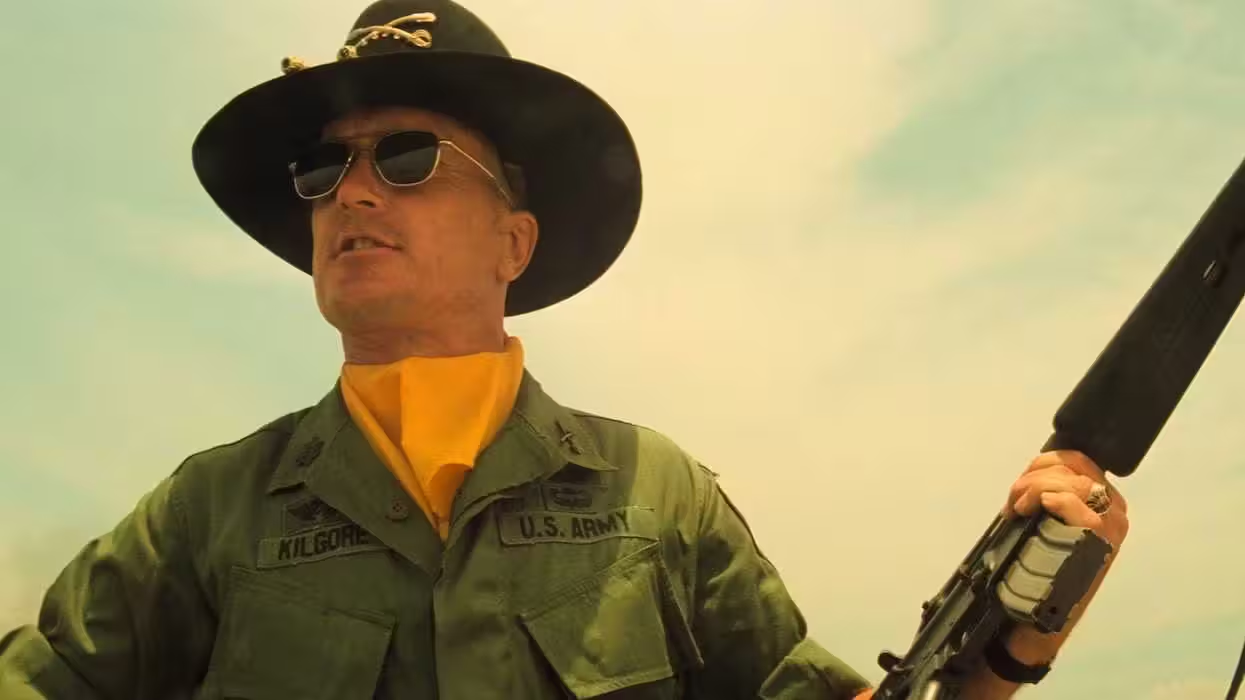
By the end of the 1970s, Duvall reappeared in an almost opposite register. In Apocalypse Now he became Lieutenant Colonel Kilgore, the helicopter commander whose enthusiasm for battle blurred into spectacle. Alongside Captain Willard, played by Martin Sheen, Kilgore launches a daylight assault on a Vietnamese village while Wagner music roars from loudspeakers. The sequence works not because of noise alone, but because Duvall plays the officer as genuinely delighted by the chaos, a man treating war like sport.
Across these roles the actor appeared almost unchanged physically — famously bald and perpetually in a vigorous middle-aged prime — yet his characters carried different burdens. Some concealed vulnerability beneath authority; others revealed obsession behind confidence. The same measured voice could reassure, threaten, or amuse depending on the moment.
That consistency became part of his appeal. Viewers often recognised him instantly but never felt they were watching the same man twice. Presence, rather than transformation, held the attention.
Read More:
Our Universe Kdrama Episode 5 Release Time And Streaming Details
More than sixty years after his first notable appearances, the performances still feel grounded in observation rather than performance technique. The characters breathe, hesitate and sometimes wound themselves as much as others — a quality that kept audiences leaning forward rather than simply watching.
His work remains less about grand speeches than about the small pauses around them, where a decision is made before anyone hears it.
iNews covers the latest and most impactful stories across
entertainment,
business,
sports,
politics, and
technology,
from AI breakthroughs to major global developments. Stay updated with the trends shaping our world. For news tips, editorial feedback, or professional inquiries, please email us at
info@zoombangla.com.
Get the latest news and Breaking News first by following us on
Google News,
Twitter,
Facebook,
Telegram
, and subscribe to our
YouTube channel.


