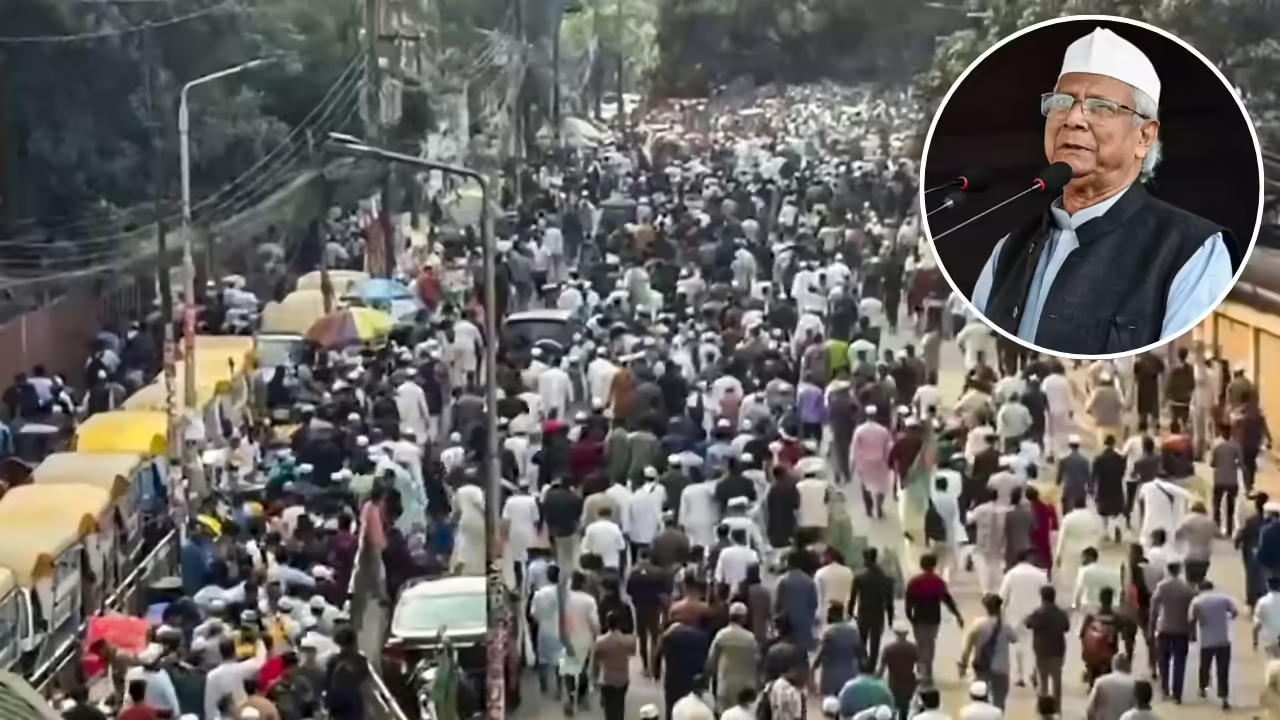
Unrest in Bangladesh grew sharper this week after a Hindu man was killed in Mymensingh. The incident led to protests in several Indian cities on Tuesday. Demonstrators gathered outside the Bangladesh High Commission in New Delhi and demanded justice. The situation has raised fresh concerns about minority safety in Bangladesh.

Officials in Dhaka also confirmed a series of violent attacks on media offices and political leaders. According to Reuters, security has been tightened after multiple shootings and arson cases. Both nations have now summoned each other’s envoys as diplomatic tension rises.
Unrest in Bangladesh and Its Growing Impact
The unrest in Bangladesh began after student leader Sharif Osman Hadi died from gunshot wounds. He was shot in Dhaka earlier this month. His death triggered large protests and violent attacks on media offices. The Daily Star and Prothom Alo buildings were vandalised and burnt. Journalists were trapped inside for hours.
According to AP, police have arrested several suspects linked to the attacks. At least 20 public figures, including editors, have received armed security. Another leader, Motaleb Sikder, was also shot in Khulna. He survived but remains under protection. These events have shaken the political environment in Bangladesh.
The killing of Hindu worker Dipu Chandra Das further inflamed tensions. He was beaten, hanged, and set on fire by a mob. Local reports later said there was no clear evidence of blasphemy. The case triggered anger in India. The VHP and other groups led protests in Delhi, Hyderabad, Tripura, and Kolkata. Police used barricades and mild force to control crowds near the Bangladesh High Commission.
Bangladesh responded by suspending visa services in New Delhi, Agartala, and Siliguri. Dhaka said its missions were not given advance notice of protests and raised concerns about safety. India condemned the killing and summoned the Bangladeshi envoy. Both sides asked for protection of diplomatic staff.
Why the Bangladesh Unrest Matters Regionally
The unrest in Bangladesh has wider political and regional effects. Elections are scheduled for February, and authorities say the timeline will not change. Interim leader Muhammad Yunus stated that the polls will be “free and peaceful.” But instability has caused fear among students, journalists, and minority groups.
India is monitoring the movement of people along the border. Reports of stranded Indian students have added pressure on New Delhi. According to ANI, student groups asked the Indian government for help. US lawmakers and the UN Secretary General have also expressed concern. They called for safety for all communities and urged Bangladesh to restore order.
The unrest has also revived debate on minority rights in the region. Analysts warn that continued violence could hurt diplomatic relations. Business ties and travel have already been disrupted with the suspension of visa services.
The unrest in Bangladesh remains a serious concern. Authorities in both nations are trying to control tensions. But many fear that more violence could follow if justice is delayed.
Info at your fingertips-
Q1: What caused the unrest in Bangladesh?
The unrest began after student leader Sharif Osman Hadi died from gunshot wounds. His death led to protests, attacks on media offices, and rising political tension.
Q2: Why did protests erupt in India?
Protests in India began after a Hindu man, Dipu Chandra Das, was killed in Bangladesh. Many groups demanded justice and safety for minorities.
Q3: What actions has Bangladesh taken?
Bangladesh increased security for leaders and journalists. It also suspended visa services in Delhi, Siliguri, and Agartala due to safety concerns.
Q4: How did India respond?
India condemned the killing and summoned the Bangladeshi envoy. Police also controlled protests outside the Bangladesh High Commission.
Q5: Are upcoming elections affected?
Bangladesh says elections will be held as planned in February. Authorities claim they want a peaceful and stable vote.
জুমবাংলা নিউজ সবার আগে পেতে Follow করুন জুমবাংলা গুগল নিউজ, জুমবাংলা টুইটার , জুমবাংলা ফেসবুক, জুমবাংলা টেলিগ্রাম এবং সাবস্ক্রাইব করুন জুমবাংলা ইউটিউব চ্যানেলে।



