Innovative Eyewear announced Claude AI integration across its entire Lucyd smart eyewear lineup this week, letting users switch between Claude and ChatGPT mid-conversation without losing context.
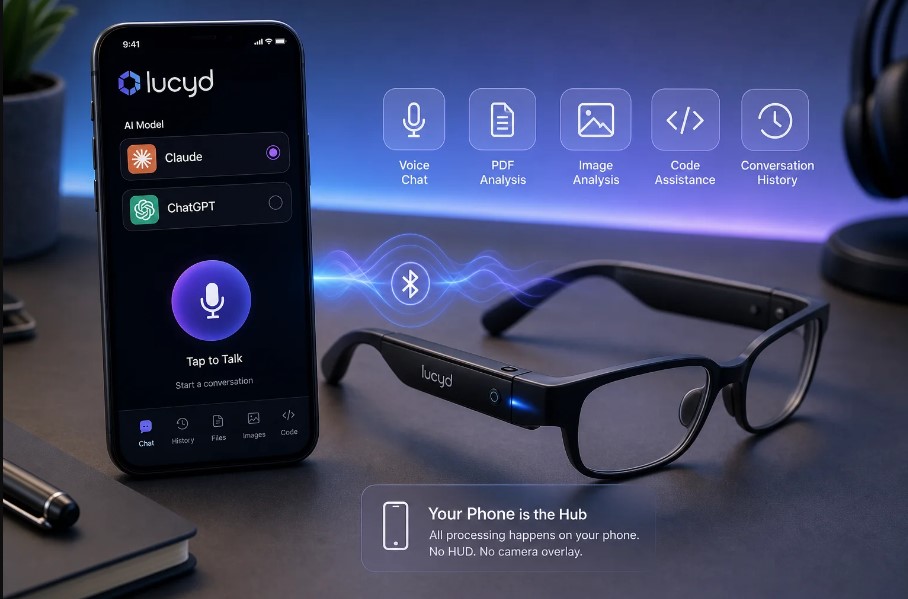
The move breaks what has been a chatbot monopoly on wearable AI. Until now, if you bought Lucyd glasses, you got OpenAI. Now you get options.
Why This Matters for Wearables
Smart glasses are the one device where AI truly belongs. You’re outdoors. Your hands are free. Reading a screen is awkward. Voice is the natural interface.
But single-provider lock-in makes wearables feel like app ecosystems all over again. Claude’s integration means users can choose based on what they actually need—Claude’s reasoning for complex questions, ChatGPT’s breadth for casual queries.
Switching models mid-conversation without losing context is the technical detail that matters here. It means conversation history travels with the user, not locked to one AI provider.
The Wearable AI Standard
Lucyd’s move is positioning smart eyewear as a platform for AI choice, not an OpenAI distribution channel. This is smart product thinking. Wearables succeed when they’re genuinely useful, not when they’re tethered to one company’s AI bet.
Expect other wearable makers to follow. Smart rings, headsets, and glasses need to offer model choice to feel like serious devices rather than marketing vehicles.
The glasses that can think with multiple AI minds are already here.

Follow iNews Zoombangla On Google
Open the Google follow page and tap the checkmark option to receive more updates from iNews Zoombangla in your Google news feed.