

Marvel Studios’ long-running reluctance to engage directly with contemporary politics appears to shift with the release of Daredevil: Born Again season 2, now streaming on Disney Plus. The new season places its central conflict squarely within a political framework, using Wilson Fisk’s rise to power as mayor of New York City to explore themes of authority, enforcement, and public resistance.
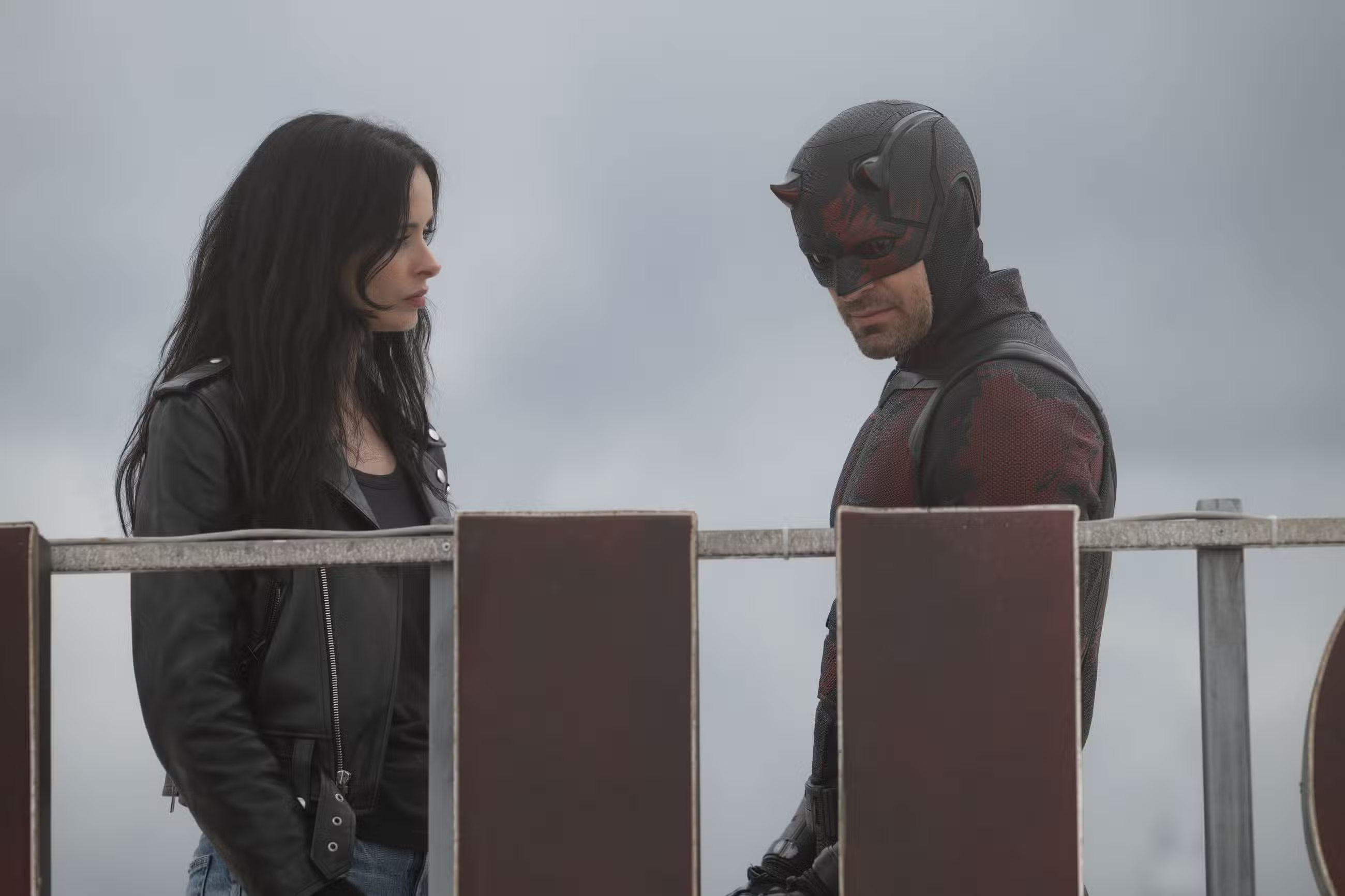
The groundwork was laid in the first season, where Fisk, played by Vincent D’Onofrio, secured office on an anti-vigilante platform before declaring martial law. Season 2 opens with those policies fully realized. His Anti-Vigilante Task Force operates with broad authority across the city, often targeting civilians alongside masked figures. Against this backdrop, Daredevil, portrayed by Charlie Cox, leads a growing resistance while his civilian identity, Matt Murdock, remains absent.
The tone of the new season reflects a more unified creative direction. Unlike its predecessor, which underwent significant restructuring late in production, the second installment was shaped entirely under showrunner Dario Scardapane. That continuity is evident, though not without drawbacks.
The early episodes struggle to maintain momentum. Much of the screen time is given to a wide range of supporting characters, many introduced in the previous season. While their individual arcs are developed, the shift away from core figures dilutes the narrative. Legal storylines led by Kirsten McDuffie, in particular, lack the dynamic previously established through Murdock’s presence.
The series finds its footing midway through the season. A pivotal turn involving Fisk re-centers the story, bringing renewed focus to the conflict between him and Daredevil. From that point, the pacing sharpens, and the series leans into its strengths—character-driven confrontations and tightly staged action sequences. The return of familiar figures, including Karen Page and a brief appearance by Jessica Jones, reinforces that shift.
What sets this season apart, however, is its political framing. Fisk’s leadership style, his consolidation of power, and the behavior of the AVTF draw clear parallels to real-world political dynamics. While the show’s creators have downplayed direct comparisons, the narrative leaves little ambiguity in how authority is exercised and challenged.
That approach gives the series a sharper edge than many recent Marvel productions, which have often avoided explicit political positioning. Here, the conflict is not only physical but ideological, and the stakes feel grounded in recognizable tensions.
Yet the closing moments introduce a turn that disrupts that clarity. Without revealing specifics, the finale pivots in a way that appears to complicate, if not contradict, the themes built throughout the season. Even by the showrunner’s own acknowledgment, the ending draws from recent historical events, though its execution may leave audiences divided.
Despite that uneven finish, the season delivers a more focused and, at times, compelling continuation of Daredevil’s story. Its willingness to engage with heavier subject matter marks a notable shift for the studio, even if the final note lands less securely than the buildup.
Also Read:
Dhurandhar Movie Box Office Collection: ‘Dhurandhar 2: The Revenge’ Maintains Historic Run on Day 11
The result is a season that feels both confident in direction and uncertain in conclusion, leaving its broader implications open to interpretation as the series moves forward.
iNews covers the latest and most impactful stories across
entertainment,
business,
sports,
politics, and
technology,
from AI breakthroughs to major global developments. Stay updated with the trends shaping our world. For news tips, editorial feedback, or professional inquiries, please email us at
info@zoombangla.com.
Get the latest news and Breaking News first by following us on
Google News,
Twitter,
Facebook,
Telegram
, and subscribe to our
YouTube channel.


