Meta released two major AI models this month: Muse Spark 1.1, a reasoning model rivaling GPT-5.5, and Muse Image, the company’s first image generation tool. Muse Spark ships with a paid developer API ($1.25 per million input tokens, $4.25 per million output), marking Meta’s first foray into selling direct API access.
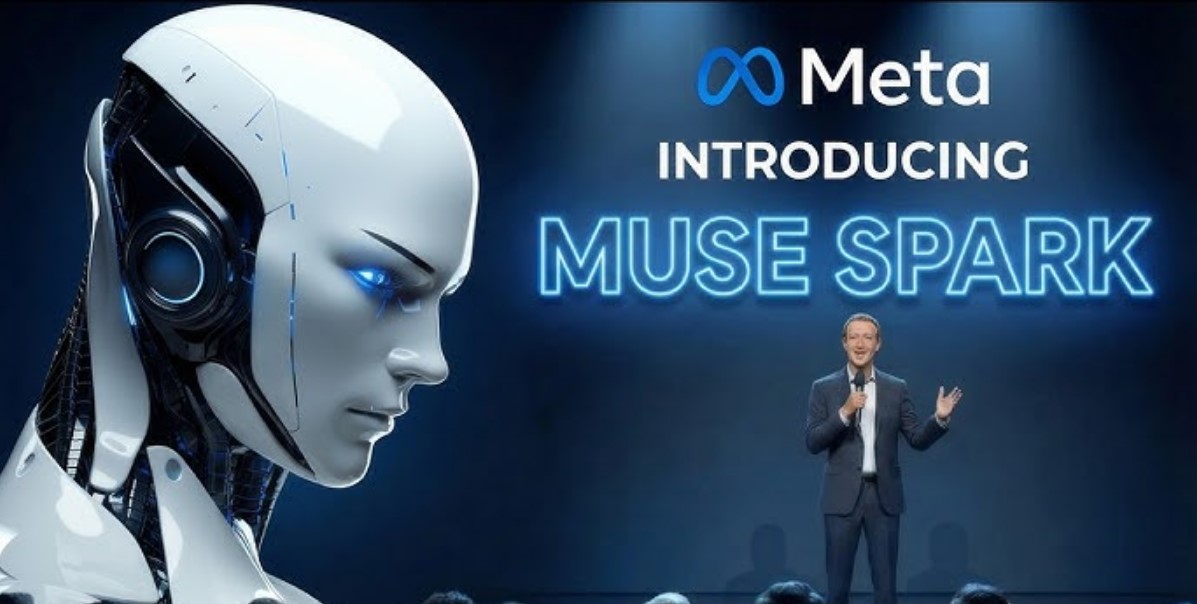
The move signals where Meta sees the AI business going: away from consumer ads and toward enterprise software. Muse Spark handles real-world coding tasks and agentic workflows. Muse Image generates photos by fusing multiple image prompts with reasoning. Both use Meta’s in-house infrastructure to reduce dependence on OpenAI.
Why Meta Built Its Own Models
For years, Meta relied on licensing arrangements and partnerships. Building frontier AI models in-house costs billions. Musk’s behavior and OpenAI’s pricing shifts pushed Meta to invest. The company now trains its own foundation models, fine-tunes them, and sells access.
Muse Spark supports a million-token context window and native delegation between primary and subagent workflows, meaning complex tasks can spawn child agents without human intervention. For companies automating internal operations, this changes the calculation. Do you pay OpenAI’s prices and wait for their roadmap, or do you run Meta’s model?
Muse Image Lands Strong in Rankings
Early benchmarks place Muse Image at number two in text-to-image quality (behind DALL-E 3 variants), and Muse Video at number three in text-to-video. These aren’t theoretical rankings. They mean users can generate complex, photorealistic outputs with semantic understanding baked in.
The reasoning engine understands contextual prompts. Instead of struggling with “a photo of a woman in a yellow sundress walking past a brick building at sunset,” Muse Image reason through it. That matters for e-commerce, product visualization, and creative workflows.
The Business Play
Meta Compute, launched earlier this month, will sell spare AI compute capacity to outside customers. Combine that with Muse APIs, and Meta transforms from a consumer-ad company into cloud infrastructure. It’s a necessary move. Training frontier models burns cash. Monetizing spare compute helps offset costs.
For developers and enterprises, this is competitive pressure on Google Cloud and AWS. Meta’s pricing on inference is aggressive. The question is reliability and support—historically Meta’s weakness in enterprise.
Muse Spark is in public preview now with $20 in free credits per new account. If you build agent-based workflows, it’s worth testing.

Follow iNews Zoombangla On Google
Open the Google follow page and tap the checkmark option to receive more updates from iNews Zoombangla in your Google news feed.