Project Hail Mary, the sci-fi film starring Ryan Gosling, surpassed Christopher Nolan’s Interstellar in domestic box office earnings, crossing $256 million and becoming the highest-grossing hard science fiction film in US market history.
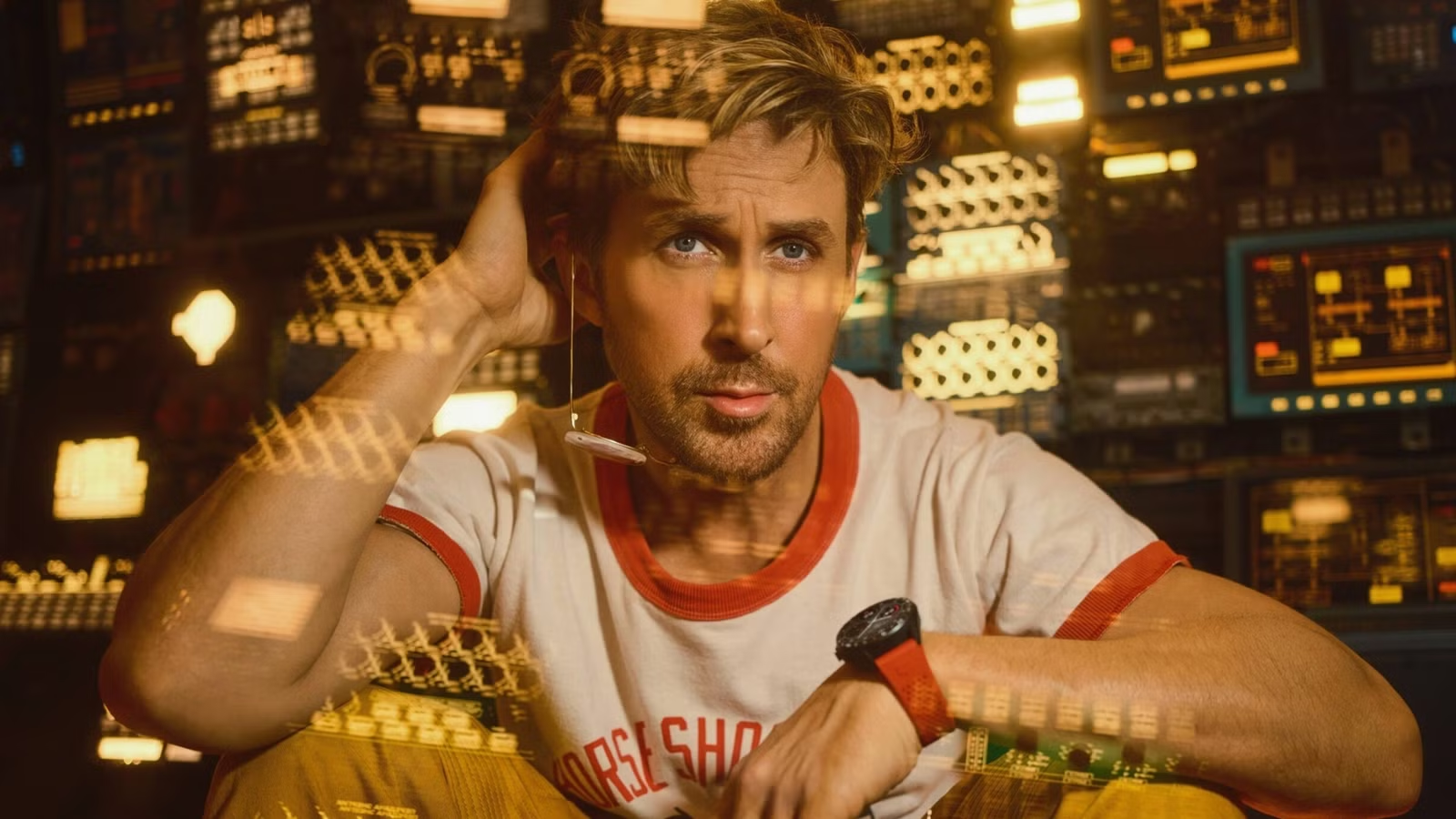
Interstellar’s domestic gross was $203.2 million when it closed its initial theatrical run in 2014. Project Hail Mary passed that milestone in just two weeks of release, reflecting both the film’s momentum and changing box office dynamics since 2014.
The film launched with an $80.5 million opening weekend, Amazon MGM Studios’ biggest debut ever, surpassing 2023’s Creed III. That opening signaled broad audience interest across demographics and geographies.
Project Hail Mary directed by Phil Lord and Christopher Miller tells the story of an astronaut attempting to save Earth by collaborating with an alien species. The premise combines spectacle with grounded science, appealing to both casual moviegoers and sci-fi enthusiasts.
However, the worldwide comparison tells a different story. Interstellar has earned $774 million globally after multiple theatrical re-releases, most recently for its 10-year anniversary in 2024. That re-release alone added $93 million to the total.
Project Hail Mary’s worldwide total through June sits around $577 million, roughly $200 million behind Interstellar’s re-release enhanced total. Whether Project Hail Mary will justify similar re-releases depends on how audiences respond long-term.
The achievement matters culturally. Hard sci-fi films struggle in modern Hollywood, often dismissed as too cerebral or too expensive. Project Hail Mary’s commercial success demonstrates that audiences still crave intelligent science fiction when execution matches the concept.
For Amazon MGM Studios, the film validated the studio’s bet on prestige science fiction. The company invested heavily in securing this project and the results justify that commitment. Similar projects now have stronger greenlight potential.
The film’s success also reflects post-pandemic appetite for theatrical experiences. Audiences willing to spend money on movies tend to pick event films like this.

Follow iNews Zoombangla On Google
Open the Google follow page and tap the checkmark option to receive more updates from iNews Zoombangla in your Google news feed.