A discarded SpaceX Falcon 9 rocket stage struck the moon early Wednesday, and a South Korean satellite has now returned the first pictures of the impact site.
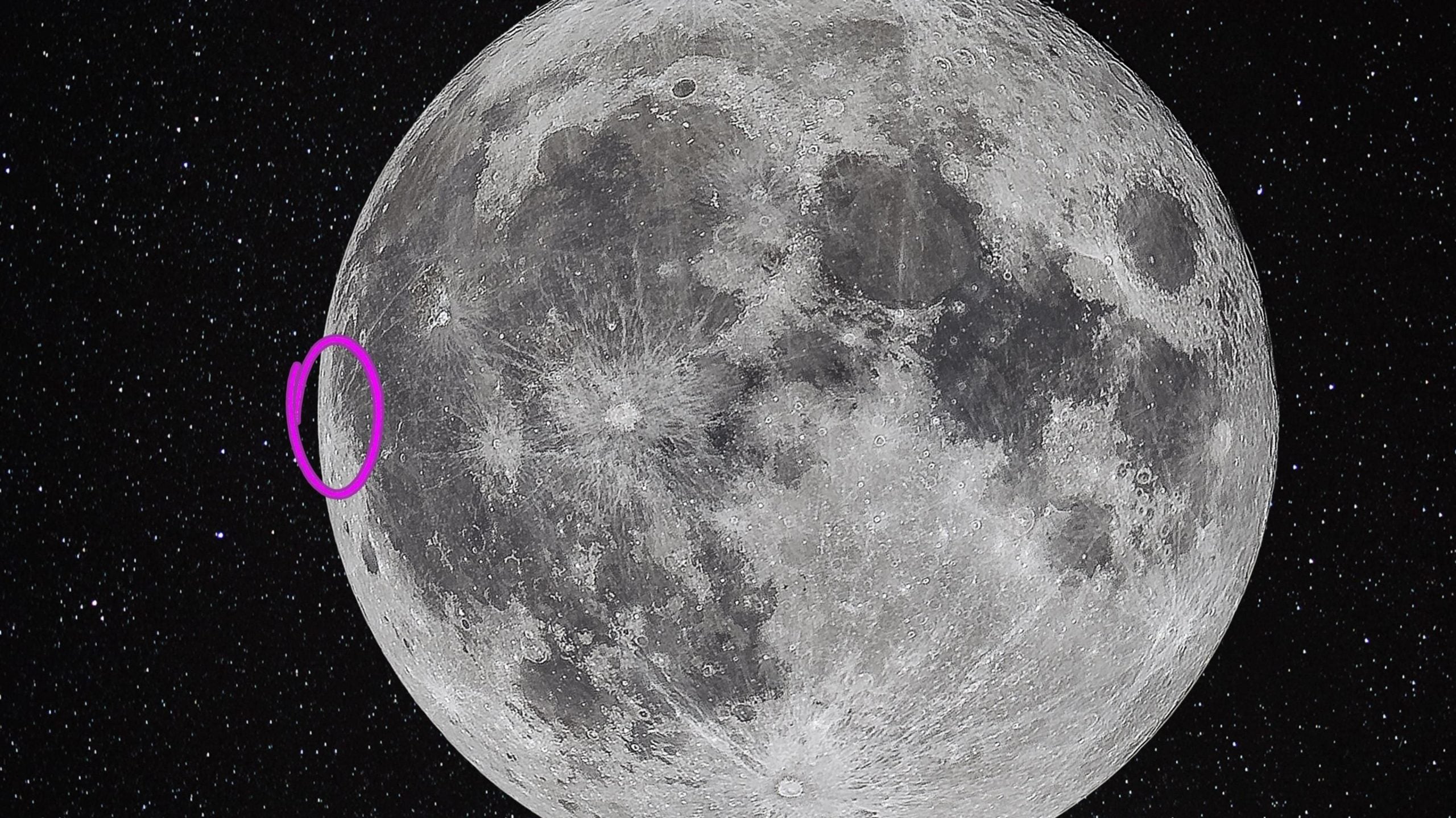
The upper stage hit the lunar surface near the Einstein and Bell craters at roughly 2:35 a.m. ET, traveling close to 5,400 miles per hour, according to NASA. The 45-foot-long stage weighed about 8,800 pounds and struck with a force close to three tons of TNT.
The rocket had been drifting through space for more than a year. It was left over from a January 15, 2025 launch that sent Firefly Aerospace’s Blue Ghost-1 lunar lander toward the moon, along with ispace’s Hakuto-R Mission 2 lander, Resilience.
South Korea’s Korea Aerospace Research Institute released before-and-after images from its Danuri spacecraft on Thursday. The orbiter made several passes over the impact zone shortly after the collision, and the photos show a patch of terrain noticeably darker than the surrounding surface, where the rocket carved out a fresh crater and threw dust and rock outward.
Estimates of the crater’s size vary slightly by source. NASA put it at roughly 60 feet wide and 12 feet deep, while other estimates place it closer to 100 feet wide and 16 feet deep. Either way, it ranks among the larger man-made impacts recorded on the moon.
Astronomers also caught the moment of impact from Earth. The Very Large Telescope in Chile detected a plume of sodium and lithium gas using spectroscopy, confirming the collision had taken place even before any photos came back.
NASA’s own Lunar Reconnaissance Orbiter is expected to pass over the site and capture its own before-and-after images, though officials say that could take another week or two to process and release.
Rocket bodies drifting back to the moon aren’t new. Old Chinese and Russian hardware has struck the lunar surface before, and scientists use each event to study what such impacts reveal about the moon’s subsurface. NASA has said this collision poses no risk to Earth.

Follow iNews Zoombangla On Google
Open the Google follow page and tap the checkmark option to receive more updates from iNews Zoombangla in your Google news feed.