Two SpaceX Falcon 9 rockets lifted off just 38 minutes apart late Saturday, one from each U.S. coast, in the tightest back-to-back launch pairing the company has flown. The pace pushed SpaceX’s Falcon 9 tally for the year to 96 missions.
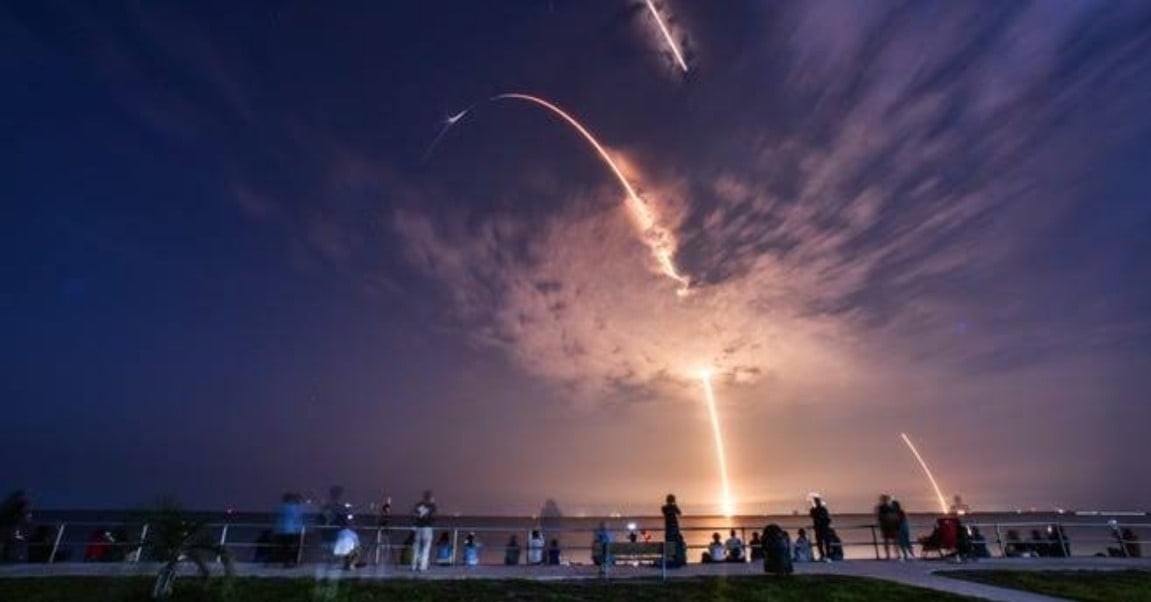
The first rocket flew from Vandenberg Space Force Base in California at 1:50 a.m. UTC Sunday, carrying a classified payload for the U.S. Space Force under the designation USSF-366. The booster had already flown 18 times before this mission, one of the more heavily reused first stages in SpaceX’s fleet.
The second Falcon 9 launched from Cape Canaveral Space Force Station in Florida at 9:12 p.m. Eastern time Saturday, or 1:12 a.m. UTC Sunday. That rocket carried eight satellites into low Earth orbit for Globalstar, a Louisiana-based satellite telecom company that leases capacity to partners for direct-to-device messaging features.
The 38-minute gap broke SpaceX’s previous record for the tightest turnaround between two separate Falcon 9 missions. Space.com, which tracked both launches live, flagged it as a new marker of how fast the company can now cycle between pads on opposite coasts.
Neither mission has been reported to have suffered any problems. SpaceX has not disclosed further details about the USSF-366 payload, which is standard practice for national security missions flown for the Space Force. Globalstar’s eight new satellites are expected to join the company’s existing constellation in the coming days as ground teams complete checkout procedures.
The doubleheader shows how routine rapid-fire launches have become for SpaceX this year. At a pace of roughly one Falcon 9 flight every three days in 2026, the company has leaned hard on booster reuse, an approach that let it fly the Vandenberg booster close to 20 times.
With 96 Falcon 9 launches logged so far in 2026, SpaceX remains on pace to top last year’s total. Both government and commercial customers are getting regular rides to orbit from either coast, often within hours of each other.

Follow iNews Zoombangla On Google
Open the Google follow page and tap the checkmark option to receive more updates from iNews Zoombangla in your Google news feed.