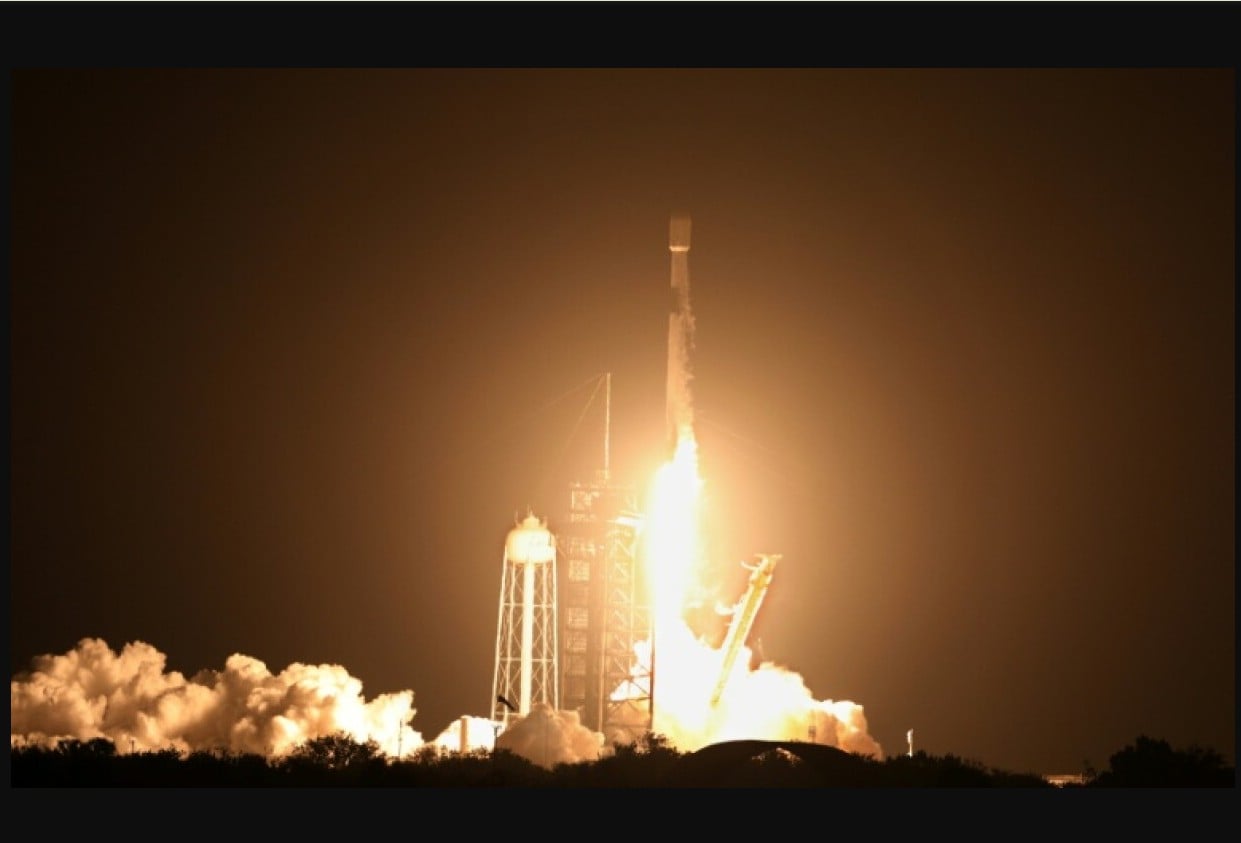
A roughly four tonne chunk of debris from a SpaceX Falcon 9 rocket, about the size of a school bus, slammed into the moon early Wednesday, according to tracking data reviewed by astronomers. The impact struck near the Einstein Crater on the lunar surface at an estimated 8,700 kilometers per hour, or about 5,400 miles per hour.
The object was the spent second stage of a Falcon 9 launched in early 2025. It had been drifting in space for more than a year before its orbit decayed enough to send it on a collision course with the moon. SpaceX has said the crash was unintentional, and the company has not issued a detailed public statement on the specific mission involved.
Scientists tracking the debris said the collision was expected to leave a new crater somewhere between 20 and 30 meters, or roughly 65 to 90 feet, across. Researchers plan to study the impact site using lunar orbiters already in operation, since high-velocity impacts like this one are rare opportunities to observe how debris interacts with the moon’s surface in real time.
Experts were quick to note the crash posed no danger to Earth. The moon has no atmosphere to burn up incoming objects, so debris and micrometeorites strike its surface far more often than they would reach the ground on Earth, though an object this large hitting a tracked, mapped location is unusual enough to draw scientific attention.
The incident adds to a growing conversation about the volume of human made debris now orbiting Earth and drifting through cislunar space, the region between Earth and the moon. As more companies launch rockets and satellites, tracking groups say uncontrolled reentries and impacts like this one are likely to become more common in the years ahead. Astronomers say the coming days should bring higher resolution orbital imagery that can confirm the crater’s exact size and shape.

Follow iNews Zoombangla On Google
Open the Google follow page and tap the checkmark option to receive more updates from iNews Zoombangla in your Google news feed.