Special correspondence: Electricity outage has mutated into a grim daily reality for the thousands of residents of the Tanpara West area in the capital’s Nikunja-2. For nearly two years, the community has endured relentless suffering due to chronic disruptions in the power supply.
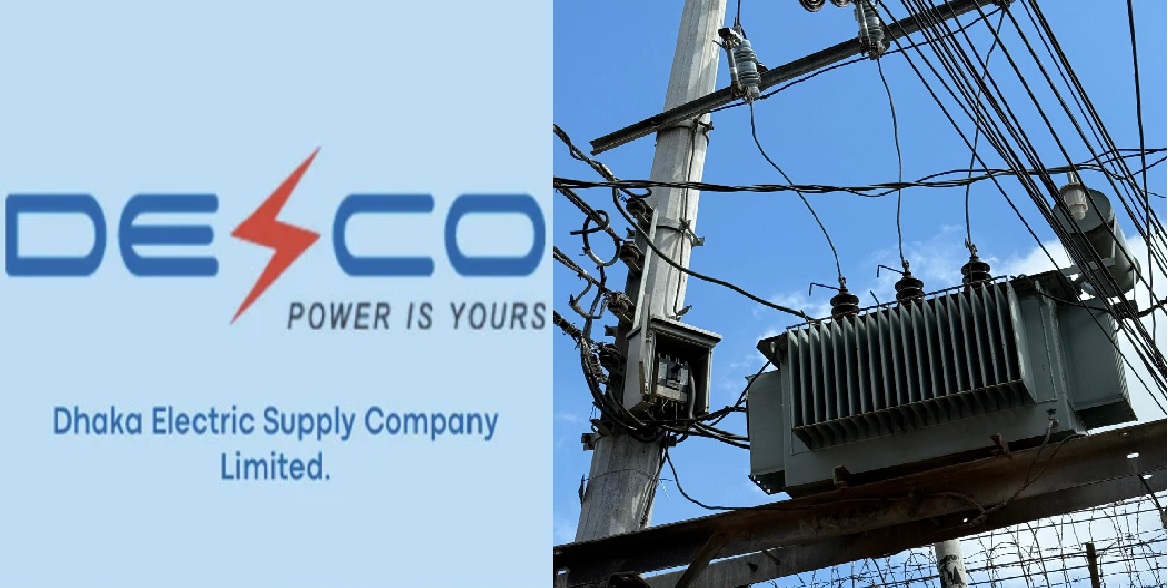
Local residents allege that the ZT100 transformer, operating under the jurisdiction of the Dhaka Electric Supply Company Limited (DESCO), has long been burdened with an electrical load far exceeding its actual capacity. As a result, the neighborhood is plunged into darkness abruptly at any hour of the day or deep into the night. While temporary fixes are often deployed following complaints to restore the connection briefly, no visible initiative has been taken by the authorities to implement a permanent solution. What initially began as isolated incidents has now woven itself into the very fabric of daily life in the area, with residents frequently facing prolonged power cuts lasting three to four days a week. Each time an outage occurs, a call to the DESCO hotline brings technicians or engineers to resolve the issue temporarily, only for the same situation to repeat itself within a few hours or a single day.
This escalating crisis stems from a widening gap between a booming demand and a stagnant infrastructure. According to locals, Tanpara West has undergone rapid urbanization over the last few years, marked by the construction of numerous multi-story buildings and a significant surge in population. Consequently, the use of power-hungry electronic appliances such as air conditioners, refrigerators, water pumps, and ovens has increased exponentially. However, the power distribution infrastructure has failed to upgrade in tandem with this rising demand. The overstressed ZT100 transformer trips or breaks down entirely at the slightest increase in pressure, forcing ordinary consumers to bear the brunt of the infrastructural failure. Local residents express deep resentment over this systemic negligence, questioning why they are deprived of basic civic amenities despite paying their electricity bills regularly. The uncertainty of not knowing when the power will go out has made living conditions unbearable, particularly for young children and the elderly who are forced to endure suffocating heat through sleepless nights. The persistent outages have also led to spoiled food in refrigerators, disrupted small businesses, and created acute water shortages as pumps cannot be operated without electricity.
The ramifications of this severe power crisis have cast a particularly dark shadow over education and entertainment in the locality. Students appearing for the ongoing Higher Secondary Certificate (HSC) and equivalent examinations find themselves in an extremely precarious position. Deprived of regular electricity, many are forced to study under the dim light of chargers, candles, or mobile phones late into the night, an ordeal that has placed immense mental and physical stress on both the examinees and their families.
Simultaneously, the frequent power cuts have severely disrupted the local excitement surrounding the FIFA World Cup knockout stages. Football enthusiasts complain that they are being robbed of the opportunity to enjoy highly anticipated matches with their families due to sudden blackouts, proving that the electricity crisis has begun to snatch away not just the daily normalcy of the residents, but also their basic avenues of recreation.
Community leaders and experts view this prolonged issue not merely as a technical glitch, but as a glaring failure in service quality. Highlighting that DESCO’s actual performance stands in stark contrast to its public promises of reliable power supply, they point out that a growing power demand in a developing residential area should never have been a surprise to the utility provider. The refusal to upgrade the transformer’s capacity in a timely manner points toward systematic oversight. Because the current ZT100 transformer is visibly incapable of handling the existing load of the area, repeated patch-ups will never yield results, making the installation of a high-capacity transformer the only viable and effective solution. When approached regarding these allegations, DESCO Executive Engineer Md. Jakker Hossain stated that the authorities are treating the matter with gravity and that the entire issue will be evaluated from a technical standpoint through relevant officials. He assured that if a capacity upgrade or a complete replacement of the transformer is deemed necessary, urgent steps will be taken in accordance with official procedures to ensure uninterrupted and quality service. Power sector experts emphasize that a permanent solution necessitates replacing the ZT100 transformer with a higher-capacity alternative, modernizing the feeder lines, and conducting regular load audits. After two years of enduring the same cyclical nightmare, the residents of Khilkhet Tanpara West are no longer willing to accept temporary make-do fixes from DESCO; they demand the immediate restoration of uninterrupted electricity as a fundamental citizen right.