The UK and Ireland will see their deepest partial solar eclipse in more than a decade on August 12, when the Moon covers as much as 96 percent of the Sun just before sunset, astronomers say.
The event is technically a total solar eclipse, but the path of totality passes only through eastern Greenland, western Iceland and northern Spain, missing the British Isles by a few hundred miles. Viewers across the UK will instead see a deep partial eclipse, with coverage ranging from about 88 percent in the far north of Scotland to more than 96 percent in the southwest of England.
The Isles of Scilly will see the deepest eclipse in the UK, with the Moon covering about 96.5 percent of the Sun’s disc, followed by Land’s End and Lizard Point in Cornwall at roughly 95.6 to 95.8 percent. Major cities will also see a substantial eclipse, with London reaching about 91.4 percent coverage and Cardiff about 93.2 percent.
Because the eclipse happens close to sunset, the Sun will be low in the western sky throughout the event. Across the UK, maximum eclipse occurs between roughly 7:05 pm and 7:13 pm BST, with first contact, when the Moon first appears to touch the Sun, occurring just before 6 pm BST. Astronomers say viewers will need a clear, unobstructed view toward the west-northwest horizon, since low cloud far in the distance can block the view even under clear overhead skies.
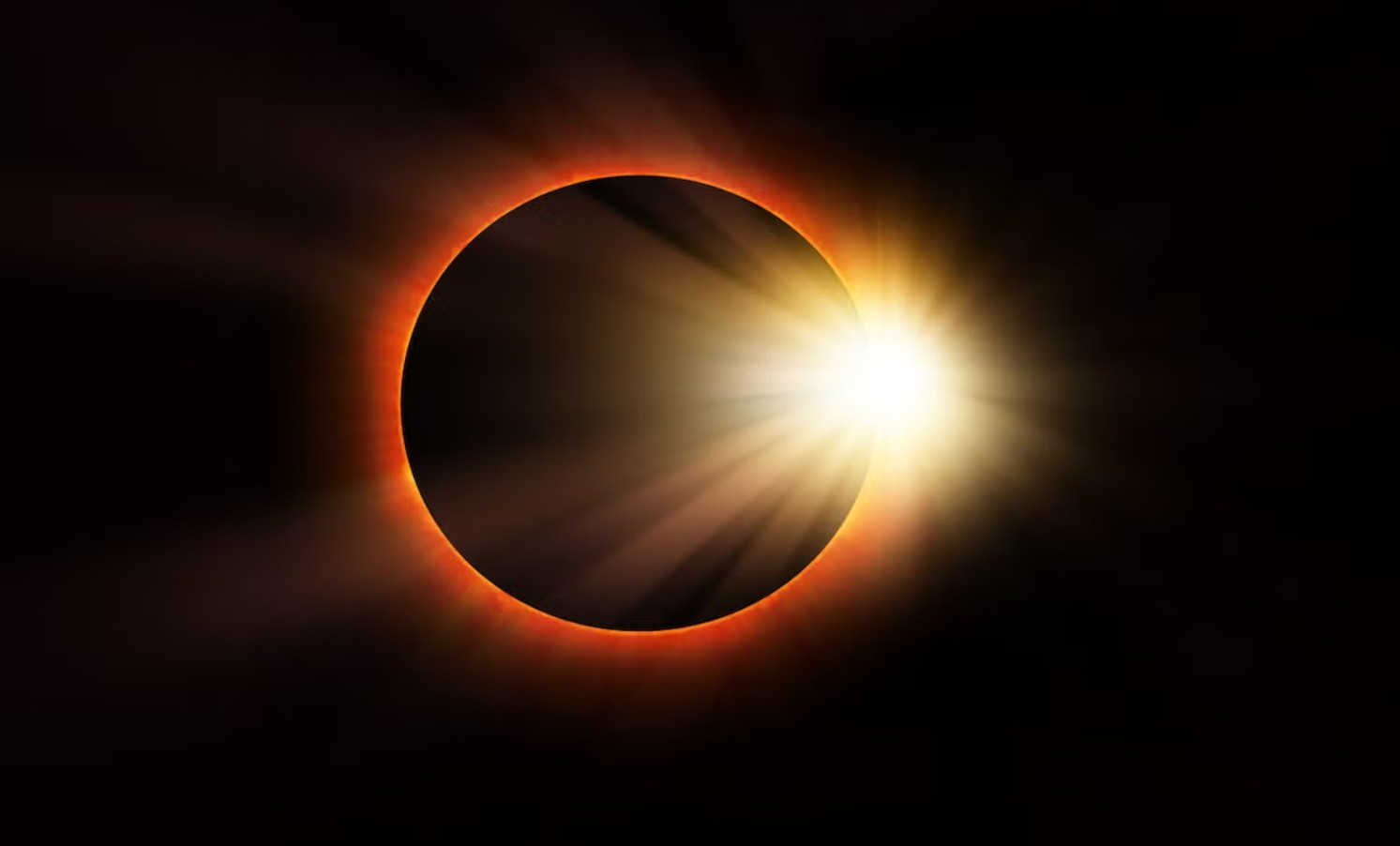
It is the UK’s deepest partial eclipse since March 20, 2015, when parts of Scotland saw up to 98 percent coverage. The next total solar eclipse visible from British soil is not due until September 23, 2090.
Observers are advised to use ISO 12312-2 certified eclipse glasses throughout the event, since ordinary sunglasses do not provide adequate protection. Cameras, telescopes and binoculars must also be fitted with proper solar filters. Later the same night, the Perseid meteor shower will reach its peak in moonless skies, offering what astronomers describe as one of the most rewarding observing days of the decade if the weather cooperates.

Follow iNews Zoombangla On Google
Open the Google follow page and tap the checkmark option to receive more updates from iNews Zoombangla in your Google news feed.