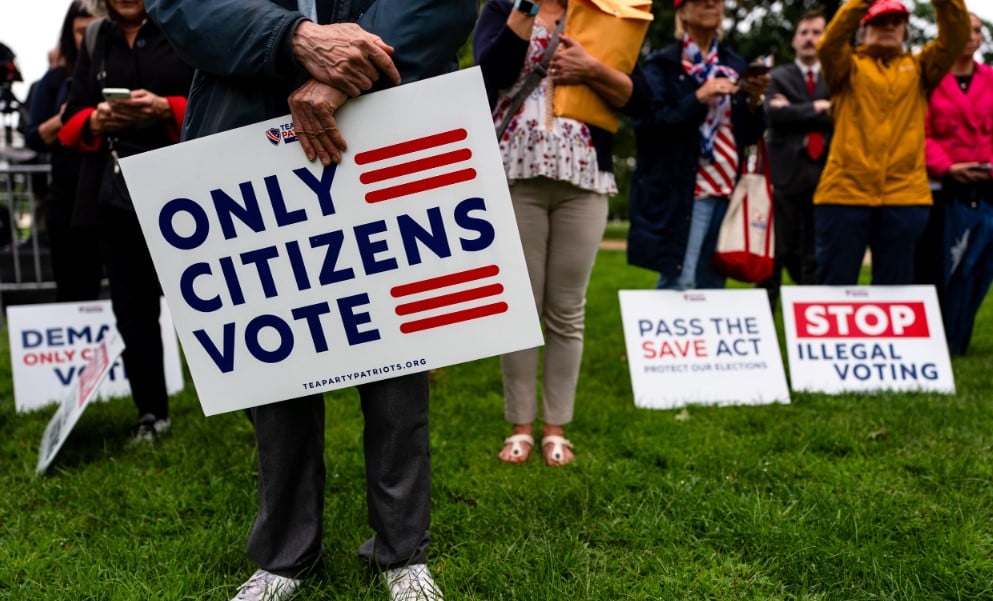
The U.S. Senate adjourned for its summer recess early on August 8 in Washington without passing the SAVE America Act, despite President Donald Trump‘s push for senators to remain in session until the voting legislation advanced. The measure would impose new federal proof-of-citizenship and photo identification requirements for voting.
The Associated Press reported that the bill did not have enough support to move forward, including among Republicans. Senate Majority Leader John Thune had said lawmakers lacked a workable path to passage under the chamber’s rules, while Trump repeatedly urged Republican senators to find a way to approve the measure before leaving Washington.
The SAVE America Act would require people to prove U.S. citizenship when registering for federal elections and show valid photo identification before voting. Supporters argue the requirements would strengthen confidence in election administration. Opponents say the rules could make voting harder for eligible citizens who do not have qualifying documents readily available.
AP reported that a narrower voter identification proposal also failed to advance before senators left town. The dispute became part of a broader end-of-session fight over government funding, nominations and other legislation that lawmakers were trying to finish before the August recess.
The Senate completed several other major items before adjourning, including a stopgap government funding measure. But the voting bill remained unresolved. Current reporting indicates Republican lawmakers expect to return to the issue after the recess, with some considering whether parts of the proposal could be attached to later budget legislation.
The Guardian also reported that Senate Republicans began their recess without completing the SAVE America Act and that elements of the proposal could reappear in future budget negotiations. No final agreement on that approach had been announced when the Senate adjourned.
As of August 8, the SAVE America Act had not passed the Senate and no new federal voter identification requirement had taken effect from the proposal. The next significant test will come when lawmakers return and decide whether to pursue the bill again as standalone legislation or through another legislative vehicle.

Follow iNews Zoombangla On Google
Open the Google follow page and tap the checkmark option to receive more updates from iNews Zoombangla in your Google news feed.