A busy stretch of smartphone announcements has brought several new devices into the spotlight, with the Xiaomi 17T Pro emerging as one of the most notable launches alongside new offerings from Oppo, RedMagic, vivo, and a growing list of upcoming devices revealed through leaks.
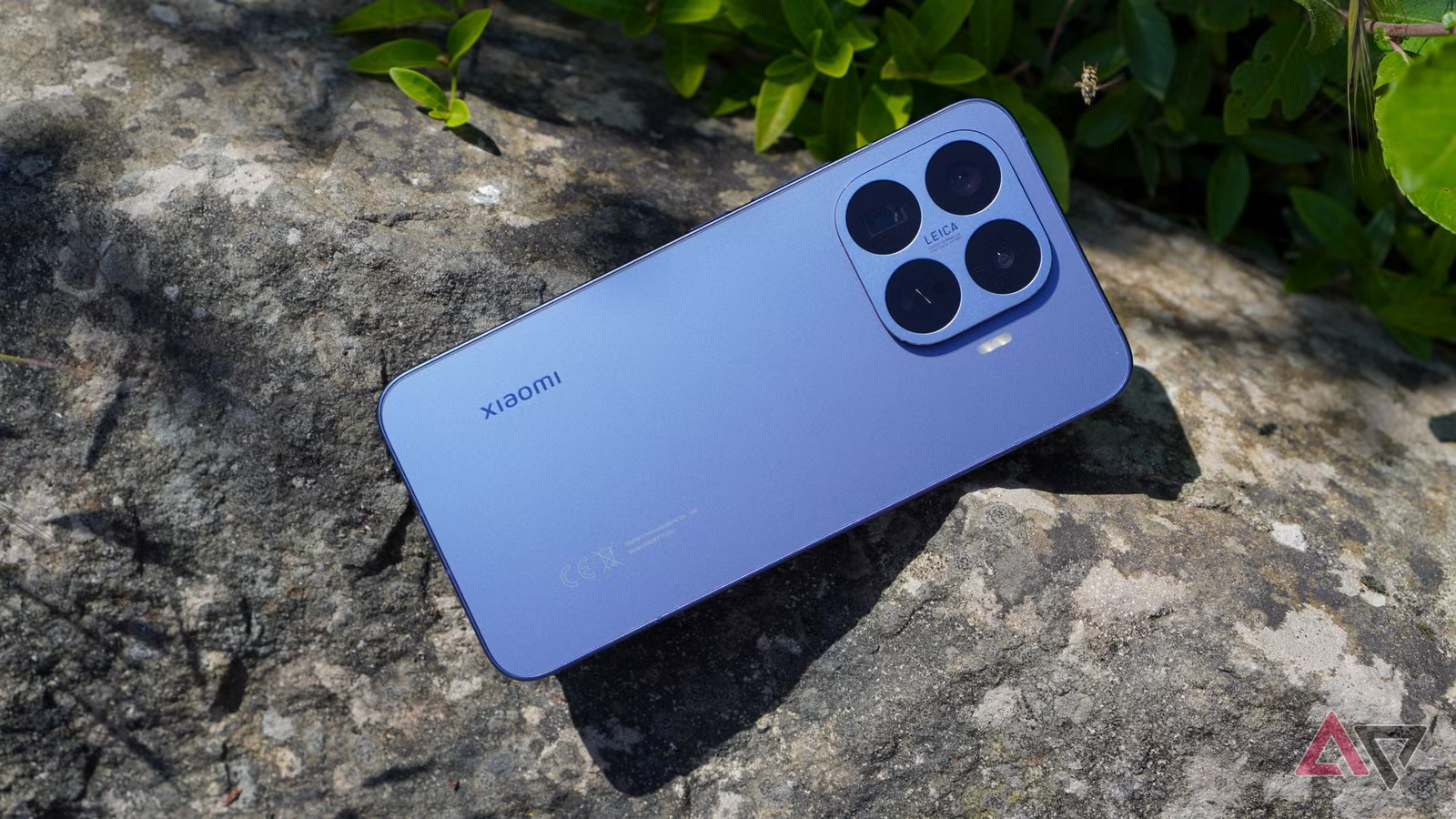
Xiaomi formally introduced the 17T and 17T Pro, expanding its upper-tier smartphone lineup with an emphasis on battery capacity, display performance, and long-range photography. The Xiaomi 17T Pro features a 6.83-inch AMOLED display with a 144Hz refresh rate and is powered by MediaTek’s Dimensity 9500 chipset. It carries a 7,000mAh battery supported by 100W wired charging and 50W wireless charging.
On the imaging side, Xiaomi has equipped the device with a larger 50-megapixel main camera while retaining a Leica-backed camera system that includes a 50-megapixel 5x periscope telephoto lens and a 12-megapixel ultrawide camera. The standard Xiaomi 17T uses a smaller 6.59-inch 144Hz AMOLED panel, a Dimensity 8500-Ultra processor, and a 6,500mAh battery with 67W charging. Pricing begins at €749 for the 17T and €899 for the 17T Pro. Xiaomi announced both models on May 28, with availability rolling out to global markets immediately.
Oppo also refreshed its Reno lineup with the launch of the Reno16 and Reno16 Pro in China. Both devices share an identical camera configuration, led by a 200-megapixel main camera paired with 50-megapixel telephoto and ultrawide sensors. A 50-megapixel front-facing camera is included on both models.
The differences between the two Reno devices are concentrated elsewhere. The Reno16 uses a 6.32-inch display, MediaTek’s Dimensity 8500 Super chipset, and a 6,700mAh battery with 80W charging. The Reno16 Pro moves to a larger 6.78-inch screen, a Dimensity 9500s processor, and a 7,000mAh battery that adds 50W wireless charging support alongside 80W wired charging. Prices in China start at CNY 3,499 for the Reno16 and CNY 4,499 for the Reno16 Pro in their 12GB RAM and 256GB storage configurations.
Gaming-focused manufacturer RedMagic expanded internationally with the launch of the 11S Pro. The device is built around a Snapdragon 8 Gen 5 Elite Leading Edition processor featuring a higher-clocked 4.74GHz prime core. RedMagic has paired the chip with its RedCore R4 gaming processor, an active cooling fan, a vapor chamber, and liquid-cooling hardware.
A 7,500mAh battery and 80W charging headline the specification sheet, while global pricing starts at €799, $849, or £709 for the 12GB and 256GB variant. Sales are scheduled to begin on June 9.
Battery capacity was also a major theme for vivo. The company unveiled the Y600 Turbo with a substantial 9,020mAh battery and 90W charging support. The handset includes a 6.78-inch AMOLED display with a 144Hz refresh rate, a MediaTek Dimensity 8450 chipset, a 50-megapixel primary camera, a 2-megapixel depth sensor, and a 16-megapixel selfie camera. It starts at CNY 1,999 and became available in China on May 31.
Meanwhile, attention is beginning to shift toward future releases. A leaked case believed to belong to Apple’s first foldable iPhone appears to reinforce reports of a book-style design. The accessory shows a vertically aligned dual-camera arrangement, a side-mounted fingerprint scanner, and a cover display resembling those found on existing foldable devices. The handset is expected to carry a premium price tag of around $2,000.
Additional leaks surfaced around Samsung’s Galaxy A27, which is said to feature a 6.7-inch 120Hz AMOLED display, a Snapdragon 6 Gen 3 processor, a 5,000mAh battery with 25W charging, and a camera system built around a 50-megapixel main sensor with optical image stabilization.
Read More:
Panasonic Lumix L10 Sees Strong Pre-Order Demand Ahead of June Launch
Taken together, the latest announcements highlight how manufacturers are increasingly focusing on larger batteries, faster charging technologies, and advanced camera hardware as competition intensifies across both premium and mid-range segments. For consumers, the latest round of launches offers a broad range of options, from gaming-focused flagships to camera-centric devices and battery-heavy everyday smartphones.

Follow iNews Zoombangla On Google
Open the Google follow page and tap the checkmark option to receive more updates from iNews Zoombangla in your Google news feed.