Capital One disclosed for the first time in a court filing Friday that it closed more than 300 Trump-affiliated bank accounts in 2021, citing anti-money laundering concerns.
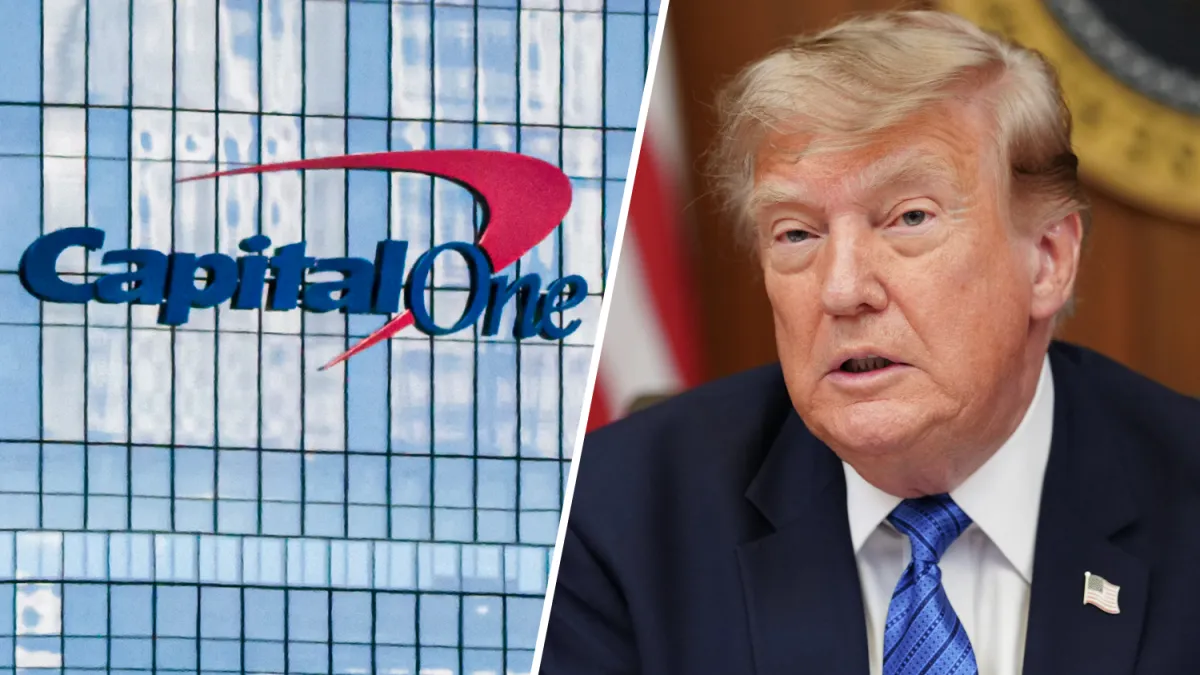
The disclosure came in response to a lawsuit filed by the Trump Organization accusing Capital One of political debanking, in which financial institutions allegedly close accounts based on a customer’s political affiliation rather than legitimate business reasons.
Capital One denied any political motivation behind the closures. The bank said in its filing that the decision followed months of analysis by a team with decades of law enforcement experience, framing the account closures as part of a standard anti-money laundering review process rather than a response to the customer’s identity or politics.
Notably, Capital One has not accused the Trump Organization of actual illegal money laundering. The filing instead frames the closures as a precautionary step taken after an internal risk assessment, a distinction the bank is likely to lean on as the case proceeds.
The Trump Organization’s lawsuit alleges that Capital One moved to distance itself from Trump in the aftermath of the Jan. 6, 2021, Capitol riot, and that the bank invented the anti-money laundering rationale after the fact to justify a politically motivated decision.
The case adds to a broader national debate over debanking, a term that has gained political prominence as some conservative figures and organizations have accused major financial institutions of cutting ties with customers over political or ideological reasons rather than standard risk-based banking criteria.
Capital One has not said whether it plans to reopen any of the accounts or offer further detail about the specific transactions or activity that prompted the 2021 closures, and the litigation is expected to continue as both sides prepare for further proceedings.
The dispute is playing out amid heightened political attention on how banks handle politically connected clients, with lawmakers on both sides of the aisle pressing financial regulators for more transparency around account closure decisions tied to reputational or compliance risk.

Follow iNews Zoombangla On Google
Open the Google follow page and tap the checkmark option to receive more updates from iNews Zoombangla in your Google news feed.