Physicists working at CERN have reported signs that collisions between relatively small oxygen and neon nuclei can create the extreme state of matter associated with the first moments of the universe. The phrase tiny Big Bang atomic nuclei describes the small-system experiment.
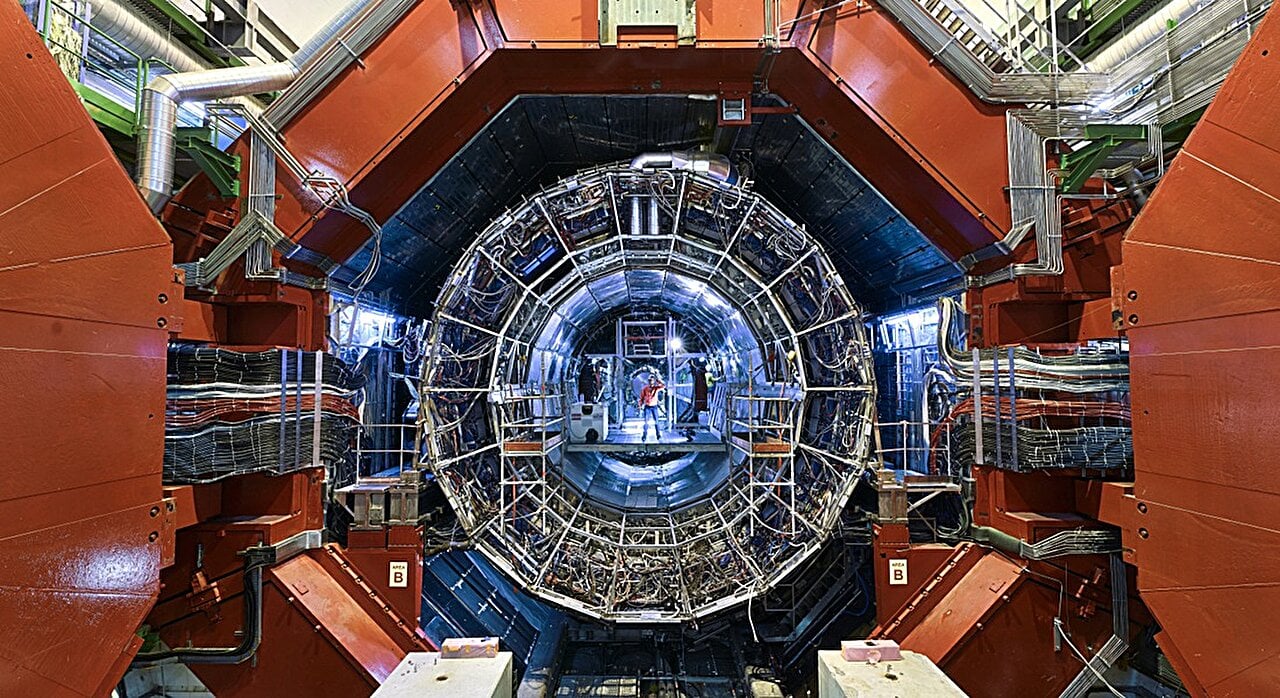
ScienceDaily reported that researchers at the University of Copenhagen and the ALICE collaboration produced microscopic droplets of quark-gluon plasma by colliding oxygen-16 and neon-20 nuclei at nearly the speed of light.
The CERN ALICE collaboration said the four major Large Hadron Collider experiments have found new indications of quark-gluon plasma in oxygen and neon collisions. The material is believed to have filled the universe during its first millionths of a second.
Scientists previously relied mainly on collisions involving much heavier nuclei to study this state of matter. The new results push the investigation toward smaller systems and provide another way to examine how quarks and gluons behave under extreme conditions.
Quark-gluon plasma is not a literal miniature universe and the experiment does not recreate the entire Big Bang. The phrase describes a tiny, short-lived sample of primordial matter whose particle patterns can be measured after the collision.
The findings may help researchers compare the behaviour of the plasma across different collision sizes. The current result is a laboratory measurement in nuclear physics, and further analysis will be needed to determine how closely the small-system collisions reproduce the collective properties seen in larger systems.

Follow iNews Zoombangla On Google
Open the Google follow page and tap the checkmark option to receive more updates from iNews Zoombangla in your Google news feed.