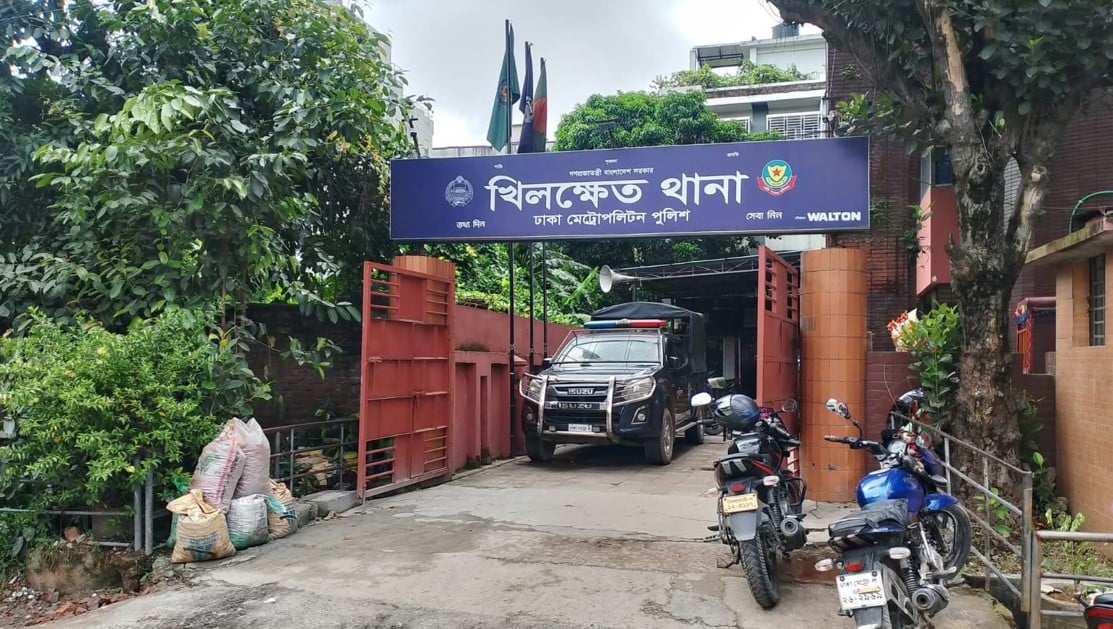
Staff Correspondent: The newly formed Community Policing Committee at Khilkhet Police Station, established as part of the Dhaka Metropolitan Police (DMP) initiative to form police station-based community policing committees, has sparked debate at the local level. Residents, representatives of social organizations, and members of civil society have questioned the committee’s neutrality and inclusiveness, alleging that members of a single political party dominate both its executive and advisory bodies.
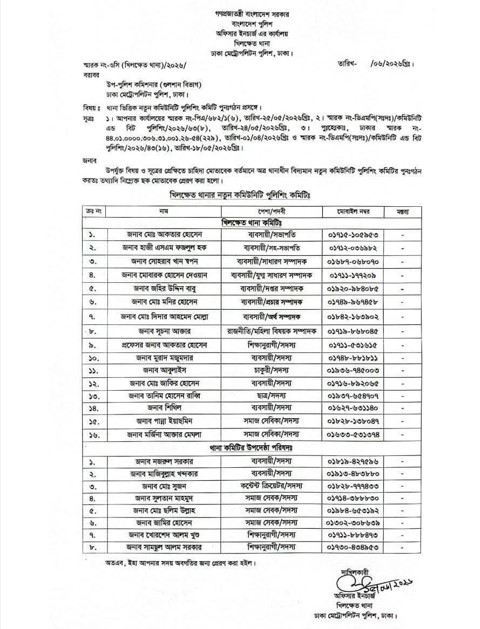
According to local sources, Md. Akter Hossain, Joint Convener of the Dhaka North unit of the Bangladesh Nationalist Party (BNP), has been appointed President of the committee. SM Fazlul Haque, Convener of Khilkhet Thana BNP, has been made Senior Vice President. Sohrab Khan Swapan, Member Secretary of Khilkhet Thana BNP, has been appointed General Secretary, while Mobarak Hossain Dewan, Joint Convener of the same BNP unit, has been named Senior Joint General Secretary.
It is further alleged that most of the remaining members of the 16-member executive committee are office-bearers or active members of the BNP. Similar allegations have been raised regarding the eight-member advisory council. Local residents claim that almost all members of both bodies are affiliated with the same political party, leaving little or no representation for individuals from other political viewpoints, civil society organizations, or non-partisan backgrounds.
Community policing is intended to strengthen trust between the police and the public, encourage community participation in crime prevention, and promote social harmony. Experts say such committees are expected to include representatives from diverse sectors of society, including teachers, businesspeople, women, youth, religious leaders, and community activists. Consequently, their credibility largely depends on political neutrality and broad social representation.
A retired schoolteacher, speaking on condition of anonymity, said, “Community policing is meant to be a non-political civic platform. If one political group dominates the committee, it may discourage public participation and undermine public trust.”
A local businessman expressed similar concerns, saying that committees of this nature should be formed through an inclusive process involving respected individuals from different social and political backgrounds.
Several residents also alleged that many well-respected individuals who have long been engaged in social, educational, and public welfare activities were excluded from the committee. They believe a more transparent and participatory selection process could have prevented the current controversy.
Observers working on governance issues noted that political balance and social inclusiveness are essential for citizen committees that work alongside law enforcement agencies. Allegations of political dominance, they said, could weaken public confidence in such initiatives.
Responding to the allegations, an official of Khilkhet Police Station, speaking anonymously, said efforts had been made to consult various local stakeholders during the committee formation process. He added that any objections could be submitted to higher authorities and that the committee could be reviewed if necessary.
M. Tanvir Ahmed, Deputy Commissioner of Police of the Gulshan Division, said, “The allegations will be examined thoroughly. If the investigation finds any truth to the claims, appropriate action will be taken. Community policing does not belong to any individual or political party; it is intended to operate with the participation of people from all sections of society, and we remain committed to that principle.”
However, a section of local residents believes that merely investigating the allegations will not be sufficient. They argue that the entire committee formation process should be reassessed to ensure that appointments are based on merit, social acceptance, public engagement, and contributions to the community rather than political affiliation.
According to them, community policing can only achieve its intended purpose when it reflects the participation of people from all walks of life and remains above political influence, thereby earning the trust and confidence of the wider community.