Wearable devices have steadily expanded beyond their original role as fitness trackers, evolving into compact companions capable of handling notifications, navigation, payments and a wide range of everyday tasks. The Fitbit Air takes a markedly different path.
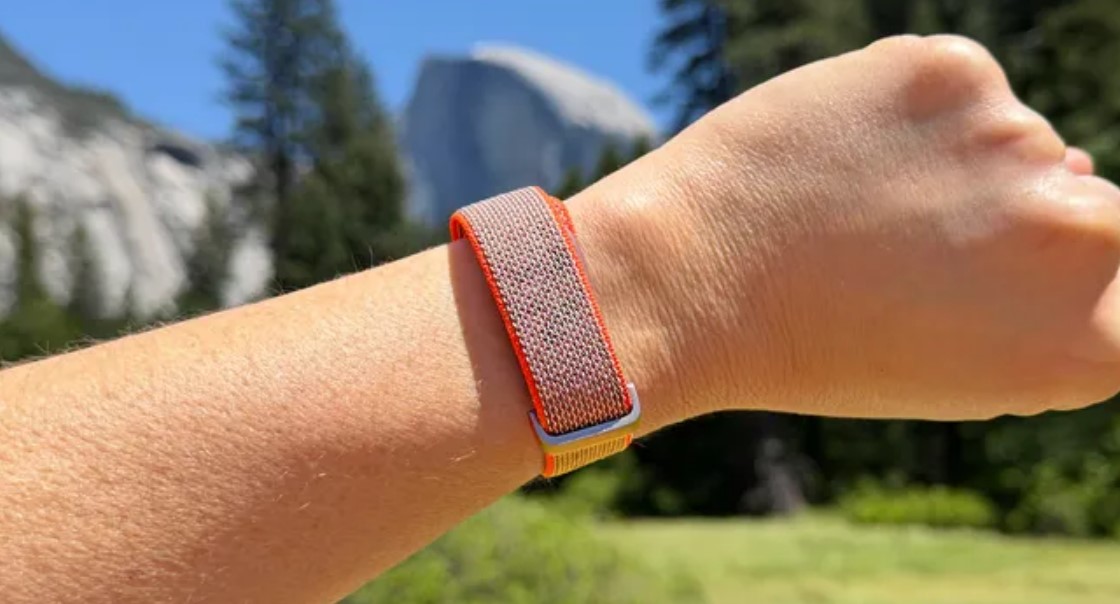
At first glance, the device resembles a conventional fitness band. It features a slim strap and a compact module that rests against the wrist. Yet the most noticeable aspect of the Fitbit Air becomes apparent only after it is worn: there is no display.
Instead of a screen, the module houses its sensors on the underside while a Google logo occupies the top surface. A small LED indicator on the side provides basic status information. The design is intentionally minimal, reducing the device to its essential functions without the visual distractions commonly associated with modern smartwatches.
Changing the look of the device is straightforward. The module can be pushed out of one band and inserted into another within seconds, allowing users to swap straps with little effort.
Despite weighing just 12g with the band attached, the Fitbit Air includes a broad collection of health-monitoring sensors. It tracks heart rate, blood oxygen levels, skin temperature, sleep quality and daily activity. The information is presented through Google’s updated Health app, which serves as the primary interface for reviewing personal health data.
The experience relies heavily on software. Basic tracking functions are available without charge, but several advanced features require a subscription costing S$12.98 per month.
Subscribers gain access to AI-powered insights delivered through a conversational interface. Using personal information such as age, height and weight, the system generates fitness plans, analyses sleep patterns and offers broader health-related observations. Recommendations can also adjust in response to changes in daily routines, including reduced activity levels or poor sleep. Guided workout videos are included for users seeking structured exercise sessions.
For users in Singapore, the Fitbit Air integrates with the Healthy 365 app, allowing participation in existing rewards programmes. Activities tracked through the device can continue to contribute toward benefits such as SimplyGo fare redemptions and FairPrice supermarket vouchers.
Battery performance is among the device’s stronger features. During testing, the Fitbit Air lasted around seven days on a single charge.
The trade-off for that simplicity becomes evident during everyday use. Without a display, most interactions require access to a smartphone. Activities such as swimming, cycling or jogging must be selected and started through the companion app. Users are also unable to check workout statistics directly from their wrist.
The limitations become clearer when compared with the Fitbit Charge 6. During a cycling session, for example, the Charge 6 allows users to begin an activity directly from the device and monitor progress in real time. It can also provide basic navigation guidance and support wireless payments after a workout.
Those conveniences are absent from the Fitbit Air.
Priced at S$189, the Fitbit Air offers a distraction-free approach to health tracking, but several of its most advanced capabilities sit behind a recurring subscription. The device succeeds in delivering a lightweight and unobtrusive experience focused on passive monitoring, though prospective buyers may weigh that simplicity against alternatives offering broader functionality at a similar price point.
Read More:
Claude Opus 4.8: Anthropic Restores Services After Outage Amid Growing Security Scrutiny
The Fitbit Charge 6, priced at S$229.95, remains one such option, pairing a display with additional features while still allowing notifications to be disabled for users who prefer fewer interruptions. For consumers considering a health-focused wearable, the choice may come down to how much value they place on minimalism compared with convenience.

Follow iNews Zoombangla On Google
Open the Google follow page and tap the checkmark option to receive more updates from iNews Zoombangla in your Google news feed.