The Galaxy S26 Ultra 3x Camera has become the center of technical debate after new leak analysis clarified earlier conflicting reports. A discovery by Erencan Yılmaz points to a new 12MP Samsung S5K3LD sensor with a native resolution of 4000×3000. However, reports indicate only a 10MP center crop is used for capture before processing reconstructs a final 12MP image.
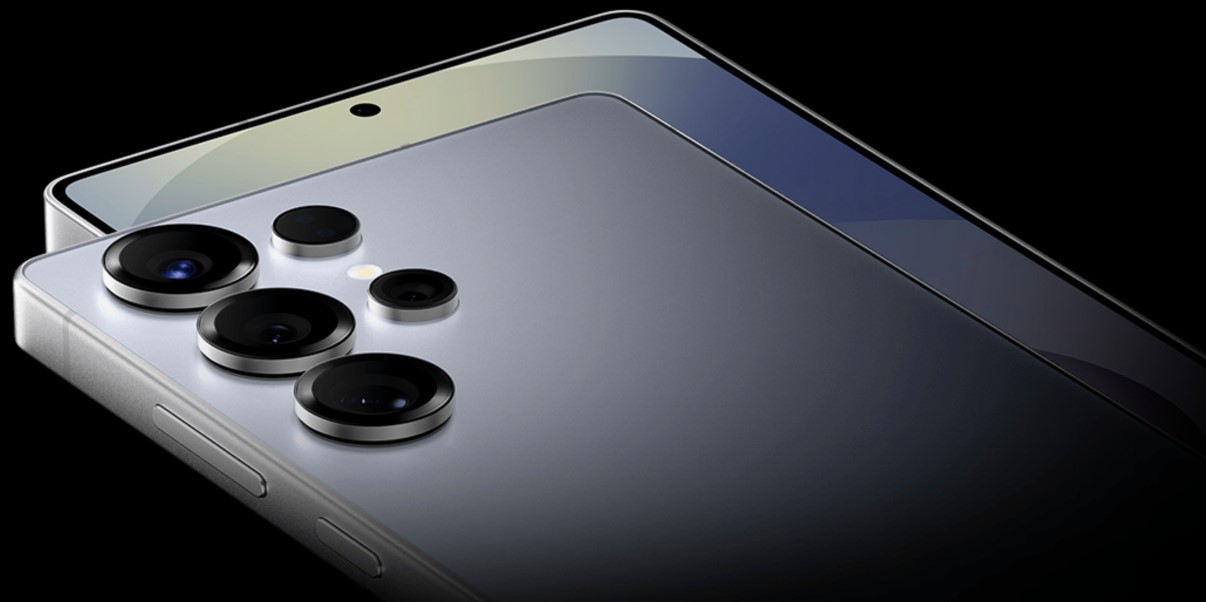
The key question now: is Samsung optimizing speed and stabilization, or is the telephoto module physically smaller than expected?
The Geometry Behind the Crop
The Galaxy S26 Ultra 3x Camera uses a native resolution of 4000×3000 but reportedly captures from a 3648×2736 area.
This produces a linear crop ratio of 0.912.
Because the aspect ratio remains 4:3, the crop equally scales width, height and diagonal. Optical format is based on the diagonal, meaning the effective optical size is also reduced by 0.912.
If the sensor starts at 1/3.2”, applying the crop results in roughly 1/3.5” effective size, placing it extremely close to the outgoing module’s 1/3.55” range.
In this scenario, the Galaxy S26 Ultra 3x Camera is not meaningfully reducing usable light area. Instead, unused pixels act as a stabilization and processing buffer. A stacked design with faster readout would support this engineering approach by improving edge consistency, rolling shutter and HDR precision.
But What If the Effective Area Is 1/3.94″?
Some reports claim the Galaxy S26 Ultra 3x Camera has an effective size of 1/3.94”.
Reversing the math suggests a native sensor closer to 1/3.6” before cropping. After the crop, photon capture decreases further. Since sensor area scales with the square of the diagonal, moving from 1/3.2” to 1/3.6” represents roughly a 25% reduction in total light area.
That would shift performance reliance more heavily toward image processing rather than hardware capability.
Where the ISOCELL LD Family Fits
Historically, Samsung’s LD-series telephoto sensors sit around the 1/3.x optical range.
A 1/3.2” base sensor aligns naturally with that structure.
A smaller 1/3.6” base sensor cropped further to 1/3.94” would be less consistent with previous tier positioning, making the size discrepancy a notable technical uncertainty rather than a confirmed downgrade.
Physics vs Processing in 2026
Modern smartphone photography is influenced by more than sensor fractions.
For the Galaxy S26 Ultra 3x Camera, readout speed, autofocus reliability, HDR stacking accuracy and ISP integration may matter more than a small diagonal difference.
A center crop can improve:
- motion capture
- stabilization margins
- rolling shutter performance
- portrait segmentation accuracy
If the module delivers cleaner motion and faster focus, the unused pixels may simply be part of system optimization rather than a limitation.
Optical Format Conventions and the Three Scenarios
As noted in a separate analysis by Daebak, the 1/3.94” figure may come from a different optical-format conversion method.
Under a strict 16mm reference constant, these cannot all be true simultaneously:
- Native size = 1/3.2”
- Effective crop = 1/3.94”
Some spec sheets use slightly different constants, shifting labeling without changing the actual imaging diagonal.
That leaves three possibilities for the Galaxy S26 Ultra 3x Camera:
- Pure labeling difference — same physical sensor, different naming convention
- 1/3.2” base sensor — engineering crop for speed and stabilization
- 1/3.6” base sensor — physically smaller light-gathering area
Only confirmed die size and pixel pitch will resolve the issue.

Follow iNews Zoombangla On Google
Open the Google follow page and tap the checkmark option to receive more updates from iNews Zoombangla in your Google news feed.