For years, Garmin’s lower-end running watches appeared frozen in place while the company steadily refreshed nearly every other part of its Forerunner lineup. The Forerunner 55, introduced in 2021, remained the lone “two-digit” model on shelves even as Garmin rolled out newer generations of premium devices with brighter displays and expanded software features.
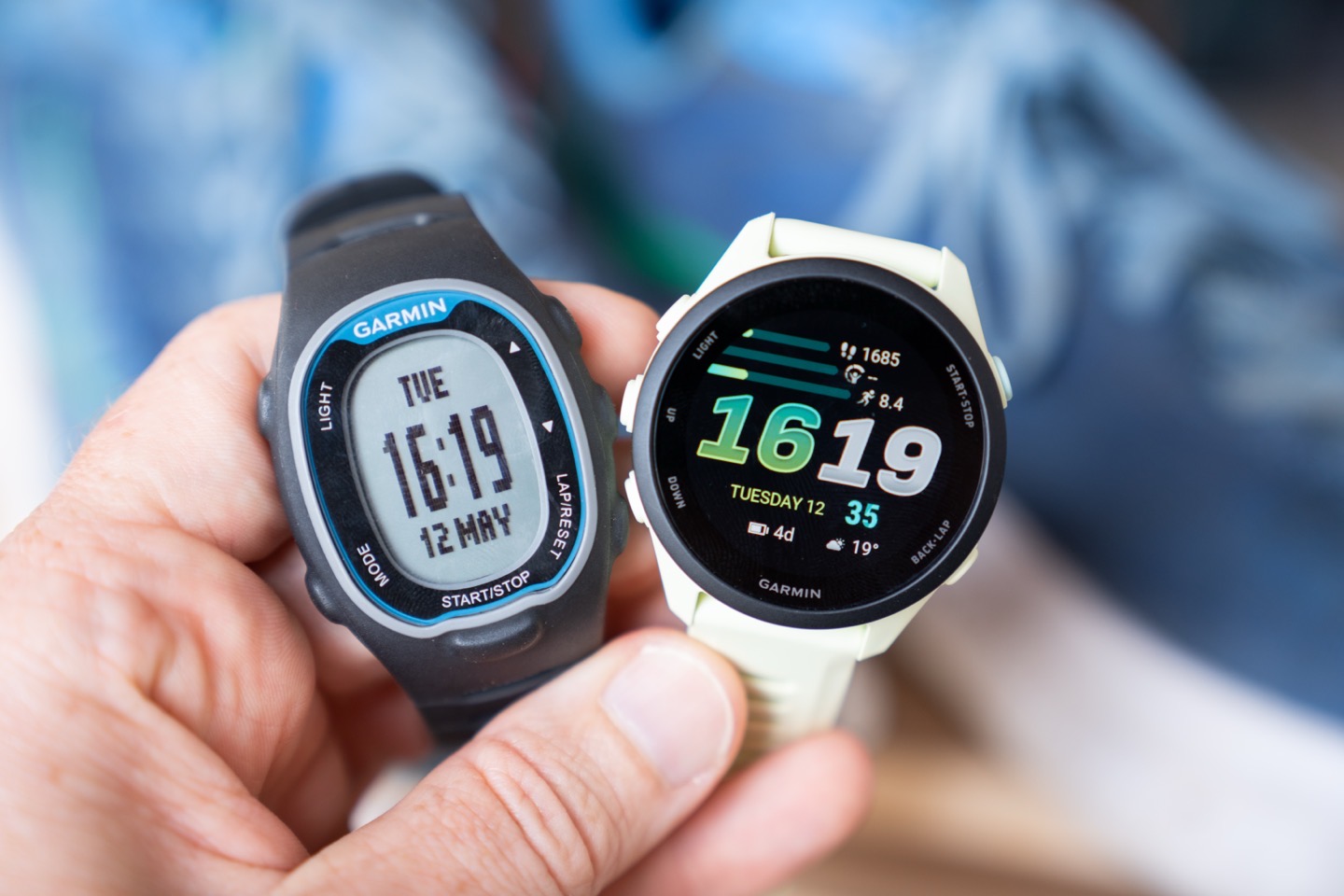
That changed this year with the arrival of the Garmin Forerunner 70, a watch positioned as the company’s new entry point into dedicated running wearables. The device joins the broader AMOLED-based Forerunner family alongside the 170, 570, and 970, bringing more modern hardware and software features to a lower price tier.
The launch stands out not only because it replaces an aging product, but because it signals renewed attention to a category Garmin had seemed willing to leave behind. The gap between the Forerunner 55 and newer models had become increasingly noticeable as higher-end devices received upgraded screens, sensors, and broader lifestyle tracking tools.
The Forerunner 70 keeps the familiar look of the series. It carries the same five-button layout long associated with Garmin running watches, with two buttons on the right and three on the left. The watch uses a standard 20 mm silicone strap that can be swapped for other compatible bands.
Garmin offers the watch in a single size of roughly 43 millimeters. That places it close to the dimensions of the Forerunner 165 and near the smaller version of the 570 lineup. The sizing is likely to appeal to runners who prefer lighter watches or have smaller wrists, while still remaining usable for a broader range of users.
Battery performance appears solid, though not exceptional. Garmin rates the device for up to 13 days in smartwatch mode with the always-on display disabled. Real-world use produced lower figures, with testing showing about 9.5 days without the always-on display and around six days with it enabled.
Charging follows Garmin’s established approach, using the company’s standard rear charging connector and bundled USB cable. The system remains consistent with the rest of Garmin’s modern watches.
Accuracy is where the Forerunner 70 makes some compromises compared with more expensive models. Garmin confirmed that the watch uses the same heart rate sensor found in the Forerunner 165 rather than the updated sensor introduced on the 570 and 970.
Even so, testing did not reveal a major performance gap between the Forerunner 70 and the significantly more expensive 570. While the newer sensor in Garmin’s premium watches may offer improved precision, the older sensor still performed reliably during evaluation.
The bigger question surrounding the Forerunner 70 may be value. Garmin has increasingly focused attention on premium devices, with top-end watches now reaching prices above $700. At the same time, rivals including Coros and Suunto have introduced lower-cost running watches with broad feature sets at roughly the same $250 price point as the new Garmin.
That leaves the Forerunner 70 entering a more competitive market than the one its predecessor faced in 2021. Still, for runners who have waited years for Garmin to modernize its entry-level offering, the new watch represents a notable shift in direction.
Read More:
Apple iPhone 18 Pro Max Colours Tipped Again as Magenta Leak Gains Momentum
The Forerunner 70 does not attempt to redefine the category. What it does instead is bring Garmin’s most affordable running watch back into step with the rest of the company’s lineup after several years of standing still.

Follow iNews Zoombangla On Google
Open the Google follow page and tap the checkmark option to receive more updates from iNews Zoombangla in your Google news feed.