Hot temperatures during development can reduce the brightness and alter the colour of blue morpho butterflies’ iridescent wings, according to a study published in PNAS Nexus. Blue morpho butterflies heat is the search phrase for the study’s finding.
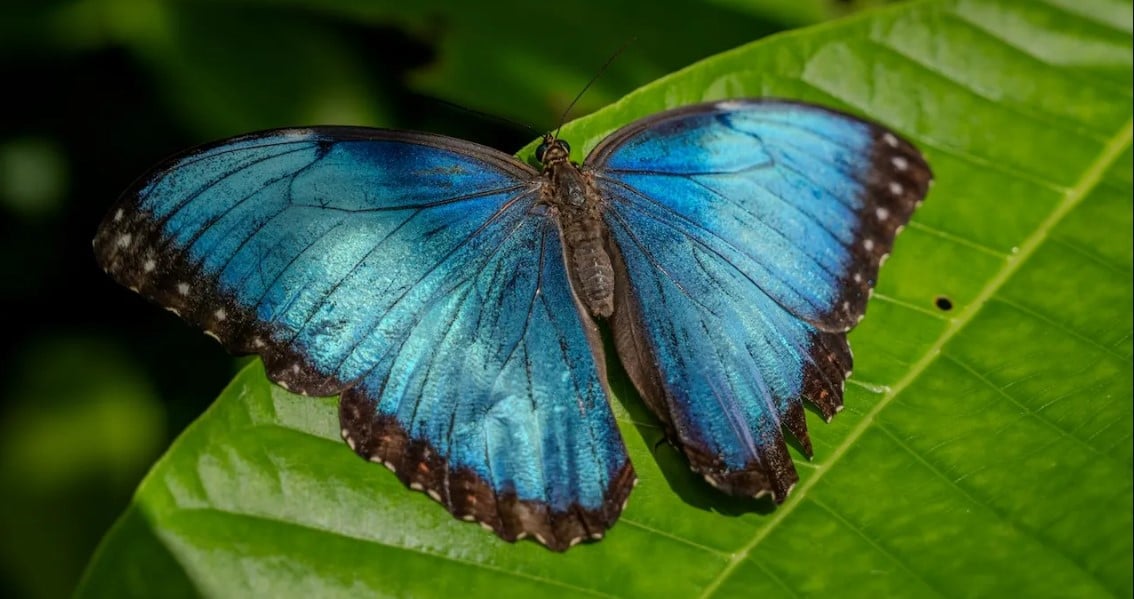
The research examined Morpho helenor larvae and exposed pupae to different temperature conditions. Oxford Academic reported that hotter conditions changed the nanostructures in the wing scales that create the butterfly’s blue structural colour.
EurekAlert, summarising the study, said the researchers found that the overall intensity of reflected light was suppressed in butterflies raised under hot-house conditions. The effect was linked to the tiny structures that act like optical surfaces rather than to a conventional pigment.
The blue morpho’s colour is produced when light interacts with layered structures on the scales. A change in their arrangement can alter brightness, hue or the range of viewing angles at which the iridescence is visible.
The researchers studied two subspecies and found some differences in how their colour shifted under heat. The results do not establish that every blue morpho in the wild will respond in the same way, because natural conditions and local biology vary.
The study provides evidence that developmental temperature can affect structural colour in a tropical butterfly. It does not measure a future population decline or predict a specific ecosystem outcome, but it gives researchers a way to examine how warming conditions may change a visible biological trait.

Follow iNews Zoombangla On Google
Open the Google follow page and tap the checkmark option to receive more updates from iNews Zoombangla in your Google news feed.