Iran’s Supreme Leader Mojtaba Khamenei has remained almost entirely absent from public view since assuming office in March following the death of his father, Ali Khamenei, in the opening hours of the US-Israeli strikes on Iran. As the June 19 peace deal signing in Geneva approaches, questions about his role in approving the agreement and his authority over hardline factions inside the Islamic Republic have become increasingly relevant.
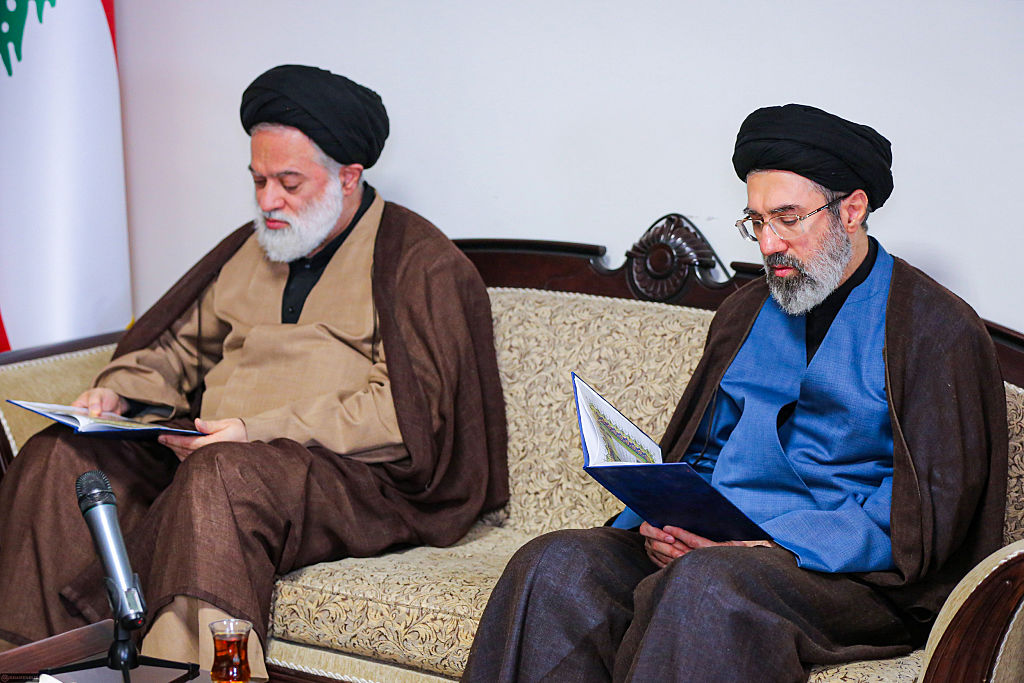
Mojtaba Khamenei, 57, was appointed by Iran’s Assembly of Experts within days of his father’s death, a speed that raised eyebrows among Iran observers who noted that a father-to-son succession in a Shiite clerical establishment is historically contentious. Ali Khamenei had himself reportedly signalled opposition to his son’s candidacy before the war. But the chaos of the conflict, combined with the younger Khamenei’s close ties to the Islamic Revolutionary Guard Corps and its paramilitary Basij force, made him the most viable option for a governing system that needed rapid continuity.
His absence from public statements during the peace negotiations has been notable. Iranian Foreign Ministry officials and other representatives have spoken publicly about the Islamabad Declaration and the upcoming Geneva signing, but the Supreme Leader has not appeared at any official event or issued public guidance on the deal since the framework was announced. This contrasts with the style of his father, who regularly gave speeches on major policy decisions.
Some Iran analysts read the silence as strategic. The peace deal with the United States is deeply uncomfortable for a political establishment built on hostility to Washington, and Mojtaba Khamenei may be leaving the public framing of the agreement to other officials while maintaining plausible distance from its most controversial elements. Others suggest he is still consolidating authority and is not yet confident enough in his internal political position to take visible ownership of a major foreign policy decision.
The deal requires Iran to commit to never acquiring nuclear weapons and to open 60-day talks on the disposition of its enriched uranium stockpile. Both commitments cut against the positions that the IRGC and hardline clerical factions have taken for years. Whether those factions are genuinely prepared to accept the deal’s terms or are simply waiting for an opportunity to undermine it during the implementation phase will depend heavily on signals from the Supreme Leader.
The funeral for Ali Khamenei, whose body has been held in a temporary facility since the conflict began, is scheduled to begin in Tehran on July 4 and conclude with burial in Mashhad on July 9. The funeral will be Mojtaba Khamenei’s first major public event as Supreme Leader, and Iran watchers are closely monitoring whether it becomes an occasion for nationalist or anti-American sentiment that could complicate the post-signing period.
Carnegie Endowment for International Peace analysts have noted that Mojtaba Khamenei’s proximity to the security apparatus may ultimately prove to be a stabilising factor if the IRGC itself has concluded that the deal is the least bad option available to Iran. But the same relationship that gives him credibility with hardliners could become a constraint if those factions decide the peace terms are unacceptable.

Follow iNews Zoombangla On Google
Open the Google follow page and tap the checkmark option to receive more updates from iNews Zoombangla in your Google news feed.